
Personal Training Business Guide
Running Client Sessions From a Backyard Shed Gym
Plenty of personal trainers start out the same way. They rent floor space, pay a cut to a big-box gym and spend half their day driving between clients. Then someone looks at the backyard and asks a simple question: why not train people right here?

Is There Enough Demand for Private Training?
Short answer: yes, if you pick your niche. Most Australians are not training enough, which leaves a lot of room for good coaches.Only about one in five adults aged 18 to 64 met the physical activity guidelines in 2022, according to ABS survey data. Strength work is even further behind. The AIHW reports that 73% of adults aged 18 to 64 did not do enough muscle-strengthening activity that year.
Choosing the Best Shed for a Gym in Queensland
The building is your biggest decision and your biggest investment. Treat it like a commercial fit-out, not a weekend storage project. Wide Span Sheds is a solid starting point when you are comparing the best sheds Australia has to offer for a training space. The family-owned supplier offers ShedSafe-accredited, site-engineered designs in BlueScope steel, with options such as insulation, skylights, roller doors and mezzanine floors. Ranbuild and Fair Dinkum Builds are two other well-known Australian names worth quoting, so you can compare spans, wind ratings and lead times side by side.Key Features to Look For
When you request quotes, focus on these features: Do not forget the floor. Lay a reinforced concrete slab, then add rubber matting at least where dumbbells and kettlebells hit the ground.What Approvals Should You Check First?
This is where many trainers get caught out. A shed big enough to train clients in is almost never small enough to skip the paperwork.As one example, Redland City Council says building approval is generally not needed only when a shed is no larger than 10 square meters and meets other conditions. A functional training shed will be well beyond that. Rules vary by council, so talk to a building certifier early.
How Do You Manage Heat and Humidity?
Queensland summers are the biggest risk to a shed gym. A training session that feels fine in July can become dangerous in January. Sports Medicine Australia updated its extreme heat policy to account for both temperature and humidity, closing blind spots in older guidance. That matters for coastal Queensland, where humid days can be riskier than the thermometer suggests.Build Heat Management Into Your Programming
- Schedule high-intensity sessions early in the morning or later in the evening.
- Keep a thermometer and a humidity gauge on the wall where you can see them.
- Run fans or an evaporative cooler, and open doors to create cross-flow.
- Keep cold water within arm’s reach of every client.
- Swap long conditioning blocks for strength work with longer rest when conditions spike.
- Know the signs of heat illness, and have a written plan for what you will do.
Clients should never have to push through dizziness or nausea to finish a set. Say that out loud during onboarding.
What Does the Client Experience Look Like?
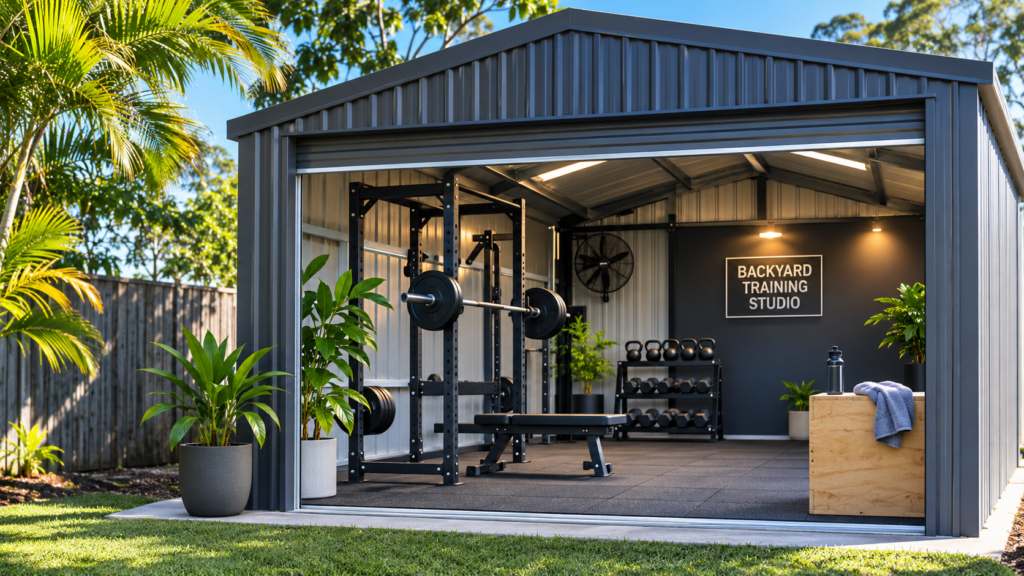
A backyard gym can feel personal and premium, or it can feel like training in someone’s garage. Small details make the difference.- Separate entrance. Clients should not walk through your house to reach the gym.
- Clean bathroom access. Plan for a toilet and handwashing close to the shed.
- Parking. Make it easy and keep neighbors happy.
- Storage. Racks and wall hooks keep the floor clear and safe.
- Branding. A sign, a whiteboard and good lighting make the space feel like a real studio.
Which Equipment Earns Its Space?
Floor space in a shed is limited, so every piece needs to pull its weight. Start with a power rack, an adjustable bench, a barbell with plates, a set of dumbbells or adjustable dumbbells, kettlebells and a rower or bike for conditioning. Skip bulky single-use machines in the first year. Add them later only when your client roster clearly asks for them.Personal Trainer Education
Build Better Programs for Your Private Training Clients
Choosing the right equipment is only one part of running a successful private training business. Trainers also need the skills to assess clients, design effective workouts and deliver professional coaching. Explore the personal trainer certification resources from Fitness Mentors to strengthen your knowledge of exercise programming and client management.
Do Not Skip Insurance and Contracts
Check that your professional indemnity and public liability insurance cover training at your home address. Many policies are written for gym floors or mobile training, not private property. Your client agreement should cover health screening, cancellation rules and what happens if a client is injured on site. Have a lawyer review it once, then use it for every new client.Is a Shed Gym Right for Your Business?
A backyard shed gym is not for every trainer. It suits coaches who want a small, steady roster, a short commute and full control over their training environment. If that sounds like you, start with the right building, sort out the approvals and plan around the heat from day one. Get those three right, and your backyard can become one of the most loyal training spaces in your suburb.Fitness Mentors
Ready to Grow Your Personal Training Business?
Whether you’re opening a backyard studio or building a larger personal training business, professional education can help you deliver better coaching and create a stronger foundation for growth.
Explore Personal Trainer Certification →