Carbohydrate Intake Calculator: How Many Carbs Should You Eat Daily for Fat Loss & Muscle
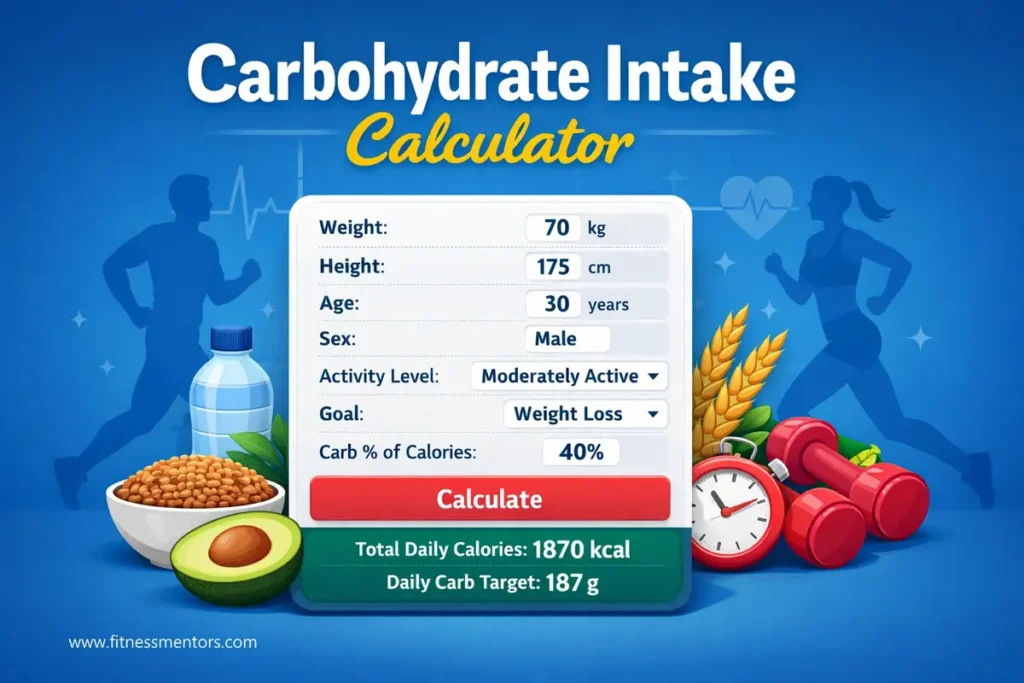

Carbohydrate Intake Calculator
Confused about how many carbs you should eat every day? You’re not alone. Some people say cut them out. Others say eat more for energy. The truth is simple: your body needs the right amount, not too much and not too little.
Carbohydrates are your body’s main fuel source. They power your workouts, help you stay active, and even support brain function. When your carb intake matches your goals, fat loss becomes easier and muscle growth feels stronger. When it doesn’t, progress can slow down fast.
Eating too many carbs can push your calories too high, which may lead to weight gain. But eating too few can leave you tired, weak in the gym, and struggling to stay consistent. That’s why guessing doesn’t work. Your body weight, age, activity level, and goal all matter.
This tool is made for anyone who wants clear direction. Whether you’re trying to lose weight, build muscle, improve athletic performance, or simply maintain your shape, it helps you find a starting number that makes sense for your body.
And the best part? It’s a free carbohydrate intake calculator. No complicated math on your end. Just enter your details, and it gives you a smart estimate based on proven formulas used by fitness professionals.
In the next sections, we’ll break down exactly how it works, how many carbs you may need, and how to adjust your intake for weight loss, muscle gain, or maintenance all in a simple way you can actually use.
What Is a Carbohydrate Intake Calculator?
A carbohydrate intake calculator is a simple tool that helps you figure out how many grams of carbs you should eat each day. Instead of guessing or copying someone else’s diet, it gives you a number based on your own body and goals.
Your carb needs are not the same as your friend’s. They depend on things like your age, weight, height, activity level, and whether you want to lose weight, build muscle, or maintain your current shape. This calculator takes all of that into account.
Here’s how it works in a simple way. First, it estimates how many calories your body needs each day just to function and move around. Then it adjusts that number based on how active you are. After that, it sets your calorie target depending on your goal. Once your total daily calories are clear, it calculates how many of those calories should come from carbohydrates. Since each gram of carbs has 4 calories, it converts that into an easy-to-follow grams-per-day number.
That’s why using a free carbohydrate intake calculator is much better than guessing. When you guess, you might eat too many carbs and slow fat loss. Or you might cut them too low and feel tired, weak, and hungry all the time. A calculator gives you a smart starting point that fits your body instead of random advice from social media.
It doesn’t mean the number is perfect forever, but it gives you a clear direction. From there, you can adjust slowly based on your results and how you feel.
How Many Carbs Per Day Do You Really Need?
There isn’t one magic number that works for everyone. Your daily carb intake depends on your body size, how active you are, and what your goal is. But we can use some simple guidelines to give you a smart starting point.
General Carb Recommendations
For most healthy adults, carbohydrates usually make up about 45–65% of total daily calories. That’s a balanced range that supports energy, workouts, and normal body function.
If you’re very active or training hard, you may need more. If your goal is fat loss, you may sit toward the lower end of that range.
Carbs as a Percentage of Calories
One of the easiest ways to calculate carbs is by using a percentage of your total calories.
Here’s a simple example:
If you need 2,000 calories per day and choose 40% from carbs:
- 40% of 2,000 = 800 calories from carbs
- Each gram of carbs has 4 calories
- 800 ÷ 4 = 200 grams of carbs per day
That means your daily carb intake would be about 200 grams.
For weight loss, many people do well around 35–45% of their calories from carbs. So if you’re wondering how much carbs per day to lose weight, the answer depends on your calorie target. Once calories are reduced slightly, carbs are adjusted within that lower range while keeping enough to support energy and workouts.
Grams Per Kilogram of Body Weight
Another simple method is based on body weight.
- Light activity: 3–5 grams per kilogram
- Moderate training: 4–6 grams per kilogram
- Intense training or athletes: 5–7+ grams per kilogram
For example, if you weigh 70 kg and train moderately:
70 × 4–6 = 280–420 grams per day
If fat loss is the goal, you would stay toward the lower end of that range.
In short, the right amount of carbs depends on your calories, activity, and goal. That’s why using a calculator gives you a number that fits your body instead of following a random diet plan.
How the Calculator Works (Step-by-Step)
The calculator may look simple on the outside, but it follows a clear and proven process behind the scenes. Let’s break it down in an easy way so you understand exactly how your number is created.
Step 1 – Calculate Your Basal Metabolic Rate (BMR)
First, the calculator finds your Basal Metabolic Rate, or BMR. This is the number of calories your body burns just to stay alive breathing, pumping blood, and keeping your organs working.
It uses the Mifflin-St Jeor formula, which is widely trusted in the fitness and nutrition world.
For men:
10 × weight (kg) + 6.25 × height (cm) – 5 × age + 5
For women:
10 × weight (kg) + 6.25 × height (cm) – 5 × age – 161
This gives your base calorie number before exercise or daily movement is added.
Step 2 – Adjust for Activity Level
Next, the calculator adjusts that number based on how active you are.
Here’s what that looks like in real life:
- Sedentary (little to no exercise) = × 1.2
- Lightly active (1–3 workouts per week) = × 1.375
- Moderately active (3–5 workouts per week) = × 1.55
- Very active (hard training most days) = × 1.725
- Extra active (athletes or physical jobs) = × 1.9
If you sit most of the day, your body burns fewer calories.
If you train hard or move a lot, you burn more.
This step gives your total daily calorie needs for maintenance.
Step 3 – Adjust for Your Goal
Now the calculator adjusts calories depending on what you want to achieve.
For weight loss:
Calories are reduced slightly, usually by 10–20%. This creates a steady calorie deficit without cutting too aggressively.
For muscle gain:
About 500 calories are added to support growth and recovery.
For maintenance:
Calories stay the same. This helps you maintain your current weight and performance.
Step 4 – Convert Calories Into Grams of Carbohydrates
Once total calories are set, the calculator figures out how many of those calories should come from carbohydrates.
Each gram of carbohydrate contains 4 calories.
Here’s a simple example:
If your adjusted daily calories are 2,000 and 40% comes from carbs:
- 40% of 2,000 = 800 calories from carbs
- 800 ÷ 4 = 200 grams of carbs per day
That final number 200 grams becomes your daily carb target.
And that’s it. No guessing. No random diet rules. Just a step-by-step method that matches your body, activity level, and goal.
Carbohydrate Intake Calculator for Weight Loss
When fat loss is the goal, calories matter most. To lose weight, your body needs to burn more calories than it eats. That’s why a carbohydrate intake calculator for weight loss first reduces your total daily calories by a small, safe amount usually around 10–20%.
Once calories are lowered, carbs are adjusted within a moderate range. Most people do well with about 35–45% of their calories coming from carbohydrates during weight loss. This keeps energy steady while still allowing fat loss to happen.
If carbs are cut too low, you may feel tired, moody, or weak during workouts. That often leads to poor training sessions and cravings later in the day. On the other hand, if carbs stay too high while calories are not controlled, progress can slow down.
A carbohydrate intake calculator to lose weight helps you find the middle ground. You get enough carbs to support your workouts and daily movement, but not so many that it stops fat loss. The goal is to balance steady energy, controlled hunger, and sustainable results.
For most people, slow and steady fat loss works best. Moderate carbs, proper protein, and a small calorie deficit usually beat extreme low-carb dieting in the long run.
Carb Intake for Muscle Growth and Bodybuilding
If your goal is building muscle, carbs play a much bigger role. When you train hard, your body uses stored carbohydrates called glycogen for energy. The more intense your workouts, the more glycogen you burn.
That’s why a carbohydrate intake calculator bodybuilding plan usually recommends higher carb levels. More training means more fuel is needed to recover and grow.
For muscle gain, carbs often make up around 40–55% of total calories, depending on how intense your workouts are. This supports strength, performance, and faster recovery between sessions.
Timing can also help. Eating carbs before a workout gives you energy to train harder. Eating carbs after a workout helps refill glycogen stores and start the recovery process. This makes it easier to train again the next day without feeling drained.
In simple terms, if fat loss needs control, muscle growth needs fuel. The right carb level depends on how hard you train and how much muscle you want to build.
Carb Intake Recommendations for Women
Women often respond differently to extreme dieting compared to men. Carbohydrates play an important role in supporting hormone balance, energy levels, and overall well-being.
When carb intake drops too low for too long, it can affect mood, sleep, workout performance, and even menstrual health. That’s why cutting carbs very aggressively is not always the best approach.
A carbohydrate intake calculator female plan considers body weight, activity level, and goal before setting a number. Most active women do well with moderate carb intake rather than extreme low-carb diets. This helps maintain steady energy throughout the day and supports proper recovery from workouts.
Carbs also help manage stress hormones. When you train hard or live a busy life, your body needs fuel. Too little fuel can increase fatigue and make fat loss harder instead of easier.
The key is balance enough carbs to support hormones and performance, while keeping calories aligned with your goal.
Carb Needs by Age
Your age can also influence how your body handles carbohydrates. That’s why a carbohydrate intake calculator by age can be helpful.
Younger Adults
Younger people, especially those who are active, usually have higher energy demands. Their metabolism tends to be faster, and they may handle higher carb intake well, especially if they train regularly.
Middle Age
As we move into our 30s and 40s, metabolism may slow slightly. Activity levels sometimes drop due to work and family life. Carb intake may need to be adjusted to match movement and training levels. Staying active becomes even more important.
Older Adults
For older adults, maintaining muscle mass is key. Moderate carbs combined with enough protein can support strength and daily function. Very low-carb diets may lead to low energy, which can reduce movement and exercise.
At every age, the right carb amount depends more on activity and lifestyle than just the number on your birthday.
Best Types of Carbohydrates for Fat Loss and Performance
Not all carbs are the same. The type you choose makes a big difference.
Complex Carbs
These are found in whole foods like brown rice, oats, sweet potatoes, beans, fruits, and vegetables. They digest slowly, provide steady energy, and help keep blood sugar stable. They also contain vitamins and minerals your body needs.
For fat loss and steady performance, complex carbs should make up most of your intake.
Simple Carbs
Simple carbs digest quickly. These include foods like white bread, sugary snacks, juice, and candy. While they are not ideal as your main carb source, they can be useful around workouts.
After intense training, simple carbs can help refill glycogen stores faster and support recovery.
Fiber
Fiber is a type of carbohydrate that supports digestion and fullness. It helps control hunger and keeps your gut healthy. Foods high in fiber are often better choices for fat loss because they keep you satisfied longer.
Timing Tips
Carb timing can also help performance. Eating carbs before workouts gives you energy. Eating them after workouts helps recovery. Some people also prefer eating more carbs in the evening to feel relaxed and satisfied.
In simple terms, focus on whole, fiber-rich carbs most of the time. Use simple carbs smartly when needed. And match your intake to your activity and goal.
Are Carbs Bad for You?
Carbs often get blamed for weight gain, belly fat, and low energy. But the truth is simple carbs are not bad on their own. Problems usually happen when they are eaten in excess or come from low-quality sources.
Common Myths
One big myth is that carbs automatically turn into fat. That’s not true. Weight gain happens when you eat more total calories than your body burns, not just because of carbs.
Another myth is that you must go very low carb to lose weight. Many people lose fat successfully while still eating moderate carbs. The key is total calories, protein balance, and consistency.
The “No Carbs at Night” Myth
You may have heard that eating carbs at night causes fat gain. This idea sounds logical, but it’s not how the body works. Your body still burns calories at night while you sleep.
What matters most is your total daily intake. If your calories are controlled, eating carbs in the evening will not automatically lead to fat gain. In fact, some people feel more satisfied and sleep better when they include carbs at dinner.
Sugar vs Whole Carbs
Not all carbs are equal. Whole carbs like fruits, vegetables, rice, oats, and potatoes come with fiber and nutrients. They digest slower and keep you fuller longer.
Added sugars, soda, and heavily processed snacks are easier to overeat because they digest quickly and don’t keep you full. That’s usually where problems begin.
So carbs aren’t the enemy. The type, amount, and your overall calorie balance matter much more.
How to Track Carbs in Your Food
Once you know your target number, the next step is tracking it in real life. This may sound hard at first, but it gets easier quickly.
Food Labels
Most packaged foods show carbohydrates on the nutrition label. Look for “Total Carbohydrates.” This number is usually listed in grams per serving.
Pay attention to serving size. If you eat double the serving, you’re eating double the carbs.
Food Scale
A food scale helps you measure portions more accurately. Instead of guessing how much rice or pasta you’re eating, you can weigh it in grams. This removes guesswork and improves accuracy, especially in the beginning.
Apps
There are many free apps that track calories and macros. You simply enter your food, and the app shows your carb intake for the day. Over time, you’ll start to recognize common portions without needing to track every bite.
Beginner Tips
- Start simple. Track just one or two meals per day at first.
- Focus on consistent portion sizes.
- Don’t stress about being perfect. Aim to be close.
- Review your progress every few weeks and adjust if needed.
Tracking isn’t about being obsessive. It’s about learning how much you’re actually eating so your results match your goals.
Common Mistakes When Adjusting Carb Intake
Even with the best tools, people sometimes make mistakes that slow results. Knowing what to avoid can save you time and frustration.
Going Too Low Too Fast
Dropping carbs too quickly can leave you tired, weak, and hungry. Your workouts may suffer, and your body may hold onto fat instead of burning it. Gradual adjustments are safer and more effective.
Ignoring Protein
Carbs are important, but protein is just as critical. Skipping protein can make you lose muscle while trying to lose fat. Always balance your macros for better results.
Liquid Calories
Smoothies, juices, and sugary drinks add carbs quickly without filling you up. These “hidden” carbs can sneak past your daily target and slow fat loss.
Not Adjusting When Weight Stalls
Your carb needs may change over time. If you stop losing weight or notice energy drops, don’t keep the same carb intake blindly. Recalculate and adjust based on your current activity, weight, and goal.
Why Trust This Calculator?
This carbohydrate intake calculator isn’t just random numbers, it’s backed by decades of professional experience. Eddie Lester, BS Kinesiology, NASM-CPT, CES, PES, FNS, MMAS, WLS, FM-CPT, ACE-CPT, NFPT-CPT, is a Master Personal Trainer from Los Angeles and the Founder and CEO of Fitness Mentors. With over 20 years in the fitness industry, he has helped thousands of clients with fat loss, muscle gain, and overall health.
Eddie has multiple certifications across personal training, corrective exercise, and sports performance, and he has also spent years teaching future trainers at a vocational college. He is the author of Business and Sales: The Guide to Success as a Personal Trainer, sharing practical knowledge from his own experience.
This calculator uses proven formulas, evidence-based methods, and practical adjustments used by professional trainers worldwide. It’s designed to give you a personalized starting point for your carb intake so you can reach your goals safely and effectively.
With Eddie’s guidance and years of hands-on experience, you can trust that this free carbohydrate intake calculator is both reliable and easy to use.
For even better results, check out our related tools: TDEE calculator, protein intake calculator, and macro calculator to see how all your nutrients fit together.
FAQs:
How much carbs per day to lose weight?
It depends on your calories, activity level, and goal. Most people aiming for fat loss do well with 35–45% of calories from carbs. A carbohydrate intake calculator for weight loss can give you a personalized number in grams per day so you stay energized while losing fat.
Is 100 grams of carbs low?
For most adults, 100 grams is considered low, especially if you exercise regularly. Low-carb can work for some, but too few carbs may leave you tired, weak, and hungry. Using a free carb calculator helps you find the right moderate range.
Can I eat carbs at night?
Yes. Eating carbs at night does not automatically cause fat gain. Total daily intake matters more than timing. Some people even find evening carbs help them feel satisfied and support recovery from workouts.
How many carbs per kg of body weight?
A simple method is based on weight:
- Light activity: 3–5 g/kg
- Moderate training: 4–6 g/kg
- Intense training: 5–7+ g/kg
This approach works well alongside a carbohydrate intake calculator to keep your intake aligned with your goals.
Are carbs bad for belly fat?
No. Carbs alone do not cause belly fat. Excess calories, low activity, and poor food quality are what lead to fat gain. Choosing whole carbs and balancing your diet prevents this.
What happens if I eat too many carbs?
Eating more carbs than your body needs can add extra calories, which may lead to fat gain over time. Using a carbohydrate intake calculator helps prevent accidental overconsumption.
Is this a free carb calculator?
Yes! This tool is completely free and gives you a personalized starting point based on your body, activity level, and goals.

Adeel Anwar
Read more from the category
![TDEE Calculator: Why Most Calorie Calculations Are Wrong [Expert Analysis]](https://www.fitnessmentors.com/wp-content/uploads/2025/10/TDEE-Calculator-Why-Most-Calorie-Calculations-Are-Wrong.webp)
TDEE Calculator: Why Most Calorie Calculations Are Wrong [Expert Analysis]
Learn Body Mass (LBM) Calculator for Body Fat Percentage