The 5 Best Continuing Education Courses for Personal Trainers

- All of our content is written by humans, not robots. Learn More
After 20+ years as a personal trainer in Los Angeles, holding 10 certifications and specializations, and teaching personal training at the vocational college level, I’ve seen firsthand what separates trainers who thrive from those who stagnate: a commitment tocontinuing education.
CEUs (Continuing Education Units) aren’t just a box to check for recertification. The right continuing education courses sharpen your skills, open new revenue streams, and build the credibility that keeps clients choosing you over every other trainer in the room.
At Fitness Mentors, we’ve helped thousands of personal trainers navigate their CEU requirements without wasting time or money on courses that don’t move the needle. This guide breaks down the 5 best continuing education courses for personal trainers in 2026ranked not just on content quality, but on real-world career impact.
How to Choose the Right Continuing Education Course: The 3P Framework
Before you invest in any CEU program, run it through three filters I call the 3P Framework:
- Purpose — What career outcome are you chasing?Are you trying to specialize in nutrition, corrective exercise, or online coaching? Do you need to shore up your business skills and close more clients? Every CEU you earn should advance a specific career goal. If you can’t articulate why you’re taking a course, it’s probably not the right course.
- Population — Who are your clients?A trainer working primarily with post-rehabilitation clients needs very different knowledge than one coaching collegiate athletes. Match your CEU investments to the people you actually train — or the people you want to train. This single filter eliminates 80% of the noise in the “best CEU courses” conversation.
- Passion — What topics genuinely excite you?Education sticks when you care about the subject. If you’re forcing yourself through material that bores you, you won’t apply it — and your clients won’t benefit. Passion-driven learning compounds over time. Pick courses that light you up.
Practical Considerations: Budget & Timeline
Not all CEUs are equal in cost or time commitment. Quick, affordable online CEUs are ideal for last-minute recertification. In-depth certifications require larger investments but deliver greater specialization and long-term earning potential. Know which situation you’re in before you enroll.


The 5 Best Continuing Education Courses
1. Certified Online Personal Trainer (Fitness Mentors)
The fitness industry has fundamentally shifted. Virtual coaching is no longer a niche it’s a primary revenue channel for trainers who know how to build and market an online business. The Fitness Mentors Certified Online Personal Trainercourse was built for this reality.
This program goes beyond the basics of programming workouts remotely. It equips you with the digital tools, client communication systems, and marketing strategies you need to build a sustainable online fitness business from scratch.
What You’ll Learn:
- How to design personalized online training programs that drive measurable results without in-person supervision
- Client communication, accountability systems, and motivation strategies adapted for virtual coaching
- How to build your fitness brand across social media, apps, and video platforms
- Marketing strategies to attract, convert, and retain virtual clients long-term
Pros:
- Fully online and self-paced-study on your schedule
- Reflects the explosive growth of virtual training demand worldwide
- Includes free introductory modules so you can evaluate fit before committing
- Positions you to build a scalable business beyond local geography
Cons:
- Success requires self-discipline and active marketing implementation
- Less hands-on feedback compared to in-person mentorship
Best For: Trainers who want to expand their coaching beyond the gym floor, build an independent online business, or add remote clients to their existing roster.
2. NASM Certified Nutrition Coach (CNC)
Clients don’t achieve lasting results from training alone and they know it. When you can speak confidently and credibly about nutrition, you become indispensable. The NASM Certified Nutrition Coachis widely considered the gold standard nutrition credential for personal trainers.
This isn’t a surface-level nutrition overview. The CNC combines evidence-based nutritional science with behavioral coaching methodology, giving you the tools to help clients make sustainable dietary changes not just temporary fixes.
What You’ll Learn:
- Macro and micronutrient fundamentals, supplement science, and practical meal planning
- Behavioral coaching techniques to help clients build lasting lifestyle habits
- Nutrition strategies for diverse goals: weight loss, muscle gain, athletic performance, and healthy aging
Pros:
- College-level, fully online curriculum at a self-paced format
- Provides all 20 CEUs needed for NASM recertification in a single course
- Adds a high-value service line (nutrition coaching) without requiring a separate RD credential
- Supported by robust case studies and real-world client scenarios
Cons:
- Higher cost (~$1,000) with limited enrollment windows per year
- Primarily grounded in traditional nutrition science; less coverage of emerging dietary research
Best For:Trainers who want to specialize in nutrition coaching, differentiate from competitors, or comprehensively address the client results gap that exercise alone can’t close
3. Business and Sales: The Guide to Success as a Personal Trainer (Fitness Mentors)
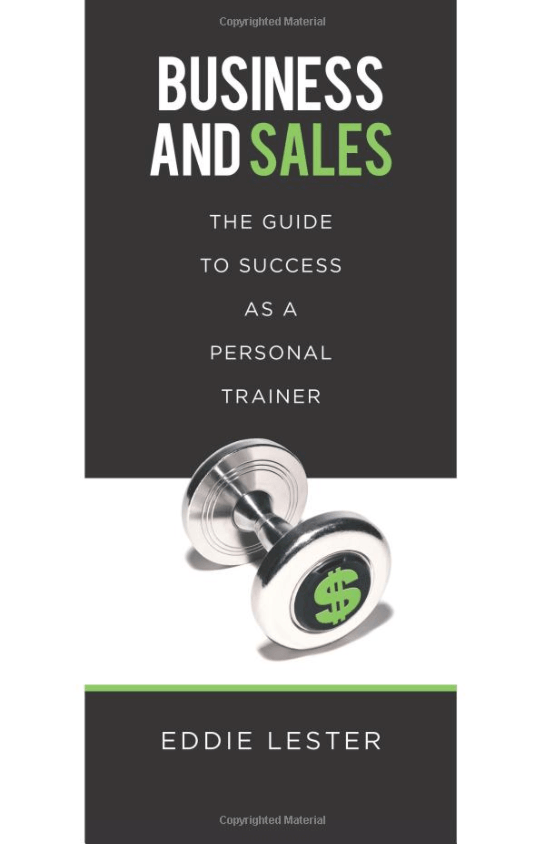
I wrote this course. I wrote it because it’s the course I wish I had when I started and because business skills are the single most overlooked gap in most trainers’ education.
No matter how good your programming is, you won’t build a career if you can’t attract clients, convert inquiries into paying members, and retain them long-term. This course directly addresses the financial engine of your personal training business.
What You’ll Learn:
- A step-by-step system for generating leads and converting them into paying clients
- Sales techniques designed specifically for the fitness industry without feeling pushy or transactional
- Business documentation and operational systems to run your practice like a professional
- How to build a personal training brand with long-term stability
Pros:
- Affordable ($349) with a fully online, home-study format
- Provides all CEUs needed for recertification
- Actionable from Day 1 strategies work for both new trainers and veterans
- Earns you the Fitness Sales Specialist (FSS)designation upon completion
Cons:
- Requires active implementation knowledge without action doesn’t close clients
- Less exercise science content than other CEU options (intentionally that’s not what this course is for)
Best For:Trainers who are technically skilled but struggling to grow their client base, increase revenue, or build a business that doesn’t depend on the next referral.
4. Pain Management Specialist (Fitness Mentors)
Most trainers will eventually work with clients dealing with chronic pain, postural dysfunction, or movement limitations and most trainers are not adequately prepared for it. The Pain Management Specialistcourse changes that.
This program gives you a systematic framework for assessing posture, identifying muscle imbalances, and designing corrective exercise protocols that reduce pain and restore quality movement. It’s one of the highest-impact CEU investments for trainers working with older adults or general population clients.
What You’ll Learn:
- How to assess posture and movement patterns to identify root causes of pain and dysfunction
- Corrective exercise strategies to address common pain presentations safely and effectively
- How to improve client flexibility, strength balance, and overall movement quality
- The muscle mechanics and anatomical foundations that underpin pain management
Pros:
- Comprehensive corrective exercise and pain management curriculum
- Fully online and self-paced with one year of access to complete the program
- Includes all CEUs needed for recertification
- Immediately applicable with general population and older adult clients
Cons:
- $399 investment (discounts available through Fitness Mentors)
- Challenging final exam that requires genuine study
- More demanding time commitment than shorter CEU options
Best For:Trainers specializing in older adults, post-rehabilitation populations, or anyone who wants to be the trainer clients with pain trust above all others.
5. NCSF Strength Coaching Specialist
If your goal is to work with competitive athletes at the collegiate or professional level the NCSF Strength Coaching Specialistis the credential that opens those doors. This is not an introductory strength and conditioning course. It’s a rigorous, sport-specific certification that earns respect in athletic performance circles.
What You’ll Learn:
- How to design sport-specific conditioning programs for football, basketball, baseball, hockey, track, and field
- Advanced periodization models, athletic assessment protocols, and performance testing
- The sport science principles that underpin elite-level training
Pros:
- Highly respected in collegiate and professional athletic training communities
- In-depth coverage of advanced strength and conditioning science
- Positions you to compete for team and institutional training contracts
Cons:
- $399 cost; requires a bachelor’s degree to sit for the exam
- Significant study hours and a rigorous final exam
- Requires ongoing CEUs every two years to maintain certification
Best For:Trainers pursuing careers with sports teams, collegiate programs, or high-performance athletes who demand coaching at the highest level.
Additional CEU Options & Resources
Beyond these five core certifications, Fitness Mentors offers a range of specialized CEU courses for trainers who want to go deeper in specific niches:
Specialized Populations:Seniors and older adults (mobility, balance, fall prevention), pre/postnatal training (safe modifications for expecting and postpartum clients), and youth fitness.
Movement Quality:Functional training and corrective exercise courses that improve client movement patterns, prevent injury, and extend training longevity.
Free CEU Options:For trainers approaching a recertification deadline, several short-form online courses cover introductory nutrition, corrective exercise fundamentals, and fitness safety and count toward CEU requirements. These are ideal for filling small gaps without a major time or financial commitment.
How to Verify Course Accreditation
Not all CEU providers are equal. Before enrolling anywhere, confirm that the course is recognized by your certifying organization (NASM, ACE, NCSF, ISSA, NFPT, or equivalent), clearly states the number of CEUs provided, and issues a verifiable certificate of completion. When in doubt, check directly with your certifying body.
Frequently Asked Questions
How many CEUs are required per year?
Most personal trainer certifications require 20 CEUs every two years, though requirements vary by organization. Always confirm directly with your certifying body. Keeping a running list of completed courses makes it easy to track where you stand.
Can I complete CEUs entirely online?
Yes. All five courses highlighted in this guide are available online. Self-paced, fully online CEU programs are now the standard and for working trainers managing full client schedules, that flexibility is essential.
How do I balance CEUs with a full-time training schedule?
Schedule dedicated study blocks during off-peak training hours. Choose online, self-paced formats that let you work at your own pace. Break larger courses into manageable modules and track progress weekly. With the right course structure, most trainers can complete CEU requirements without disrupting their income or client relationships.
Which CEUs add the most value to my career?
The highest-value CEUs are the ones aligned with your specific career goals and client base. Nutrition coaching, corrective exercise, business and sales, and specialized population training (seniors, pre/postnatal, athletes) consistently deliver the strongest return both in client outcomes and income potential. When evaluating any program, prioritize courses accredited by recognized fitness organizations and taught by practitioners with documented real-world experience

Eddie Lester
Read more from the category