Answering Client Pre-Workout Questions Within Scope
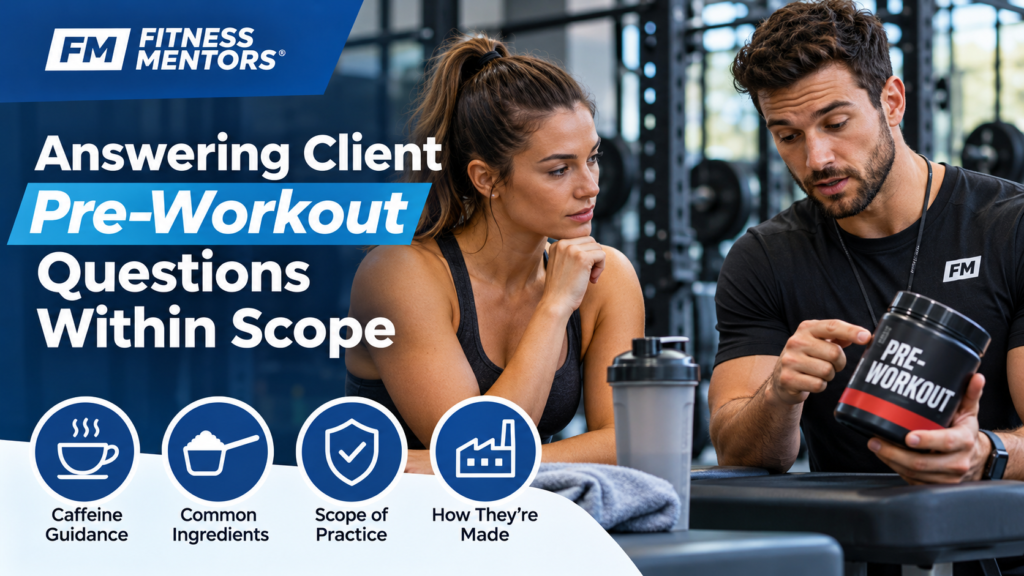

A client arrives for a 6 a.m. session, shaker in hand, and asks whether the new tub they bought is any good. A week later another wants to know why their heart races during warm-ups. These questions land on trainers because you are the expert they see most often. How you answer affects their safety and your professional standing.
Start with one fact clients rarely know. Most pre-workout tubs are not made by the company whose logo is on the front. A brand usually hires a supplement contract manufacturer to blend, fill and test the product to its own specification. The caffeine dose and the ingredient mix are therefore the brand’s decisions, and they vary widely.
Where Does a Trainer’s Scope End?
Scope of practice is the set of tasks your credential and local law allow you to perform. For most certified personal trainers, that means general, evidence-based information, not individual prescriptions. The line between a coach, a nutritionist and a registered dietitian matters here, because only some of those roles can give tailored advice.
Inside your scope, you can usually:
- Share what a public health body says about caffeine intake.
- Explain what a common ingredient is and why it appears in a product.
- Point out how timing and dose might affect a session.
- Help a client read a label they already own.
Outside your scope, you should refer:
- Anyone with a heart condition, high blood pressure or an anxiety disorder.
- Clients who are pregnant, breastfeeding or taking prescription medicine.
- Requests to design a personal supplement plan or treat a symptom.
What Should You Know About Caffeine Numbers?
Caffeine is the main active ingredient in most pre-workouts, and it is the one clients underestimate. The FDA’s caffeine guidance cites 400 milligrams a day as an amount not generally linked to negative effects in healthy adults. It also stresses wide variation in how sensitive people are and how fast they clear it.
That 400 mg figure covers the whole day. A client who drinks 2 coffees before work and then takes a full scoop at 5 p.m. can pass it without noticing. Ask them to add up every source, including energy drinks and gels.
Three practical points help in session:
- Check the label for milligrams per serving, not just “energy blend” wording.
- Suggest a half scoop for anyone new to a product.
- Remind evening trainees that caffeine taken late can cut into sleep and recovery.
Which Other Ingredients Come Up Most?
Clients often ask about the tingling or the “pump” more than the caffeine. A short, accurate answer builds trust. For the research behind each ingredient, the NIH Office of Dietary Supplements keeps a plain-language fact sheet on exercise supplements for consumers.
The ones you will hear about most:
- Beta-alanine is an amino acid that can raise muscle carnosine. It often causes a harmless pins-and-needles feeling in the face and hands.
- Citrulline is an amino acid linked to blood flow. It is the same ingredient sold in many nitric oxide boosters, so clients may double up without realizing.
- Creatine is a compound stored in muscle that supports short, intense efforts. It works through daily intake, so timing it before a session matters less than taking it consistently.
- Proprietary blends list ingredients without each dose, which makes any comparison guesswork.
Why Do Two Tubs With the Same Claims Differ?
This is where the manufacturing model explains a lot. Superior Supplement Manufacturing, a US contract maker, describes two routes on its site. A custom formula is developed for one brand and takes roughly 8 to 10 weeks including development. A private label product uses a ready-made formula with the brand’s label and can reach market in about 4 to 6 weeks.
So 2 tubs from different brands might share a stock base, or they might be completely different recipes. The label is the only clue a client has. The maker states its typical minimum run at 1,500 to 2,500 units of finished product, which is why small brands carry so few flavors.
Quality systems also sit with the factory. Superior’s site lists certifications such as NSF, SQF and ISO across its network, and it notes that certifications vary by facility. What should a client do with that? Look for an independent sport certification mark on the tub, because the brand name alone says little about where it was made.
A Script for the Next Client Who Asks
Clients remember how you handled the question more than the details. A calm, repeatable approach works best.
- Ask what they are taking, how much and when.
- Read the label together and total the caffeine for the day.
- Share one or two facts from a public source, such as the FDA or NIH.
- Note any warning signs, such as palpitations, dizziness or poor sleep.
- Refer to a physician or dietitian when health conditions or medicines are involved.
- Record the conversation in your client notes.
That last step protects you. A short note that you shared general information and referred onward shows you stayed in scope.
Should a Trainer Ever Sell Pre-Workout?
Some trainers earn affiliate income on supplements, and a few launch their own tub. Either way, the client now sees a sales pitch inside a coaching relationship. Disclose any commission clearly, and never make a product a condition of training.
If you put your own name on a product, you take on the brand owner’s duties for its label and claims. That is a business decision for later in your career. Your first job is to give clients honest, scope-safe guidance.
Frequently Asked Questions
Can a Personal Trainer Recommend a Pre-Workout?
A trainer can share general information about ingredients and public guidance. Recommending a specific product or dose for an individual usually falls outside a CPT’s scope, so refer those questions to a dietitian or physician.
How Much Caffeine Is Too Much Before Training?
The FDA cites 400 mg a day for healthy adults as generally not linked to negative effects. Count every source that day, and start new products at a half serving.
Why Does Pre-Workout Make Clients Itchy?
That tingling usually comes from beta-alanine. It is common and harmless for most people, and smaller split doses reduce it.
Who Actually Makes Most Pre-Workout Supplements?
Many brands use contract manufacturers that blend and package the product to the brand’s formula. The brand owns the label, and the factory handles production and testing

Eddie Lester
Read more from the category

How to Choose a Gym in Cambridge, MA: A Trainer’s Checklist

Why More Fitness Centers Are Adding Infrared Saunas to Their Facilities