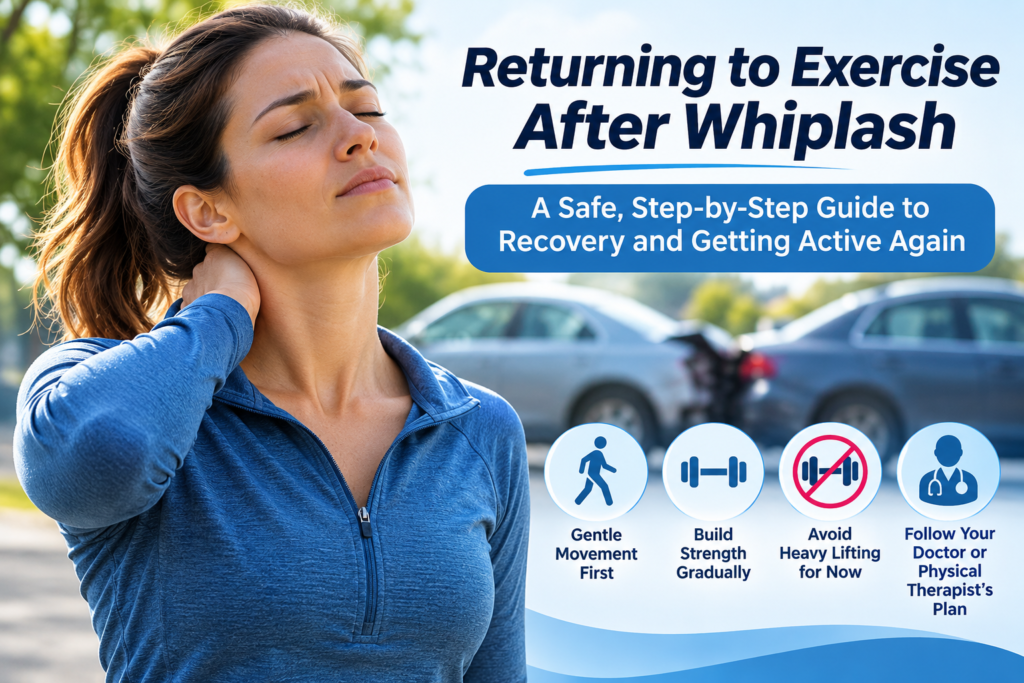


A safe return to exercise after whiplash usually means starting with gentle neck movement and walking within the first days, adding activity in small steps as pain allows, and holding off on heavy lifting and contact sports until a doctor or physical therapist clears them. Recovery timelines vary, so progress should follow symptoms, not the calendar.
Treatment for a crash-related neck injury often involves doctor visits, imaging, and physical therapy, and many people want to know how no-fault benefits cover medical care in Michigan while they recover. Whatever the payment source, the steps below describe how clinicians generally approach a gradual return to movement.
What is whiplash and which symptoms should you watch for?
Whiplash is a neck injury caused by a rapid back-and-forth movement of the head, most often in a rear-end car crash. It strains the muscles, ligaments, and other soft tissues of the neck, and it can also happen in falls and sports collisions.
Mayo Clinic notes that symptoms usually develop within days of the injury and may include neck pain and stiffness, pain that worsens with movement, loss of range of motion, headaches that start at the base of the skull, and sometimes dizziness, fatigue, or trouble concentrating. Because symptoms can arrive late, a person who felt fine at the scene may be sore two days later.
Mayo Clinic advises seeing a doctor for any neck pain or other symptoms after a car accident, sports injury, or other trauma, since a prompt exam can rule out more serious injuries and set up a treatment plan. Recovery is hard to predict, and people whose first symptoms were intense or started quickly, including severe pain and very limited range of motion, may be more likely to have longer-lasting pain.
How soon can you return to exercise after whiplash?
Many people can begin gentle movement within the first few days, while a return to strenuous exercise generally waits until pain and motion have improved and a clinician agrees. The goals of whiplash treatment, according to Mayo Clinic, are to control pain, restore normal range of motion in the neck, and get the person back to regular activities.
In the early stage, doctors often suggest relative rest instead of strict bed rest, since long periods of inactivity or a neck collar worn for too long can delay recovery. Mayo Clinic says a doctor will likely prescribe stretching and movement exercises to do at home, sometimes after applying moist heat or taking a warm shower to loosen the muscles.
A common progression looks like this, though each step should be adjusted by a clinician who knows the injury:
- First days: short walks, gentle neck movements within a comfortable range, and attention to posture
- Following weeks: slow range-of-motion exercises, light stretching, and low-impact activity such as easy walking or stationary cycling if cleared
- As strength returns: supervised strengthening for the neck and upper back, followed by a gradual return to regular workouts
- Last to return: heavy overhead lifting, contact sports, and activities with sudden jolts
The rule that holds at every stage is to work inside a pain-free or mildly uncomfortable range, stop if pain spikes, and let the next day’s symptoms guide whether to add more or hold steady.
Which activities are usually safe and which should wait?
Low-impact movement that keeps the neck relaxed is usually the best place to start, while activities that jar or load the neck should wait. Walking, gentle stretching, and slow shoulder rolls are common first choices because they keep blood flowing without stressing healing tissue.
Activities that often need to wait include running on hard surfaces, high-impact classes, heavy weightlifting, overhead presses, football, hockey, martial arts, and anything with a risk of falls or collisions. Even gym machines that seem safe can strain the neck if the head is held in a fixed forward position for long sets.
Daily habits support the exercise plan. Back sleeping or side sleeping with a pillow that keeps the neck in a neutral position, regular breaks from desk work, and raising a computer screen to eye level reduce flare-ups. Heat or ice, as a doctor recommends, can ease soreness before and after movement.
When does whiplash call for physical therapy or a doctor’s review?
Physical therapy is worth discussing when pain lingers, range of motion stays limited, or a person needs help doing the exercises correctly. Mayo Clinic says a physical therapist can teach range-of-motion exercises and help prevent further injury.
Some symptoms should prompt a call to a doctor right away, including pain that spreads into the shoulders or arms, numbness, tingling, or weakness in the arms or hands, severe or worsening headaches, vision changes, trouble with balance or walking, or confusion. A forceful crash can also cause a concussion alongside whiplash, which is another reason to get checked.
Most people with whiplash improve within a few weeks with a treatment plan that includes pain relief and exercise, according to Mayo Clinic, but some develop long-term pain. A person still struggling after several weeks deserves a follow-up visit rather than a longer stretch of waiting.
Keeping a simple log helps at those appointments. Note which activities were tried, how the neck felt the next day, what eased the pain, and what made it worse. Bring that log, along with a list of medications and any imaging results, to each visit so the care team can adjust the plan and clear the next level of activity safely.