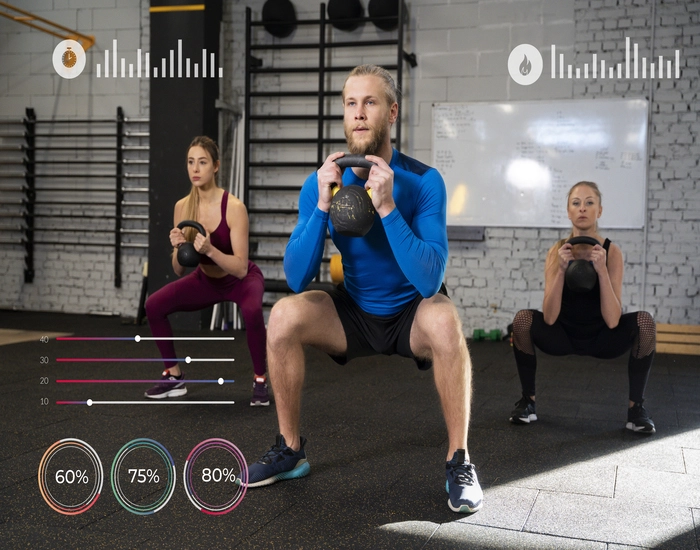


The fitness industry has changed dramatically over the past few years. Today’s members no longer want to be restricted by operating hours. They expect to work out before sunrise, after midnight, or whenever their schedule allows. As a result, 24-hour gyms have become one of the fastest-growing segments of the global fitness industry, giving members the flexibility to exercise on their own terms.
The numbers highlight why this shift matters. The global health and fitness club market is valued at well over $100 billion, while millions of people now hold gym memberships worldwide. Industry research also shows that nearly 50% of new gym members leave within their first six months, making convenience and overall member experience just as important as the quality of equipment. At the same time, commercial gyms continue to lose thousands of dollars annually due to unauthorized access, equipment theft, membership sharing, and vandalism, especially during unstaffed hours.
This presents a new challenge for gym owners. Extending operating hours creates new revenue opportunities, but it also increases security risks if facilities continue relying on traditional keys, manual check-ins, or outdated card systems.
This is why a modern gym access control system has become a necessity rather than a luxury. It helps fitness centers automate member entry, strengthen security, reduce operational costs, and deliver a seamless experience around the clock.
In this article, we’ll explore why access control has become one of the most important investments for modern 24-hour fitness centers and how it supports long-term business growth.
1. 24-Hour Gyms Need More Than Traditional Locks and Keycards
Running a gym that never closes is very different from operating a business during standard working hours.
Once staff leave for the day, the responsibility of protecting members, equipment, and the facility shifts entirely to the security infrastructure. Traditional keys, shared PINs, or standalone keycard systems were never designed for this type of environment.
One of the biggest problems with older systems is that they provide access but very little accountability. If a keycard is shared with someone else, a PIN is passed between friends, or an unauthorized visitor enters behind a paying member, gym owners often have no way of knowing until an incident has already occurred.
For a business filled with expensive treadmills, strength machines, free weights, and electronic equipment, this creates unnecessary financial risk.
A modern access control system addresses these limitations by verifying who enters the building, recording every access event, and ensuring only authorized members can enter during approved hours.
This creates several operational advantages:
- Members can enter independently without requiring front-desk staff.
- Owners gain a complete digital record of every entry and exit.
- Access permissions can be updated instantly as memberships change.
- Unauthorized access attempts become easier to identify and investigate.
Instead of simply locking the front door, the system becomes an active part of the gym’s overall security strategy.
2. Smarter Access Improves Both Security and Member Experience
Modern fitness centers compete on more than equipment and pricing.
Today’s members expect convenience at every stage of their experience, from joining online to entering the facility without waiting in line. A complicated check-in process or limited operating hours can quickly push members toward competitors offering a more seamless experience.
This is where a modern gym access control system creates value beyond security.
Platforms like Coram demonstrate how modern access management is evolving for 24-hour fitness facilities. Rather than relying solely on traditional key fobs, Coram supports secure member access through mobile credentials, cards, or PINs, allowing facilities to automate entry even when no staff are present.
The platform also combines access control with AI-powered video intelligence, detects credential misuse and tailgating, links every access event with matching video footage for faster investigations, protects sensitive areas such as locker rooms through privacy masking, and allows operators to manage multiple gym locations from a centralized cloud dashboard while working with existing readers and IP cameras.
For gym operators, this creates measurable operational improvements:
- Members enjoy fast, self-service access at any time of day.
- Lost keycards and manual check-ins become less common.
- Unauthorized entry becomes significantly more difficult.
- Staff spend less time managing entrances and more time supporting members.
Security improves without making the member experience more complicated, which is exactly what today’s fitness businesses need.
3. Membership Fraud Is More Common Than Many Gym Owners Realize
One of the biggest hidden costs for 24-hour fitness centers isn’t equipment maintenance or utilities.
It’s membership fraud.
Many gyms experience situations where active members share access credentials with friends or family members. Others face issues with expired memberships still being used because credentials were never removed from the system.
While each incident may appear minor, the cumulative financial impact can be significant over the course of a year.
Consider a gym charging $60 per month. If only 20 unauthorized users gain regular access through shared credentials, the facility could lose more than $14,000 in annual membership revenue, not including additional wear on equipment and increased operating costs.
Traditional systems struggle to identify these situations because they simply record credential activity.
Modern access control systems provide much greater visibility by combining credential management with activity monitoring. They can identify unusual access behavior, highlight repeated credential misuse, and maintain detailed records that help operators investigate suspicious incidents more efficiently.
This level of accountability discourages misuse while protecting legitimate paying members who expect a secure and well-managed facility.
4. Protecting High-Value Equipment Requires Better Visibility
A modern fitness center represents a significant financial investment.
Commercial treadmills often cost several thousand dollars each, while strength equipment, cable machines, recovery devices, and electronic fitness systems can quickly push equipment investments into hundreds of thousands of dollars.
Replacing stolen or damaged equipment is only part of the cost.
When equipment becomes unavailable, member satisfaction declines, repairs interrupt operations, and facilities may experience insurance claims or unexpected downtime.
Modern access control contributes to equipment protection by creating a complete picture of facility activity.
Instead of wondering who entered during overnight hours, operators can review precise access records, verify movement using integrated video, and quickly understand what occurred if an incident takes place.
This level of visibility not only improves investigations but also acts as a strong deterrent. People are far less likely to misuse equipment or enter restricted storage areas when they know every access event is monitored and recorded.
5. Centralized Access Management Makes Multi-Location Growth Easier
Many successful gyms don’t stop at a single location. As memberships grow, operators often expand into multiple neighborhoods, cities, or even states. While this creates new revenue opportunities, it also introduces a new operational challenge: managing access consistently across every facility.
Without a centralized system, each location often ends up operating independently. Managers manually issue credentials, update member permissions, and resolve access issues separately.
This not only consumes valuable administrative time but also increases the likelihood of errors, such as inactive members retaining access or new members waiting for credentials to be activated.
A modern access control system simplifies this process by allowing operators to manage every location from one platform.
Instead of switching between different systems, administrators can:
- Grant or revoke member access instantly across all facilities.
- Apply consistent security policies to every location.
- Monitor entry activity from a single dashboard.
- Reduce the administrative workload for local staff.
- Expand to new locations without rebuilding the entire access infrastructure.
This centralized approach is especially valuable for fitness franchises and growing gym chains. It ensures every facility follows the same security standards while giving management complete visibility into day-to-day operations.
Rather than becoming more difficult to manage as the business grows, security becomes easier to control.
6. Better Safety During Unstaffed Hours Protects Both Members and the Business
Operating around the clock means there will inevitably be periods when no employees are physically present.
While this offers members greater flexibility, it also creates situations where immediate supervision is unavailable. Medical emergencies, equipment misuse, unauthorized visitors, or security incidents can occur at any hour, making visibility more important than ever.
A modern gym access control system helps operators maintain oversight even when the facility is unattended.
Every entry is logged, allowing owners to know exactly who is inside the building and when they arrived. When integrated with intelligent surveillance, security teams can quickly verify access events and investigate unusual activity without spending hours reviewing recorded footage.
This level of visibility improves safety in several ways.
For members, it creates confidence that the facility remains secure regardless of the time of day. For owners, it provides valuable evidence if incidents occur and helps reduce disputes related to unauthorized access or property damage.
Additional benefits include:
- Better monitoring of overnight facility usage.
- Faster investigation of incidents or complaints.
- Improved accountability during unstaffed operating hours.
- Greater confidence for members training late at night or early in the morning.
As more gyms adopt 24-hour operating models, maintaining this level of oversight is becoming an essential part of responsible facility management.
7. Modern Access Control Is an Investment in Long-Term Growth
Many gym owners initially view access control as a security expense.
In reality, it is an operational investment that supports nearly every aspect of the business.
As fitness centers grow, they introduce new membership plans, digital booking systems, personal training services, and multiple facility locations. Managing all of this using outdated access methods quickly becomes inefficient.
Modern access control systems are designed to grow alongside the business.
They provide the flexibility to support changing membership structures, simplify administrative tasks, and integrate with other technologies already used by the facility. Because many cloud-based platforms work with existing hardware, businesses can modernize their operations without replacing their entire security infrastructure.
Over time, this delivers benefits that extend far beyond security:
- Lower administrative costs through automation.
- Better member retention through a smoother access experience.
- Reduced financial losses from unauthorized entry.
- Improved operational consistency across every location.
- Stronger protection for expensive fitness equipment and facilities.
Instead of reacting to problems after they occur, gym owners gain the tools needed to prevent them while creating a more professional experience for every member.
For fitness businesses planning to compete in the modern fitness industry, this type of scalability is no longer optional. It is becoming the standard.
Frequently Asked Questions
What is a gym access control system?
A gym access control system is a security solution that manages and monitors who can enter a fitness facility. Modern systems allow operators to automate member access, track entry activity, and improve security through centralized management.
Why do 24-hour gyms need access control?
Since staff are not always present, access control helps ensure that only authorized members can enter the facility. It also creates a record of every entry, improving accountability and reducing security risks.
Can access control reduce membership fraud?
Yes. Modern systems help prevent credential sharing, expired memberships being used, and unauthorized entry by managing permissions more effectively and maintaining detailed access records.
Is access control only useful for large gym chains?
No. Independent gyms also benefit by reducing manual administration, improving security, and providing members with convenient self-service access.
Can modern systems work with existing infrastructure?
Yes. Many cloud-based access control platforms are designed to integrate with existing readers, cameras, and security infrastructure, allowing facilities to modernize without replacing their entire system.
Key Takeaways
- Traditional keys and standalone access systems are no longer sufficient for modern 24-hour fitness centers.
- A modern gym access control system improves security while creating a better experience for members.
- Automated access reduces membership fraud, unauthorized entry, and administrative workload.
- Centralized management makes it easier for growing fitness businesses to operate multiple locations.
- Better visibility during unstaffed hours improves both member safety and operational accountability.
- Investing in modern access control helps fitness centers scale more efficiently while protecting valuable assets.
Conclusion
The expectations of today’s gym members have changed dramatically.
People want the freedom to work out whenever it suits their schedule, whether that’s before work, late at night, or during weekends. Meeting those expectations requires more than extending operating hours. It requires building an environment that is secure, efficient, and easy to manage around the clock.
A modern gym access control system helps make that possible. By automating member access, strengthening security, reducing operational complexity, and providing greater visibility into facility activity, it supports both a better member experience and stronger business performance.
As 24-hour fitness continues to grow, the facilities that invest in smarter access management will be better positioned to protect their members, safeguard their assets, and scale with confidence.
The question is no longer whether your gym should operate 24/7. It’s whether your access control system is ready to support that future.