
Personal trainer insurance is vital to your career. Read why liability insurance is important, as well as four of our top options for 2025.
Continue readingThe Best Apps for Personal Trainers to Stay Connected with Clients

Ever feel like keeping your clients motivated and on track is harder than ever? In 2026, staying connected isn’t just convenient it’s essential. With the explosion of fitness technology, personal trainers now have powerful tools at their fingertips to track progress, customize workouts, and communicate in real time.
Whether it’s guiding clients through at-home routines or offering on-demand classes, the right apps help trainers build stronger relationships and deliver a truly personalized experience. No more missed check-ins or generic programs everything is tailored, trackable, and seamless.
The fitness world has changed dramatically since the COVID-19 pandemic. Clients now expect more flexibility, engagement, and convenience, making the use of fitness apps not just smart but critical for any serious trainer. In this guide, we’ll explore the top apps personal trainers can use to elevate client engagement, simplify routine management, and ultimately grow their business. #shareasale
Why Personal Trainers Need the Best Fitness Apps
Personal trainers have always been at the heart of health and fitness, guiding clients to achieve their goals. But in today’s digital world, technology has become just as important as expertise.
Fitness apps give trainers the power to connect with clients beyond the gym walls. They make it easy to track progress, create fully personalized programs, and even offer on-demand classes that fit any schedule. This constant connection keeps clients motivated, accountable, and seeing real results.
For trainers looking to stand out, combining these apps with additional qualifications like nutrition or wellness certifications creates a complete, holistic approach to health.
As workout habits shift, apps also give trainers the tools they need to adapt. Heart rate monitors, exercise trackers, live-streamed workouts, and performance analytics let you meet each client’s unique needs while keeping your services modern, professional, and highly effective.
Best Fitness Apps for Personal Trainers in 2026
1. Hoola
Hoola is a versatile app designed for personal trainers and clients alike. It offers access to personalized workout plans and on-demand classes, making it easy for trainers to customize routines based on their clients’ goals.
With a user-friendly interface and tools to sync progress across devices, Hoola is ideal for fostering strong trainer-client relationships.
2. Nike Training Club
Nike Training Club is a favorite for many fitness professionals. This app offers both free and paid versions, featuring workout routines for strength training, HIIT, yoga, and more. It is also one of the best free apps for personal trainers to track clients while offering quality routines.
Trainers can recommend this app to clients looking for a completely free option while still providing high-quality routines.
3. Peloton App
Although known for cycling, the Peloton app offers much more, including yoga, Pilates, and meditation classes.
Personal trainers can use it to suggest live or on-demand sessions for clients, providing flexibility for at-home or on-the-go workouts. Plus, the app’s free trial lets clients explore its features before committing.
4. Apple Fitness +
Apple Fitness+ is Apple’s exclusive training app designed to work seamlessly with the Apple Watch. It provides access to low-impact exercises, at-home workouts, and yoga workouts, making it perfect for trainers who want to engage tech-savvy clients.
This app also offers on-demand classes led by certified instructors and workout routines that can be customized based on goals.
5. Strava
Strava is a top pick for outdoor enthusiasts, offering tools for tracking routes, heart rate, and outdoor running or cycling progress.
With its ability to sync with Garmin devices, it’s ideal for trainers working with runners or cyclists. Strava’s community features also allow clients to share achievements, adding a motivational edge to any routine.
6. JEFIT
JEFIT is a fitness planner app designed for trainers and clients who focus on strength training and building muscle. It features certified trainers’ routines, weight tracking, and a motivational interface.
This app is perfect for trainers who want to help clients track their progress while sticking to highly structured workout plans.
7. Trainerize
Trainerize stands out for trainers who want a professional platform to manage client programs, nutrition, and communication. It offers flexible tools for scheduling, messaging, and tracking all in one place. Using Trainerize for clients allows trainers to provide an organized, all-in-one fitness coaching experience.
How to Choose the Best Workout App Based on Your Goals
Not all fitness apps are created equal, and picking the right one depends on your goals as a personal trainer and the needs of your clients. If your focus is strength training or muscle building, apps like JEFIT are perfect, offering certified trainer routines and detailed progress tracking.
For yoga instructors or trainers who emphasize low-impact workouts, apps like Peloton and Nike Training Club provide guided yoga, Pilates, and stretching sessions. Outdoor-focused trainers will love Strava, which tracks running and cycling routes, syncs with Garmin devices, and allows real-time progress monitoring.
Apps like Hoola are great for clients who want a mix of at-home and gym workouts. The key is choosing an app that fits your style while giving clients features that make their workouts more engaging—live classes, on-demand sessions, and tools to customize routines.
Tips for Getting Started with Fitness Apps
Integrating fitness apps into your training routine is simpler than you might think. Here’s how to make the most of them:
-
Test the App Yourself – Try it before introducing it to clients. This ensures the interface, features, and workouts match your professional approach.
-
Take Advantage of Free Trials – Apps like Peloton and Apple Fitness+ often offer free trials. Use this time to explore progress tracking, live sessions, and on-demand content.
-
Sync with Fitness Devices – Connect apps to devices like Apple Watch or Garmin. This helps you monitor heart rate, track data, and provide clients with insights for better results.
-
Personalize Workouts – Use the app to create routines tailored to each client’s goals, whether it’s building strength, improving cardio, or practicing yoga. Apps like Nike Training Club and Hoola make customization easy, keeping clients motivated and engaged.
Why Personal Trainers Should Embrace Fitness Apps in 2026
The world of personal training is changing and fitness apps are leading the way. In 2026, staying connected, tracking progress, and keeping clients motivated isn’t just easier it’s expected.
Whether you rely on free tools like Nike Training Club or invest in advanced apps, these digital platforms give trainers the power to create personalized workout plans, monitor results, and engage clients like never before.
Apps such as Hoola, Apple Fitness+, and Strava cater to different training styles from strength and cardio to yoga and outdoor adventures making it simple to match the right tool to each client’s goals. By embracing fitness technology, trainers can streamline their business while building stronger, more meaningful relationships.
The future of personal training is digital, and those who adapt early will thrive. Start exploring the best apps today and take your training career to the next level!
How Mental Health Therapy Helps Personal Trainers Overcome Career Burnout
As a personal trainer, you’re passionate about helping others achieve their health and wellness goals. However, the demands of this profession can take a toll on your own mental health. Long hours, high client expectations, and the pressure to maintain a perfect physique can lead to career burnout.
If you’re feeling exhausted, demotivated, and unsure of how to continue in your role, you’re not alone. Mental health therapy can provide the support and guidance you need to overcome career burnout and reignite your passion for personal training.
What are The Signs of Career Burnout in Fitness Mentors
Career burnout is a state of physical, emotional, and mental exhaustion caused by prolonged stress and overwork. For personal trainers, burnout can manifest as fatigue, decreased motivation, and a sense of detachment from their work. Factors contributing to burnout in this field include long working hours, high client demands, and the pressure to maintain personal fitness standards. Career burnout can manifest in different ways, but common signs include:
- Chronic fatigue and exhaustion
- Cynicism and detachment from clients and colleagues
- Reduced productivity and performance
- Lack of motivation and interest in work-related activities
- Increased irritability and mood swings
Research indicates that fitness professionals experience significant levels of burnout. A study found that 32.8% reported personal burnout, 28.5% work-related burnout, and 18.0% client-related burnout. If you’re experiencing several of these symptoms, it’s essential to seek help. Ignoring career burnout can lead to more severe mental health issues, such as depression and anxiety.
What is The Role of Mental Health Therapy in Addressing Burnout
Mental health therapy provides personal trainers with the tools and support they need to manage and overcome burnout. Here’s how it works:
Identifying the Root Causes
The first step in mental health therapy is identifying the root causes of burnout. Therapists work with personal trainers to understand the specific stressors contributing to their burnout. This could include work-related pressures, personal issues, or a combination of both.
Developing Coping Strategies
Once the root causes are identified, therapists help personal trainers develop coping strategies to manage stress. These strategies can include mindfulness techniques, relaxation exercises, and time management skills. By learning how to cope with stress effectively, personal trainers can reduce the impact of burnout on their lives.
Building Resilience
Mental health therapy also focuses on building resilience. This means helping personal trainers develop the inner strength to bounce back from challenges. Therapists teach techniques for maintaining a positive mindset, setting healthy boundaries, and prioritizing self-care.
Providing Emotional Support
Having a safe space to talk about their feelings is important for personal trainers dealing with burnout. Therapists provide non-judgmental emotional support, allowing individuals to express their thoughts and feelings openly. This support can be incredibly healing and validating.
How Mental Health Therapy Can Help
Mental health therapy can provide a safe and supportive environment for personal trainers to explore the underlying causes of their career burnout. A trained therapist can help you:
- Identify and challenge negative thought patterns and behaviors
- Develop coping strategies and stress management techniques
- Improve communication skills and boundary setting
- Enhance self-care and prioritize your own mental health needs
A mental health treatment center like Delray Brain Science can provide specialized support for personal trainers dealing with burnout. These centers offer comprehensive therapy programs customized to individual needs, ensuring that personal trainers receive the best possible care.
Benefits of Mental Health Therapy for Personal Trainers
Mental health therapy offers numerous benefits for personal trainers struggling with career burnout, including improved mental health by addressing anxiety, depression, and other emotional issues, thereby helping them regain their sense of purpose and motivation. It also enhances job performance by effectively managing burnout, allowing personal trainers to rekindle their enthusiasm for work and achieve better outcomes for their clients.
Also, mental health therapy promotes a healthier work-life balance, which is crucial for long-term career success and overall well-being.
What are The Steps to Take if You’re Experiencing Burnout
The personal training industry faces high attrition rates, with approximately 80% of personal trainers leaving the profession within their first year. If you’re a personal trainer experiencing burnout, recognize the signs such as feeling exhausted, disengaged, or unmotivated, and acknowledge these feelings to seek help. Consider seeking help from a mental health therapist who can provide the support and variety of tools needed to manage burnout effectively.
Practice self-care by prioritizing regular exercise, healthy eating, adequate sleep, and activities that bring joy and relaxation. Establish healthy boundaries at work to prevent overworking, which might involve setting specific work hours and learning to say no when necessary.
Conclusion
Career burnout is a common experience for many personal trainers, but it doesn’t have to be a permanent state. By seeking mental health therapy and implementing practical strategies for managing burnout, you can overcome this challenge and maintain a fulfilling and successful career.
Remember, prioritizing your mental health is essential to achieving your goals and living a happy, healthy life.
Boost Your Metabolism with Strength Training at Home

Metabolism is your body’s engine, converting food into energy to fuel essential functions like breathing, digestion, and movement. It’s not just about burning calories, it’s about keeping your body running efficiently. A well-functioning metabolism plays a big role in how energized and healthy you feel daily. The great news is that your fitness routine can significantly influence it.
Strength training is a powerhouse when it comes to boosting metabolism. Lifting weights or doing metabolic resistance training exercises doesn’t just help you build muscle, it keeps your body burning calories long after your workout. This happens because your body works hard to repair and grow muscle tissue, which requires energy. Over time, this process can even increase your resting metabolic rate, meaning you’ll burn more calories even while binge-watching your favorite show. Metabolic strength workout at home offers a versatile and effective way to build muscle, improve endurance, and enhance overall fitness without the need for a gym membership.
Cardio is another crucial player. While strength training builds muscle, cardio improves endurance and burns calories during the workout itself. Whether it’s a brisk walk, a spin class, or a dance session, cardio keeps your heart healthy and adds variety to your routine.
Understanding Metabolic Workouts
Metabolic workouts are an excellent tool for personal trainers to incorporate into client routines. These high-intensity sessions combine strength and cardio into quick, circuit-style workouts, helping clients maximize calorie burn, build strength, and improve overall fitness in less time. Here’s how to use metabolic workouts effectively to help clients reach their fitness goals:
What Are Metabolic Workouts?
Metabolic workouts focus on speed, intensity, and functional, compound movements like squats, lunges, or kettlebell swings. Unlike traditional strength training, which prioritizes lifting heavier weights with longer rest periods, these sessions emphasize:
Quick Circuits: Alternating exercises in a seamless flow to challenge multiple muscle groups.
Short Rest Intervals: Keeping rest periods brief to maintain an elevated heart rate.
High-Intensity Effort: Pushing clients to work at or near their maximum effort level.
The result is a high-calorie burn during the workout and an afterburn effect (EPOC), which keeps their metabolism elevated for hours post-workout.
Key Benefits of Metabolic Workouts for Your Clients
1. Boosts Metabolism
How It Helps: The afterburn effect allows clients to burn more calories even after their session ends.
Trainer Tip: Focus on high-intensity intervals and compound movements to maximize this effect.
2. Builds Strength and Stamina
How It Helps: Combines muscle-building resistance exercises with cardio endurance for a complete workout.
Trainer Tip: Select exercises that challenge multiple muscle groups simultaneously, such as burpees or push-up rows.
3. Supports Fat Loss
How It Helps: High-intensity efforts torch fat while building lean muscle mass, improving body composition.
Trainer Tip: Periodically track body fat percentage to measure progress beyond the scale.
4. Minimal Equipment Required
How It Helps: These workouts can be done with just dumbbells, kettlebells, resistance bands, or even body weight.
Trainer Tip: Offer home-friendly routines for clients who can’t make it to the gym.
5. Keeps Workouts Fun and Engaging
How It Helps: Circuit-style routines mix things up to prevent boredom and keep clients motivated.
Trainer Tip: Regularly switch up the exercises and formats to keep sessions fresh and exciting.
How to Design an Effective Metabolic Workout for Your Clients
1. Select Compound Movements
Choose exercises that work multiple muscle groups, like squats, deadlifts, kettlebell swings, or mountain climbers.
2. Incorporate Time-Based Intervals
Structure workouts around intervals, such as 30 seconds of work followed by 15–20 seconds of rest.
3. Maintain High Intensity
Encourage clients to give their maximum effort during each work interval to elevate their heart rate and challenge their muscles.
4. Adjust for Fitness Levels
Offer modifications for beginners (e.g., bodyweight squats instead of jump squats) and progressions for advanced clients (e.g., adding weights or plyometrics).
5. Monitor Form and Safety
Ensure clients maintain proper form throughout the workout, especially as they fatigue.
6. Metabolic Workout Plan for Recovery
Balance metabolic workouts with lower-intensity sessions or rest days to prevent overtraining and promote recovery.
Practical Examples of Strength Training at Home
|
Exercise |
How to Do It |
Beginner Modification |
Progression Options |
|
Bodyweight Squats |
Stand with feet shoulder-width apart, and lower your body as if sitting in a chair. |
Wall squats for added support. |
Add weights or try jump squats. |
|
Push-Ups |
Lower your body with arms bent, keeping a straight line from head to toe. |
Knee push-ups or incline push-ups on a wall. |
Standard push-ups or decline push-ups. |
|
Lunges |
Step forward, bending both knees to form 90-degree angles. |
Stationary lunges for better stability. |
Walking lunges or add weights. |
|
Planks |
Hold a straight body position on your forearms and toes. |
Plank on knees or using an elevated surface. |
Longer holds or try side planks. |
|
Dumbbell Rows |
Bend at your hips, and pull dumbbells or weights towards your body. |
Use water bottles instead of dumbbells. |
Use heavier weights or resistance bands. |
Integrating Cardio for Optimal Results with Aroleap
Home gym system is designed to help you combine cardio and strength training effortlessly, making your workouts more effective and boosting your metabolism. Its features are perfect for creating balanced routines that get results.
Smart Resistance for Strength: The eccentric mode adds controlled metabolic resistance training workouts to lowering phase of exercises like squats or rows. This means your muscles work harder, helping you build strength and burn more calories even at rest.
Built-In Safety: Aroleap’s spotter mode lets you push your limits safely. Whether you’re lifting heavy or transitioning between strength and cardio moves, it’s there to support you, reducing the chance of injury.
Guided Workouts with Virtual Trainers: Not sure how to mix cardio and strength? Aroleap’s virtual trainers guide you through routines tailored to your fitness level and goals. They keep things interesting and ensure you’re doing exercises correctly for the best results.
AI Tracks Your Progress: The built-in AI tracks key metrics like calories burned, heart rate, and muscle engagement. It gives you real-time feedback and helps you adjust your workouts to keep improving.
Versatile and Dynamic: Switch easily between strength exercises and quick cardio bursts using Aroleap’s resistance settings. It’s perfect for circuit training or creating your combo routines that keep your heart rate up and your muscles working.
With Aroleap, you can make the most of your home workouts, blending cardio and strength training in a way that’s effective, efficient and fun.
Your Path to a Boosted Metabolism
Boosting your metabolism is an achievable goal, especially through strength training. Not only does this type of training increase your muscle mass, but it also elevates your resting metabolic rate, which means you burn more calories even while at rest.
Moreover, we explored the benefits of metabolic workouts and their distinction from traditional strength training. Incorporating exercises that combine strength with high-intensity movements can amplify your metabolic response. Additionally, integrating cardiovascular exercises will further enhance your results, creating a well-rounded fitness regimen.
For those looking to embark on this journey from the comfort of their home, practical examples of strength training exercises were shared. These can be easily modified to align with different fitness levels, making them accessible for everyone. The beginning of your fitness path doesn’t have to be overwhelming. Start small, be consistent, and gradually build upon your progress. With commitment and the right balance of strength training and cardio, you are well on your way to improved health and fitness.
5 Best Health Coach Certifications for 2026
We’ll be taking a closer look at these popular health coach certifications:
- Health Coach Institute (See pricing)
- ISSA Health Coach Certification (See pricing)
- Fitness Mentors Health Coach Certification (See Pricing)
- NASM Online Health Coach Bundle (See pricing)
- ACE Health Coach Certification (See pricing)
- ADAPT Certified Functional Health Coach
- AFPA Health & Wellness Coach Certification
On your quest to get certified as a health coach you’re likely starting with some of the same questions many prospective students have.
Which health coach certification should I get? How much does a health coach certification cost? What kind of jobs can I get with a health coach certification and how much can I make?
The questions go beyond the above, so we wanted to provide this in-depth guide on the best health coach certifications available dissected by four important factors:
- Price
- Primary focus of education
- Program prerequisites
- Program duration
Before we dive into the above four criteria let’s discuss what a health coach is and how to get a health coach certification:



What is a Health Coach?
Health coaches are credentialed healthcare professionals who provide support and mentorship to clients through personalized food and lifestyle recommendations to help them accomplish health goals.
How to Become a Certified Health Coach
Step 1: Determine Your Prerequisites
Unlike many other health and wellness certifications, certified health coach bodies have varying requirements for their prerequisites. For example, ACE requires their students to be 18 or older, have a high school diploma or equivalent, and a CPR/AED certification. The Duke Integrative Medicine Program requires a bachelor’s degree or 3-5 years of experience in a medical or allied health field. The AFPA only requires that participants are 18 or older.
In short, there are no uniform guidelines to become a certified health coach; each body will have its own prerequisites that should factor into your decision.
Step 2: Find the Best Health Coach Certification for YOU
The “best health coach certification” does not exist. The decision is an individual one as there is no best option for everyone. Each certification has its pros and cons, education focus, and elements that make the best option different for everyone.
Step 3: Prepare for Your Exam & Pass!
We recommend setting a realistic deadline for your exam date and scheduling it in advance. Students who don’t set a date may suffer from long term procrastination and never end up taking the time needed to prepare. Further, some certification bodies require that you schedule your exam in a certain time period after your initial registration.
Once your exam is complete and you earn your certification, you are ready to start working with clients!
Step 4: Start Working with Health Coach Clients
Once certified, you have the credentials and knowledge needed to take on clients. You can now focus your efforts on marketing your brand or landing a job as a certified health coach and helping others achieve their health and wellness goals.
Now that you know what’s needed to enter the health coach industry, let’s look at some important considerations of each health coach certification to learn the best one for you!
Best Health Coach Certification: An Objective Look into 4 Key Criteria
Price
The costs of each respective health coach certification are not really apples-to-apples. Some courses are much more in-depth than others and this is reflected in their costs. The cost-to-value benefit will greatly depend on the educational nature of the material and what it may mean to your career.
From a pure cost perspective, the ACE Health Coach Certification is the cheapest health coach certification we found at $599. It frequently goes on sale and was actually under $450 at the time of our research. At $699, the AFPA Health & Wellness Coach Certification is the second cheapest. These two bodies are well-known for their personal trainer certifications while the other more expensive options seem to be much more focused on health coaching exclusively.
The most expensive health coaching certification was $9,997, provided by ADAPT Certified Functional Health Coach. The Duke Integrative Medicine Health Coach Professional Training Program and the Primal Health Coach Program are around the same price, at $4,400 and $4,495, respectively.
| Certification | Price |
| ACE Health Coach Certification | Basic- $599 | Plus- $749 |
| Fitness Mentors Health Coach Certification | $699 | Virtual Health Coach Bundle $999 |
| ADAPT Certified Functional Health Coach | Advance- $9,997 | Monthly- $899 |
| AFPA Health & Wellness Coach Certification | $699 |
| Duke Integrative Medicine Health Coach Professional Training Program | $4,400 |
| Primal Health Coach Program | $4,495 |
Primary Focus of Education
The below information was taken from the websites of the respective certification bodies. Note that the site’s don’t necessarily have a clean, succinct focus blurb.
ACE Health Coach Certification: Rooted in behavior-change science and the principles of lifestyle medicine, the study and training program addresses all the core competencies of health coaching within a single learning experience. You will learn practical and effective strategies that can be implemented to facilitate lifestyle change and positively impact health and well-being.
ADAPT Certified Functional Health Coach: The ADAPT Health Coach Training Program is a year-long, virtual course that offers instruction in everything you need to establish and grow your coaching career. [The] course gives you the skills you need to help others and change your own life in the process.
AFPA Health & Wellness Coach Certification: AFPA Certified Health & Wellness Coaches help their clients make powerful lifestyle behavioral shifts that lead to: Greater life satisfaction;
Better emotional and physical performance; Less disease. As a Certified Coach, you’ll develop tailored wellness plans for your clients to integrate into their lives and teach clients how to be accountable, follow through, and reach their goals.
Duke Integrative Medicine Health Coach Professional Training Program: Gain an understanding of the science of behavior change, personal health planning, the Wheel of Health, and mindful awareness; Learn the essential elements of Integrative Health Coaching and how to apply them with individuals and groups; Acquire the coaching expertise needed to successfully motivate others to adopt positive behaviors for sustainable health and wellness.
Primal Health Coach Program: Primal health incorporates diet and nutrition within a holistic framework that includes exercise, stress management, sun exposure, and lifestyle behaviors.
Certification | Primary Focus of Education |
Behavior-change science and the principles of lifestyle medicine | |
ADAPT Certified Functional Health Coach | Behavior-change, conflict resolution, “ancestral nutrition,” business and professional development |
AFPA Health & Wellness Coach Certification | Behavior-change, emotional and physical performance, disease prevention |
Duke Integrative Medicine Health Coach Professional Training Program | Behavior-change, experiential practice, personal health planning, sustainable wellness |
Primal Health Coach Program | Nutrition/health education, coaching training, business building, infrastructure for the operation of your practice. |
Program prerequisites
As mentioned, the program prerequisites for health coaching certifications vary more than perhaps any other health or wellness certification. Here is what you can expect from each body:
ACE Health Coach Certification: To sit for the ACE Health Coach Certification Exam, you must:
- Be at least 18 years of age
- Hold a current adult CPR and AED certificate including live skills check
- Present a current government-issued photo ID with signature (driver’s license, passport or military ID).
ACE allows requires at least one of the following:
- Current NCCA-accredited certification in fitness, nutrition, healthcare, wellness, human resources or a related field
- An associate degree or higher from an accredited college or university in fitness, exercise science, nutrition, healthcare, wellness or a related field
- A completed health coach training and education program approved by the National Board for Health and Wellness Coaches (NBHWC)
- A minimum of two years of documented work experience in coaching, leading, designing, implementing, or facilitating one or more of the following: behavior or lifestyle change, exercise, wellness, nutrition, or physical activity
ADAPT Certified Functional Health Coach: You automatically qualify for ADAPT if you; have a professional license, certification, or associate’s degree or higher in any healthcare or wellness-related field, or; have at least two years of full-time work experience in a healthcare or wellness-related field.
Prospective students can also fill out an eligibility form if they do not meet the above requirements.
AFPA Health & Wellness Coach Certification: Qualification for the AFPA entails:
- Be at least 18 years of age.
- Have a solid understanding of the English language.
Duke Integrative Medicine Health Coach Professional Training Program: Applicants to the Duke program must hold a minimum of a bachelor’s degree, which may be in any field of study. Exceptions may be made for those with 3-5 years of experience in a medical or allied health field such as medicine, nursing, physical therapy, health education, exercise physiology, psychotherapy, or nutrition.
Primal Health Coach Program: Primal health has no prerequisites whatsoever.
Certification | Program prerequisites |
18 years old; hold a current CPR/AED* | |
ADAPT Certified Functional Health Coach | 2-years full time work experience in healthcare, or; a professional license, certification, or associate’s degree or higher in healthcare |
AFPA Health & Wellness Coach Certification | 18 years old |
Duke Integrative Medicine Health Coach Professional Training Program | Bachelor’s degree, or; 3-5 years of experience in a medical field |
Primal Health Coach Program | None |
Program Duration
ACE Health Coach Certification: The ACE program is self-paced although preparation usually takes 80 to 100 hours. The exam is good for 6 months from the purchase date of your study program. 150 Questions (125 scored and 25 experimental questions) are on the exam.
ADAPT Certified Functional Health Coach: The ADAPT program is a year-long program with an estimated time commitment of 10 to 12 hours per week
AFPA Health & Wellness Coach Certification: The AFPA program is self-paced however students will need to complete the exam within six months of enrollment.
Duke Integrative Medicine Health Coach Professional Training Program: Duke offers both an in-person course and an online course:
- In-person: this course totals eight days of two, 4-day modules, six to eight weeks apart.
- Online: the online course is 18-weeks and is comprised of 16 live, 3-hour webinars, once a week.
Primal Health Coach Program: The Primal program is self-paced and consists of 20 comprehensive chapters that are estimated to take 60 to 100 hours to complete.
FAQS About Health Coach Certifications
Do health coaches need certification?
While anyone can say they are a health coach, only certified health coaches will be able to showcase the credentials, education, and support from third-party organizations dedicated to ensuring proper client care and results. Further, getting a job with a health coach certification will be much easier to obtain.
Do health coaches need college degrees?
Health coaches don’t need college degrees for some certifications, while others do require them.
How much is a health coach certification?
Health coach certification costs range from $600 to nearly $10,000. These costs vary depending on the length, curriculum, and prestige of the course.
How long does it take to become a certified health coach?
Many health coach certifications can be obtained in as little as three months. Other courses may take up to a year.
Where can you work with a health coach certificate?
There are a number of career opportunities available to certified health coaches including those within college and university settings; within wellness centers and gyms; within corporate wellness programs; within weight loss programs; at training centers; and as entrepreneurial ventures such as within a consulting capacity.
What do Certified Health Coach Salaries look like?
According to Glassdoor, the average base pay for a Certified Health Coach is $46,764. More experienced health coaches can expect to make upwards of $70,000 a year.
Health Coach Certification Takeaway
According to data from the BLS, the health coach job market is likely to grow 11% over the next decade, making it a great option for in-demand work. As health and wellness continues to dominate conversations around the US and the world, certified health coaches will always be needed to help implement positive change amongst individuals and groups.
To get into this high demand market, you first need to get certified. With the information above determine the best health coach certification for your career goals and start your career path with confidence and a sound background in which to help clients.
If you need help determining which health coach certification is right for you, leave a comment or reach out to us directly.
Take the Quiz: What Health Coach Certification is Best for You?
We designed this test to help you choose the perfect health coach certification based on your learning style and goals.


How to Design Effective Meal Plans for Personal Training Clients

Most personal trainers excel at designing workout routines but here’s the catch: even the best exercises can’t deliver their full results without proper nutrition. Studies show that pairing tailored meal guidance with fitness plans is the key to real health improvements and achieving your clients’ goals.
That’s where we come in. We’ll guide you step-by-step to create personalized meal plans that perfectly complement your training programs. Whether your clients are focused on building strength, improving mobility, or mastering complex exercises, combining workouts with nutrition creates a truly transformative experience. Not only will this approach help your clients see results faster, but it will also set you apart in a crowded fitness market and elevate your professional reputation.
Ready to level up your training? Let’s explore how to seamlessly blend fitness expertise with custom nutrition strategies for maximum impact.
Nutrition: A Key Piece in The Puzzle of Health
Exercise is essential, but without the right nutrition, progress can stall. Think of nutrition as the fuel that powers energy, recovery, and overall health. For personal trainers, this means dietary guidance isn’t optional it’s a key part of helping clients succeed. Working with dietitians, tailoring plans to individual needs, and continuously building your nutrition knowledge are all crucial steps.
Here’s why nutrition should be considered a cornerstone of health:
-
Whole, natural foods are packed with nutrients but low in calories, supporting healthy weight loss for clients struggling with overweight issues.
-
Hydration is vital for all bodily functions, from energy production to exercise performance.
-
Energy-boosting foods rich in complex carbs and protein help clients perform better, both in workouts and daily life.
-
Balanced nutrition supports mental and physical health, lowering the risk of chronic diseases and improving long-term wellbeing.
When designing meal plans, personal trainers should also consider existing health conditions and include supplements that complement overall goals. For example, clients concerned with prostate health may benefit from supplements like omega-3s, vitamin D, or antioxidants such as lycopene from tomatoes, which can support prostate function.
Similarly, for clients dealing with joint pain or inflammation, supplements like glucosamine or turmeric can be incorporated alongside nutrient-rich meals to promote comfort and mobility without requiring drastic, hard-to-maintain changes.
Pairing Nutrition with Effective Workouts
While crafting personalized meal plans is crucial, it’s equally important to pair them with effective exercise routines. For clients focused on weight loss, treadmill workouts for losing weight can be a powerful tool to complement their nutrition plans as well as protein powder for weight loss. By combining well-balanced meals with targeted exercises like treadmill workouts, clients can accelerate their progress toward their fitness goals. This integration helps in burning calories efficiently while also keeping energy levels high for sustained workouts.
Get Certified in Nutrition
Get Certified in Nutrition
Want to stand out as a personal trainer and offer real results? Earning a nutrition certification can give you the knowledge and credibility to provide comprehensive guidance that goes beyond just workouts. Understanding nutritional science ensures your advice is effective, safe, and trusted—helping you build a stronger reputation in a competitive fitness market.
Here are some of the top nutrition certifications for personal trainers:
-
Fitness Mentors Fitness Nutrition Specialist – Practical strategies to create client-focused meal plans.
-
ISSA Certified Nutritionist – Covers foundational nutrition knowledge and applied coaching techniques.
-
NASM Certified Nutrition Coach (NASM-CNC) – Focuses on personalized nutrition guidance to complement training programs.
-
AFPA Nutrition & Wellness Consultant Certification – Offers insights into wellness, lifestyle coaching, and client behavior.
-
Precision Nutrition Level 1 Certification – Industry-leading program for designing effective, science-backed nutrition plans.
With the right certification, you can confidently guide clients in both fitness and nutrition, delivering results that truly transform their health and set yourself apart as a trusted expert.
Personalize Every Meal Plan
No two clients are the same and neither should their meal plans be. Personalizing nutrition ensures each client gets the right balance of nutrients to fuel workouts, support recovery, and achieve their goals without drastic, hard-to-maintain changes.
Start by gathering detailed information about each client’s lifestyle: eating habits, allergies, dietary preferences, and daily routines. This insight allows you to craft meal plans that fit seamlessly into their lives, making healthy eating feel natural rather than forced.
The result? When clients feel that their plan is designed just for them, they’re far more likely to stick with it and see real results. Personalized meal plans aren’t just about nutrition they’re about building trust, satisfaction, and long-term success.
Simplify with Pre-Made Meal Services
As we’ve seen above, changing nutrition habits is daunting for many clients as it often requires significant lifestyle adjustments. Inevitably, drastic and unsustainable life-style changes will set up clients for failure, which can also impact your reputation as a PT.
Fortunately, you have some strategies to leverage to make the transition easier. For example, pre-made meal services can bridge this gap, offering a convenient solution for consistent nutrition.
Recommending these services enables clients to enjoy varied, nutritionally balanced dishes that are easy to prepare and can be budget-friendly. These services typically offer calorie smart dishes for dietary needs, simplifying the meal planning process without compromising on health goals.
Collaborate with Specialists (e.g: Dietitians and Therapists)
Even though you may have been investing in your nutrition education and have built a wealth of knowledge, some aspects of providing nutritional guidance to clients may be out of your area of expertise.
In this case, you should not hesitate to collaborate with specialists. For example, dietitians can offer specialized knowledge, ensuring your clients receive expert advice tailored to their specific needs. Additionally, in some cases, you may provide a better to your clients by checking out reliable online therapy reviews and recommending them to consult a specialist. This may be the case if, for example, they have dealt with eating disorders or are struggling with their self-image or relationship with food. A therapist may also help you better understand how to speak about diet, nutrition, and food with clients who may have a history of eating disorders.
Respect Dietary Restrictions and Preferences
Respecting dietary restrictions and preferences is crucial in creating viable meal plans. Begin with a thorough understanding of any allergies or intolerances to avoid adverse reactions.
Additionally, the increasing prevalence of dietary preferences, such as plant-based diets, is something to keep in mind when educating yourself on the best nutrition plans for your clients.
For example, in the EU alone, the number of vegans is projected to reach 8.25 million by 2033. Catering to these preferences not only ensures client satisfaction but also aligns with current trends. Offering vegan-friendly options like greens powder can help meet these needs, providing clients with a natural and nutritious choice.
After all, your clients will want to feel motivated and supported, not judged in their choices!
Monitor and Adjust Regularly
Even when creating a plan according to your client’s needs, it is important not to overlook the importance of regular adjustments and changes. That is because, throughout their fitness journey, your clients may experience changes in their fitness levels, weight, or dietary preferences over time.
So, make sure to schedule regular check-ins to discuss their progress, challenges, and any feedback they may have. Use these insights to make necessary tweaks to their nutrition plan, ensuring it continues to meet their evolving needs.
Incorporate Variety and Balance
Meal planning is an essential aspect of a well-rounded diet. Nonetheless, planning meals that are similar or repetitive isn’t sustainable in the long-term, causing clients to fall back onto unhealthy choices.
That’s where you should anticipate these needs and offer a solution in the form of varied and nutritionally balanced meals. Start by rotating between different protein sources, vegetables, and grains to prevent monotony.
Also, include exotic cuisines and dishes to enhance the appeal of meal plans. Asian cuisine, for example, often features natural and unprocessed foods that are both nutritious and flavorful.
Educate Clients on Food Choices
As a personal trainer, your knowledge significantly impacts the effectiveness of your fitness and meal plans, but passing on this knowledge empowers clients to make informed decisions independently.
When clients understand the nutritional value of foods and the impact of their diet on their health, they can maintain healthy habits even when they stop following structured meal plans. This education fosters a deeper commitment to their health journey and promotes sustainable changes.
In some cases, clients may be unsure whether certain foods are contributing to discomfort. A quick quiz to determine Lactose intolerance or a gluten sensitivity self-assessment can help identify patterns worth paying attention to. While these aren’t diagnostic tools, they can support more informed conversations with healthcare professionals.
Set Realistic and Achievable Goals
Setting realistic and achievable goals is essential to client success. Goals should be specific, whether aiming for weight loss, muscle gain, or improving overall fitness. While following these standard guidelines, be sure to tailor these objectives to individual clients based on their starting points and potential.
For example, someone may aim to lose 10 pounds in three months, while another may focus on increasing muscle mass or achieving balance between the cutting and bulking phases.
Simply put, realistic goals keep clients motivated and mark a clearer path to success.
Track Progress and Celebrate Success
Helping clients succeed starts with setting goals that are both realistic and achievable. Goals should be specific and tailored to each individual whether the focus is on weight loss, muscle gain, improving endurance, or enhancing overall fitness. Avoid one-size-fits-all targets; instead, base objectives on a client’s starting point, lifestyle, and potential.
For example, one client might aim to lose 10 pounds in three months, while another focuses on building lean muscle or balancing cutting and bulking phases. Clear, attainable goals give clients direction, keep them motivated, and make progress measurable, turning small wins into lasting results.
Track Progress and Celebrate Success
Tracking progress is just as important as setting goals. Regular monitoring ensures that your training and nutrition plans are working effectively and highlights when adjustments are needed. This proactive approach helps clients avoid setbacks, stay on track, and maximize results.
Equally important is celebrating achievements big or small. Recognizing milestones, whether it’s hitting a new personal best, sticking to a meal plan for a month, or simply improving consistency, boosts motivation and reinforces positive habits. Success isn’t just the end goal; it’s the journey, and celebrating progress keeps clients engaged and inspired.
Wrap-Up: Crafting Tailored Nutrition Plans
Creating effective nutrition plans goes beyond meal recommendations it’s about personalization, collaboration, and ongoing adjustments. For personal trainers entering this space, the key to success lies in understanding each client’s unique needs, preferences, and lifestyle.
Remember, personal training is a dynamic process. Staying informed about the latest research, trends, and innovations ensures you can provide the best guidance possible. By combining targeted goal-setting, progress tracking, and tailored nutrition strategies, you can help your clients achieve real, lasting results while building your credibility as a trusted fitness professional.
A Comprehensive Guide to The USAW Certification

In this guide, we’ll walk you through everything you need to know about the USA Weightlifting certification, from its history and benefits to the certification process and beyond.
Understanding the USA Weightlifting Certification
History and Background
USA Weightlifting, the official governing body for the sport of weightlifting in the United States, has been fostering excellence in weightlifting since its inception. With over 250,000 members and the mission to promote and develop weightlifting at all levels, USA Weightlifting offers certification programs designed to equip coaches with the skills and knowledge they need to guide athletes toward success.
Certification Levels
USA Weightlifting offers two primary levels of certification:
Level 1: Sports Performance Coach
This entry-level certification provides coaches with a foundational understanding of weightlifting techniques, safety protocols, and programming fundamentals. It’s perfect for those who are new to coaching or looking to enhance their coaching skills. It’s the standard USAW Level 1 Certification, ideal for new coaches or those seeking to sharpen their skills.
Level 2: Advanced Sports Performance Coach
Building upon the Level 1 certification, this advanced level delves deeper into advanced techniques, programming strategies, and athlete performance analysis. It’s ideal for coaches who are ready to take their coaching career to the next level.
Eligibility Criteria and Prerequisites
To pursue a USA Weightlifting certification, certain prerequisites must be met. These usually include a minimum age requirement, completion of educational modules, and, in some cases, prior coaching experience. The organization outlines these prerequisites clearly to ensure that certified coaches are well-prepared to guide athletes effectively and safely. Here are a few USAW certification requirements you should follow:
Age Requirement: To embark on the exciting journey of the USA Weightlifting certification, you’ll need to meet a minimum age requirement. Generally, this age requirement is 17 years old. This ensures that you have the maturity and understanding necessary to embark on a coaching career and guide athletes effectively.
Educational Modules: As you set out on your certification path, you’ll encounter educational modules designed to equip you with the knowledge you need. These modules cover a range of topics, from weightlifting techniques to coaching methodologies. Completing these modules not only enhances your understanding but also prepares you for success in the certification process.
Coaching Experience (Varies): When it comes to coaching experience, there’s flexibility. While prior coaching experience can be advantageous, especially if you’re aiming for the advanced certification level, it’s not always a strict requirement. Whether you’re an experienced coach or someone new to the coaching realm, the USA Weightlifting certification is attainable and tailored to accommodate various experience levels.
Passion for Weightlifting: Your genuine passion for weightlifting is your driving force. It’s what fuels your desire to help athletes excel, and it’s the spark that ignites your coaching journey. Your enthusiasm for the sport will not only make the certification process engaging but also set the tone for your coaching career.
Physical Fitness: While you don’t need to be an Olympic weightlifter yourself, having a basic level of physical fitness is beneficial. It allows you to better understand the physical demands that athletes face, empathize with their challenges, and provide tailored guidance based on your own experiences.
Commitment to Learning: As the weightlifting landscape evolves, your commitment to continuous learning becomes vital. By staying updated with the latest coaching techniques, safety protocols, and industry trends, you ensure that your certification remains relevant and your coaching remains effective.
Positive Attitude: Coaching is not just about sets and reps; it’s about building relationships, motivating athletes, and creating a positive training environment. A positive and supportive attitude goes a long way in fostering athlete development, building trust, and ensuring a fulfilling coaching experience for both you and your athletes.
Benefits of a USA Weightlifting Certification
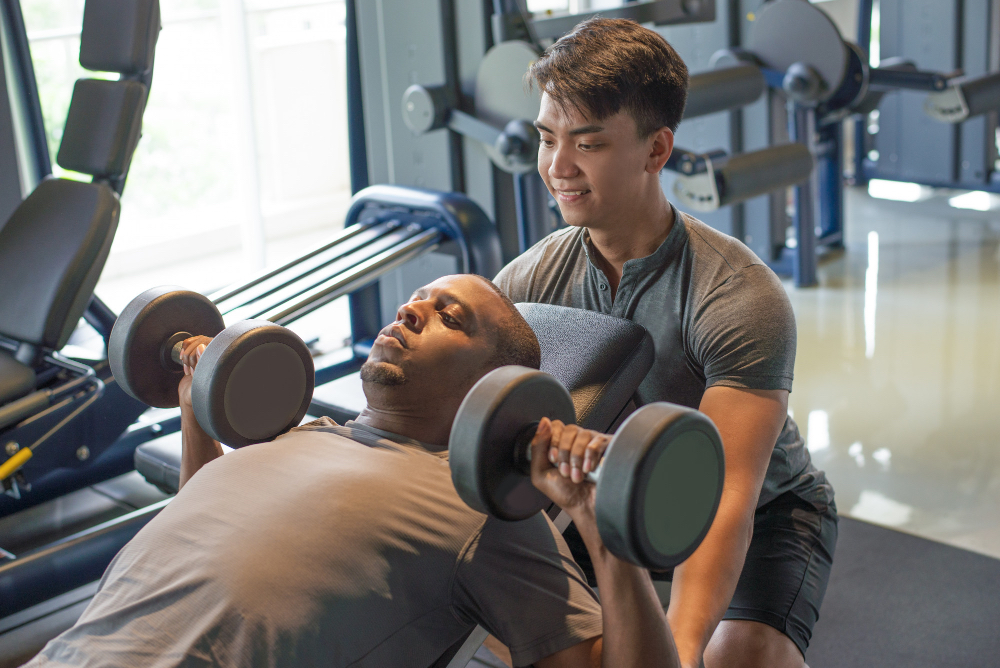
Enhanced Coaching Skills and Knowledge
Obtaining the USA Weightlifting certification isn’t just about getting a piece of paper. It’s about gaining valuable insights into weightlifting techniques, coaching methodologies, and athlete management. You’ll learn how to identify and correct lifting techniques, program effective training regimens, and tailor your coaching approach to different skill levels.
Credibility and Recognition
The USA Weightlifting certification adds a layer of credibility to your coaching credentials. As a certified coach, you’re recognized as someone who has undergone rigorous training and assessment, making you a trusted expert in the field. This recognition can open doors to coaching opportunities at gyms, sports teams, and beyond.
Working with Diverse Clientele
Whether you’re working with beginners or seasoned athletes, a USA Weightlifting certification equips you with the skills to cater to a diverse range of clients. From teaching proper form to newcomers to fine-tuning techniques for elite athletes, your certification prepares you to address various coaching scenarios.
Access to Ongoing Education and Resources
The world of fitness and weightlifting is constantly evolving. USA Weightlifting understands this and provides certified coaches with access to a wealth of ongoing education opportunities, workshops, webinars, and resources. This ensures that you stay up-to-date with the latest
USA Weightlifting Certification Process
Becoming a Certified Coach
To become a USA Weightlifting certified coach, you’ll need to follow a structured certification process. This typically involves the following steps:
1. Registration and Application
Begin by registering for the certification program of your choice. The application process is straightforward and can be completed online. Many candidates now appreciate the convenience of completing parts of their USAW certification online.
2. Written Exam
The USA Weightlifting (USAW) exam is a comprehensive assessment that evaluates your knowledge and understanding of weightlifting coaching principles. It covers a range of topics, including weightlifting techniques, coaching methodologies, safety protocols, programming strategies, and nutritional guidance. The exam is designed to ensure that you’re equipped with the necessary skills to guide athletes effectively and safely in their weightlifting journey. It typically consists of a written portion that tests your theoretical knowledge and a practical portion that assesses your ability to apply coaching techniques in a hands-on setting.
3. Practical Exam
The practical exam evaluates your coaching skills in a hands-on setting. You’ll be required to demonstrate your ability to coach athletes through various lifts, provide feedback, and ensure their safety during training.
4. Continuing Education
After you’ve earned your USAW certification, the journey of learning and growth doesn’t stop. The timing for continued education varies depending on your certification level and the policies of USA Weightlifting. Generally, you’ll be required to engage in continued education on an ongoing basis, typically over a set period, such as every two years.
Core Topics Covered in Certification
Weightlifting Techniques and Mechanics
One of the foundational elements of the USA Weightlifting certification is gaining a deep understanding of weightlifting techniques and mechanics. You’ll learn the intricacies of lifts such as the snatch and clean and jerk, including proper form, common mistakes, and how to correct them.
Safety and Injury Prevention
Safety is paramount in weightlifting. You’ll be educated on how to create a safe training environment, spot athletes effectively, and address common safety concerns to minimize the risk of injuries.
Programming for Different Levels
Effective coaching involves tailoring training programs to athletes’ individual needs and goals. As a certified coach, you’ll learn how to create personalized training regimens for athletes of varying skill levels, from beginners to advanced lifters.
Nutritional Guidance for Weightlifters
Nutrition plays a significant role in athletes’ performance and recovery. A USA Weightlifting certification covers the basics of sports nutrition, helping you provide athletes with valuable dietary advice to enhance their training outcomes.
Exploring Career Opportunities
Coaching Roles
With your USA Weightlifting certification in hand, you’ll be equipped to pursue various coaching roles. These could include working at local gyms, training athletes in sports teams, or even establishing your private coaching practice. The versatility of the certification allows you to choose a path that aligns with your interests and expertise.
Income and Growth Prospects
Certified weightlifting coaches often enjoy increased income potential due to their specialized skills and credibility. As your reputation grows and you accumulate more experience, your coaching services become more sought after, potentially leading to higher earning opportunities.
Group Fitness Instructor Takeaway
Accreditation is a very important factor for those group fitness instructors that want to work within a corporate setting. Many gyms or fitness facilities will require an accreditation for gainful employment. However, lack of an accredited certification does not mean you can’t become a great group fitness instructor; you just have to weigh your career path and consider if this is important to your end goals.
Comparison with Other Certifications
Standout Features of the USA Weightlifting Certification
While there are several coaching certifications available, the USA Weightlifting certification stands out for its specificity to the sport of weightlifting. Unlike more general coaching certifications, USA Weightlifting focuses exclusively on the techniques, skills, and knowledge necessary to excel in weightlifting coaching.
Why a USA Weightlifting Certification?
Choosing a USA Weightlifting certification demonstrates your commitment to the field of weightlifting. It showcases your dedication to mastering the intricacies of the sport and your desire to provide athletes with the best possible coaching experience.
Maintaining Certification and Continuous Learning
Staying Updated
The world of weightlifting and coaching is constantly evolving. Staying updated with the latest techniques, safety guidelines, and industry trends is crucial to maintaining your certification’s relevance and effectiveness.
Engaging in Workshops and Seminars
Continuing education is a cornerstone of professional development. Participating in workshops, seminars, and conferences not only helps you stay current but also exposes you to new coaching methodologies and networking opportunities.
Frequently Asked Questions
While prior coaching experience can be beneficial, it’s not always a strict requirement. The certification programs are designed to accommodate both newcomers and experienced coaches.
The timeline varies depending on factors such as your availability, study pace, and exam schedules. On average, individuals can complete the certification process within a few months.
Absolutely! A USA Weightlifting certification equips you to coach athletes of various ages and skill levels, from teenagers to senior citizens.
While some components of the certification process may be available online, certain aspects, such as the practical exam, are usually conducted in person to assess your coaching skills effectively.
The fees vary depending on the level and location, but most find the investment reasonable given the career opportunities it creates. Many coaches also ask if the USAW certification worth it, and the answer often depends on your professional goals
Conclusion
The USA Weightlifting certification is your gateway to a fulfilling and impactful career in weightlifting coaching. It’s not just about gaining a certification; it’s about immersing yourself in the world of weightlifting, honing your coaching skills, and helping athletes achieve their goals safely and effectively. The benefits, knowledge, and recognition you’ll gain through this certification are invaluable assets that can pave the way for a successful coaching journey.
So, if you’re passionate about weightlifting and aspire to make a difference in athletes’ lives, consider embarking on the exciting path of a USA Weightlifting certification. Your journey toward becoming a trusted and skilled weightlifting coach starts here.
How to Become an Exercise Physiologist

How to Become an Exercise Physiologist in 2026
This is the heading
Table of Contents
Exercise physiologists are professionals who specialize in designing and implementing exercise programs to promote physical fitness, health, and well-being. They help individuals and groups improve their physical performance, manage health conditions, prevent chronic diseases, and maintain an active lifestyle.
Exercise physiologists work in a variety of settings, including hospitals, clinics, fitness centers, universities, and research labs. To become a certified exercise physiologist, one needs to meet specific education and certification requirements.
In this blog, we will discuss the steps to become a certified exercise physiologist and explore the career opportunities in this field.
Explanation Of What An Exercise Physiologist Is And What They Do
Exercise physiologists are experts in the science of exercise and human physiology. They use their knowledge of how the body works to develop exercise programs that meet the unique needs of each individual. Exercise physiologists work with people of all ages and fitness levels, from professional athletes to patients recovering from injuries or managing chronic diseases. An exercise physiologist job description typically includes conducting fitness assessments, creating tailored exercise plans, and monitoring progress.
The role of an exercise physiologist can vary depending on the setting in which they work. In a clinical setting, exercise physiologists may work with patients who have chronic conditions such as heart disease, diabetes, or obesity. They assess the patient’s fitness level, design an exercise program that meets the patient’s needs and limitations, and monitor their progress over time. In a fitness center or university setting, exercise physiologists may work with athletes or individuals who are looking to improve their overall health and fitness.
Importance Of Certification In The Field
Certification is essential in the field of exercise physiology because it demonstrates that an individual has the knowledge and skills necessary to provide safe and effective exercise programming. It also ensures that the exercise physiologist has met a certain level of education and professional experience. Most employers require certification, and many insurance companies will only cover exercise programs provided by certified professionals.
Education and Prerequisites
To become a certified exercise physiologist, one must have a Bachelor’s degree in exercise science, kinesiology, or a related field. These degrees provide a foundation in exercise physiology, biomechanics, and anatomy, among other subjects. In addition to a degree, there are prerequisite courses that must be taken before applying for certification. These courses typically include biology, anatomy, physiology, and chemistry.
Graduate degree programs are available for individuals who wish to advance their education and obtain additional certifications. These programs can help individuals specialize in areas such as sports performance, clinical exercise physiology, or rehabilitation.
Exercise Physiologist Certification Process
There are two main organizations that offer certification for exercise physiologists. These include ASEP (American Society of Exercise Physiologists) and the American College of Sports Medicine (ACSM). Each organization has specific eligibility requirements and examination formats.
The ACSM offers the Certified Exercise Physiologist (CEP) certification, which is designed for individuals who work in clinical settings. To be eligible for this certification, candidates must have a Bachelor’s degree in a related field, completed specific coursework, and have 600 hours of professional experience. The exam consists of 125 multiple-choice questions and is administered over a three-hour period.
Continuing education requirements for maintaining certification
To maintain certification, exercise physiologists are required to complete continuing education units (CEUs) to keep up with the latest research, techniques, and industry standards. The number of CEUs required varies depending on the certifying organization, but typically, exercise physiologists must complete between 20 and 30 CEUs every two to three years. CEUs can be obtained by attending conferences, completing online courses, or publishing research.
Career Opportunities
Where do exercise physiologists work? Exercise physiologists are employed in a variety of environments, including hospitals, clinics, fitness centers, universities, and research labs. The demand for exercise physiologists is growing as more people seek to improve their health and well-being. According to the Bureau of Labor Statistics, the employment of exercise physiologists is projected to grow 11 percent from 2020 to 2030, which is faster than the average for all occupations.
In hospitals and clinics, exercise physiologists work with patients who have chronic conditions such as heart disease, pulmonary disease, and diabetes. They develop exercise programs to help manage these conditions, improve patients’ quality of life, and reduce the risk of complications.
In fitness centers and universities, exercise physiologists work with athletes, fitness enthusiasts, and individuals who are looking to improve their overall health and well-being. They design exercise programs that meet the unique needs and goals of each client, monitor their progress, and adjust the program as needed.
The profession offers steady demand and rewarding opportunities. Searching for “Exercise Physiologist jobs near me” online often reveals openings across healthcare facilities, sports organizations, and academic institutions.
Average salary and job outlook
The average salary for exercise physiologists varies depending on the setting in which they work. According to the Bureau of Labor Statistics, the median annual wage for exercise physiologists was $50,280 in May 2020. The highest-paid exercise physiologists worked in research and development, with a median annual wage of $72,680. The lowest-paid exercise physiologists worked in fitness and recreational sports centers, with a median annual wage of $43,020.
In hospitals and clinics, the Clinical Exercise Physiologist salary is often higher than in recreational fitness settings, reflecting the specialized knowledge required to manage complex health conditions.
The job outlook for exercise physiologists is positive, with job growth projected to be faster than the average for all occupations. As more people seek to improve their health and well-being, the demand for exercise physiologists is likely to continue to grow.
Steps to Become an Exercise Physiologist
Complete a Bachelor’s degree in exercise science, kinesiology, or related field.
Gain practical experience through internships, labs, or volunteer programs.
Choose a certification pathway (ACSM or ASEP).
Complete required clinical or practical hours.
Pass the certification exam.
Maintain certification with continuing education.
Explore career paths in clinical, research, fitness, or educational settings.
Conclusion
Becoming a certified exercise physiologist is a rewarding career path that allows individuals to help others improve their health and well-being. To become certified, individuals must have a Bachelor’s degree in a related field, complete specific coursework, and pass an examination. Continuing education is also required to maintain certification. Exercise physiologists work in a variety of settings and have a positive job outlook, with job growth projected to be faster than the average for all occupations. If you have a passion for exercise, health, and helping others, a career as an exercise physiologist may be right for you.
Table of Contents
Best Nitric Oxide Supplements

Table of Contents
Nitric oxide (N.O.) is a vital molecule produced by our body, and it plays a crucial role in maintaining good health. It helps in relaxing blood vessels, regulating blood pressure, and improving circulation. Low levels of nitric oxide can lead to various health issues, including high blood pressure, cardiovascular disease, and erectile dysfunction.
If you’re interested in enhancing your athletic performance, you may have heard about nitric oxide supplements. While these supplements don’t actually contain N.O., they do include compounds like l-arginine and l-citrulline that can boost the body’s production of this important molecule.
While the research on the effects of increased N.O. levels on athletic performance s ongoing and not conclusive, there is some evidence to suggest that it may be helpful for high-intensity interval training (HIIT) and prolonged aerobic activity.
Some athletes also use N.O. supplements for the “pump” and vascularity they feel during workouts. This is where many look for the best nitric oxide supplements for working out to maximize endurance and performance benefits.
Why We Know What We’re Talking About
To help you navigate the world of N.O. supplements, we’ve tested and compiled a list of some of the best nitric oxide supplements on the market, taking into account ingredients, reputable brands, and the latest research.
But why trust us? As certified personal trainers, we have extensive knowledge and experience in the field of fitness and nutrition. We understand the importance of using safe and effective supplements to support our clients’ health and fitness goals. Note that it’s always best to consult your physician before taking any new supplements, as many can interact with current medication or cause adverse effects if you have certain health conditions.
When it comes to ranking the best nitric oxide supplements, we rely on our expertise and research to provide reliable recommendations. We take into consideration factors such as ingredient quality, dosage, and customer feedback to ensure that we are providing accurate and trustworthy information. Our goal is to help you make informed decisions for yourselves and for your clients about their supplement choices, and we take pride in being a reliable source of information in this area.
Transparent Labs Citrulline Powder
Here is a quick summary of our findings:
- Best Pre-Workout Nitric Oxide: Transparent Labs Bulk Pre-Workout supplement
- Best Nitric Oxide Supplement For Vascularity: Transparent Labs Citrulline powder
- Best Nitric Oxide Supplement For Bodybuilding: Transparent Labs Nitric Oxide Capsules
- Best Nitric Oxide Supplement For ED: VigRX N.O. Support
For athletes focused on strength and hypertrophy, some products stand out as the best nitric oxide supplements for muscle growth because of their targeted ingredient profiles and dosing.
Best pre-workout nitric oxide
Transparent Labs Bulk Pre-Workout Supplement
PRICE
★★★★★ Rated 5 out of 5
QUALITY
★★★★★ Rated 5 out of 5
FLAVORS
★★★★★ Rated 5 out of 5
OVERALL
★★★★★ Rated 5 out of 5
Pros
- Contains high-quality ingredients and is free from unnecessary fillers or additives
- May help improve energy, focus, and endurance during workouts
- Some users report improved muscle pumps and vascularity
- Comes in several different flavors to suit different preferences
- Offers a transparent label, so users know exactly what they are consuming
Cons
- Some users report experiencing side effects such as jitters, headaches, or upset stomach
- The product is more expensive compared to other pre-workout supplements on the market
- May not work for everyone and some users report not experiencing any significant improvements in their performance or results
- The taste may not be to everyone's liking, and some users report a chalky or gritty texture
- Contains caffeine, which may not be suitable for those who are sensitive to stimulants
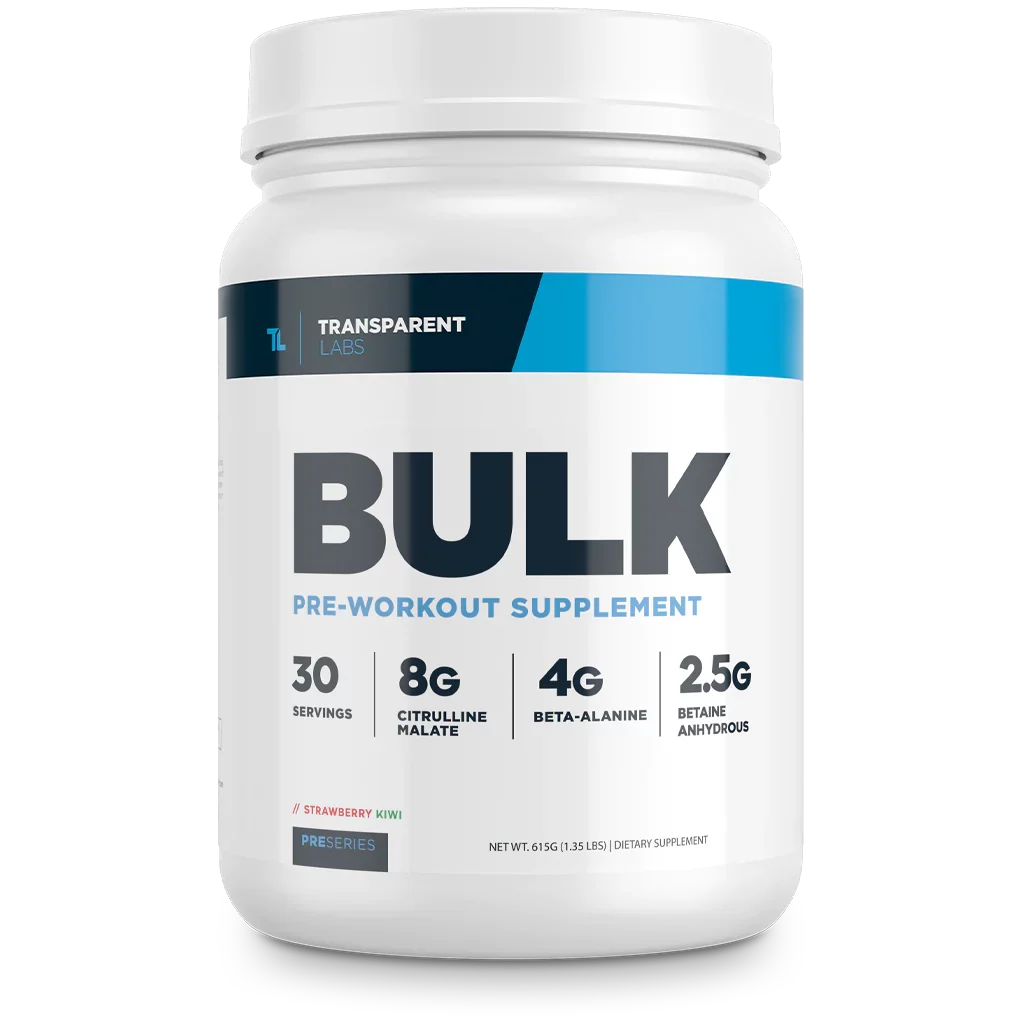
Ingredients
Citrulline Malate
Beta-Alanine
BetaPure™ Betaine Anhydrous
Taurine
L-Tyrosine
AlphaSize® Alpha-GPC
PurCaf® Organic Caffeine
L-Theanine
Theobromine
SenActiv®
BioPerine® Black Pepper Fruit Extract
With a scientifically-backed blend of ingredients, fully transparent labeling, and no artificial additives, this powder is the perfect choice for anyone looking to improve their strength, energy, and focus in the gym. Plus, with its proven ability to enhance muscle pumps, stamina, and lean muscle growth, BULK is the ultimate pre-workout supplement for serious athletes and fitness enthusiasts alike.
From my personal experience, the supplement helped me feel more energized and focused during workouts, allowing me to push harder and achieve better results. The supplement also has a good taste and mixes well with water or other liquids. While some customers feel that the supplement is too expensive compared to other pre-workout products on the market, I found the price well worth it.
Best nitric oxide supplement for vascularity
PRICE
★★★★★ Rated 5 out of 5
QUALITY
★★★★★ Rated 5 out of 5
FLAVORS
★★★★★ Rated 4.5 out of 5
OVERALL
★★★★★ Rated 4.5 out of 5
Pros
- Improved athletic performance because of an increase in blood flow and circulation. This can result in improved endurance, better muscle pumps, and reduced soreness after exercise.
- Citrulline has been shown to improve arterial function and blood flow, which can help reduce the risk of heart disease and other cardiovascular conditions.
- Citrulline may help promote muscle growth by increasing the production of nitric oxide, which can improve nutrient delivery to muscles and support protein synthesis.
- Transparent Labs Citrulline powder is made with high-quality ingredients and is generally considered safe and effective when used as directed.
Cons
- Some people may experience digestive issues such as diarrhea, nausea, or stomach cramps when taking citrulline supplements.
- Citrulline may interact with medications used to treat erectile dysfunction, high blood pressure, and other conditions. It is important to consult with a healthcare provider before taking citrulline supplements.
- While citrulline has been shown to be effective for improving athletic performance and supporting heart health in many individuals, it may not work for everyone.
- Citrulline supplements can be expensive, especially when compared to other amino acid supplements.
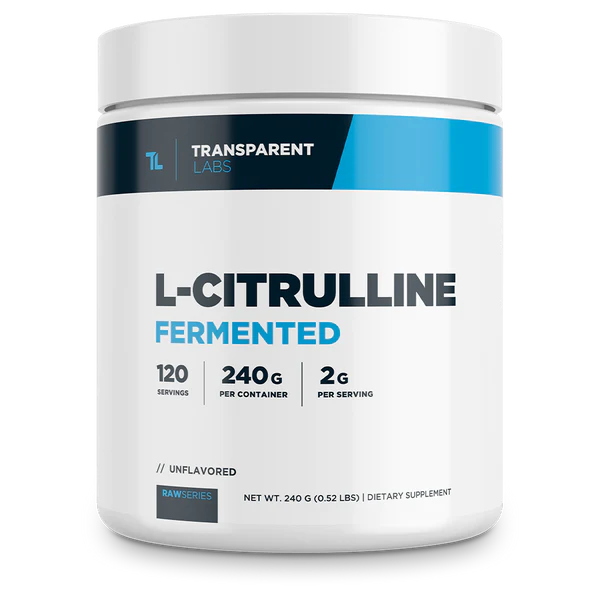
Ingredients
L-Citrulline
Transparent Labs Citrulline powder is made with high-quality ingredients and is designed to be easily absorbed by the body. It is a popular choice among athletes and fitness enthusiasts looking to enhance their workouts and improve their overall performance.
I recently tried Transparent Labs Citrulline powder, and I have to say I was impressed. Each scoop contains a whopping 2,000 mg of fermented L-citrulline, which can do wonders for increasing blood flow, muscle pumps, and recovery.
What’s great about L-citrulline is that it’s an amino acid that is easy for the body to absorb and convert into L-arginine, one of the building blocks of nitric oxide. This is why it’s become so popular in recent years as a top nitric oxide booster.
One of the things I found interesting about L-citrulline is that it was first isolated from the rind of watermelon, which is where it gets its name. And while the kidneys can store large amounts of citrulline but not arginine, citrulline is considered to be the most important endogenous regulator of nitric oxide production.
Best nitric oxide supplement for bodybuilding
Transparent Labs Nitric Oxide Capsules
PRICE
★★★★★ Rated 5 out of 5
QUALITY
★★★★★ Rated 4.5 out of 5
FLAVORS
★★★★★ Rated 3.5 out of 5
OVERALL
★★★★★ Rated 4 out of 5
Pros
- Improved athletic performance by increasing blood flow and oxygen delivery to the muscles. This can lead to better muscle endurance, strength, and recovery.
- Enhances muscle pumps
- Made with high-quality, clinically dosed ingredients that are free from artificial colors, sweeteners, or preservatives.
- Easy capsule delivery (no need to drink anything)
Cons
- Potential Side Effects - As with all of these supplements, nitric oxide supplements are generally safe but can cause certain side effects like headaches, dizziness, and nausea. In rare cases, they can also lead to dangerously low blood pressure and increased risk of bleeding.
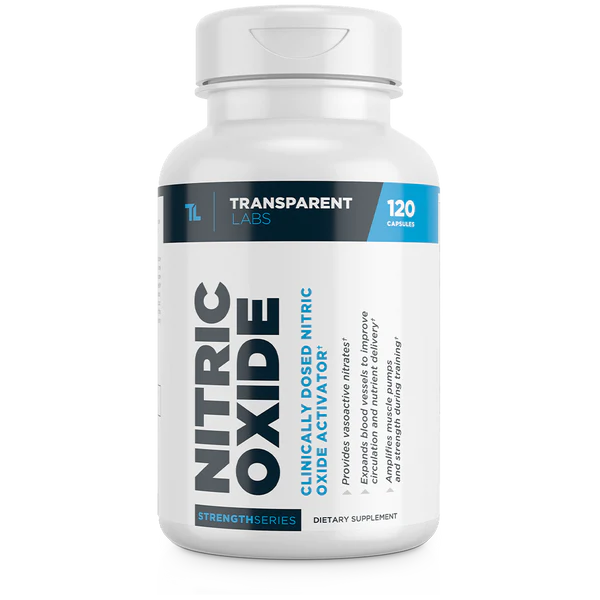
Ingredients
NO3-T® Arginine Nitrate and Betaine Nitrate
Setria® L-Glutathione
Pine Bark Extract
Vitamin C
AstraGin™
The TL Labs formula contains clinical doses of several hyperemic ingredients, including patented NO3- T® arginine nitrate and betaine nitrate, Setria® reduced L-glutathione, AstraGin™, pine bark proanthocyanidins, and vitamin C.
What I found most impressive was how quickly these ingredients went to work, bolstering my body’s nitric oxide production and facilitating robust blood flow to my skeletal muscle tissue during my workouts. This ultimately led to better performance and faster recovery times.
I particularly appreciated the inclusion of Setria® reduced L-glutathione, which is known for its antioxidant properties and ability to support immune health. And with pine bark proanthocyanidins and vitamin C added to the mix, I felt confident that I was getting a comprehensive blend of ingredients that could support my overall health and fitness.
Best nitric oxide supplement for ED
PRICE
★★★★★ Rated 5 out of 5
QUALITY
★★★★★ Rated 4 out of 5
FLAVORS
★★★★★ Rated 3.5 out of 5
OVERALL
★★★★★ Rated 4 out of 5
Pros
- Can improve sexual performance and function
- Can increase libido and improve erectile function.
- Made with high-quality ingredients and is free of artificial colors, flavors, and preservatives.
- Capsules are easy to swallow and do not have a bad taste or aftertaste.
- Quick results (according to many reviewers)
Cons
- Can be expensive compared to other nitric oxide supplements on the market.
- Possible digestive issues such as nausea, stomach cramps, or diarrhea
- Some notice no significant changes in their athletic performance or sexual function.
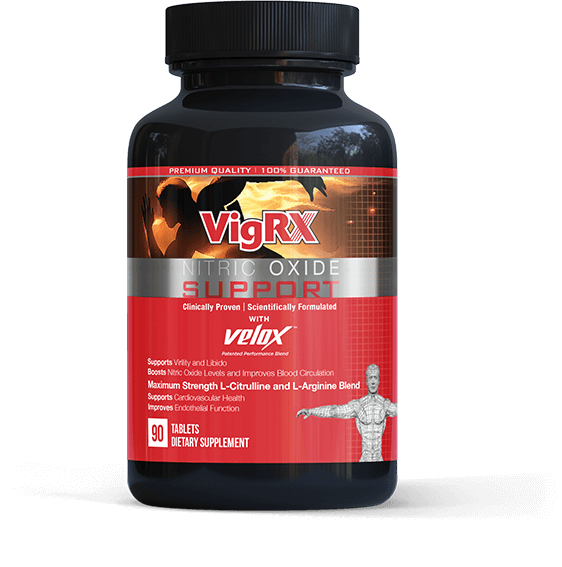
Ingredients
Velox (L-Citrulline, L-Arginine)
Gelatin
Magnesium Stearate
Silica
VigRX N.O. Support is a formula that contains a powerful, patented extract of L-Citrulline and L-Arginine in the maximum safe dose, providing you with the benefits of both amino acids. By taking VigRX N.O. Support regularly, you can likely improve blood flow to the penis, aiding with a symptom of ED.
The supplement was highly effective at increasing nitric oxide levels, which can lead to improved blood flow and better oxygen delivery to the muscles. I especially appreciated that the supplement is made with high-quality ingredients and is free from unnecessary fillers or additives. I also felt a vast mprovements in overall energy levels and recovery times when using the product.
Nitric Oxide Supplements and ED
Studies have shown that the combination of L-Citrulline and L-Arginine significantly improves blood flow and can enhance erectile function. In fact, research suggests that supplementing with just L-Arginine alone may be nearly useless, while the combination of both ingredients has been found to be highly effective.
Numerous studies have been conducted on the effectiveness of L-Citrulline and L-Arginine for improving blood flow and erectile function. One study published in the Journal of Sexual Medicine found that a combination of L-Citrulline and L-Arginine significantly improved erectile function in men with mild to moderate erectile dysfunction. This supports the important connection between nitric oxide and improved nitric oxide erection responses.
Another study, published in the International Journal of Cardiology, found that combining L-Citrulline and L-Arginine improved blood flow and reduced blood pressure in healthy men. This study also found that the effects of the supplement were seen within just eight days.
Nitric oxide supplements for high blood pressure
As fitness professionals, we tend to stay in our lane in terms of supplement recommendations and as such won’t make a recommendation related to medical conditions such as high blood pressure. While we know many people take nitric oxide supplements for high blood pressure, it is generally under the care of their physician.
According to MayoClinic, here’s a summary of what they advise.
L-arginine supplements are sometimes taken by individuals to relax and widen their arteries, potentially helping to reduce blood pressure. However, these supplements are generally unnecessary and may only be beneficial for individuals who have a genuine deficiency.
Research on L-arginine has produced conflicting results. Recent studies suggest that L-arginine may decrease blood pressure, improve cholesterol levels, and improve the overall health of blood vessels. A review of multiple studies revealed that adults with high blood pressure who took daily L-arginine supplements experienced a reduction in their diastolic blood pressure.
L-arginine may work more effectively in promoting heart health when used in conjunction with other vitamins, such as B6 and B12. However, more extensive and well-designed studies are required to confirm these results before experts can endorse regular use of these supplements.
L-arginine drug interactions
It is essential to be aware that L-arginine supplements can interact with certain medications, including blood thinners like aspirin and warfarin, specific diuretics, nitroglycerin, some high blood pressure medications, erectile dysfunction drugs, and diabetes medications.
Individuals who have experienced a heart attack should avoid taking L-arginine, as there are concerns that the supplement may increase the risk of death. Additionally, those with allergies and asthma should exercise caution when using L-arginine supplements.
Individuals who have experienced cold sores or genital herpes should not take L-arginine supplements, as excessive L-arginine levels may activate the virus responsible for these conditions.
Again, if you have high blood pressure and are interested in nitric oxide supplementation, consult with your healthcare provider.
Understanding the Role of Citrulline and Arginine in the Body
Here’s a brief primer on pre-workout supplements and nitric oxide supplementation and why we recommend a product that has high levels of citrulline, a key ingredient in in improving nitric oxide synthesis.
These days, it can be challenging to differentiate between pre-workout powders and nitric oxide supplements, as they all appear to be identical. To verify this, you can simply walk into your local supplement store and browse through the pre-workout section, and you’ll quickly discover that every product has only minor variations in their components.
Many pre-workouts are “concentrated” formulas that deliver a small rush of “pseudo-energy” through the use of harsh stimulants. It’s no wonder that people feel like they “work.” (You might as well drink a pot of coffee before hitting the gym, which is more cost-effective and has similar effects.)
The issue with stimulant-heavy pre-workout formulas is that anything that stimulates the nervous system will constrict blood vessels, increase blood pressure, and counteract nitric oxide production. It’s acceptable to consume caffeine in moderation before working out, but consuming large quantities of stimulants will inevitably reduce the benefits of nitric oxide supplements.
L-Citrulline is a non-essential amino acid that is naturally found in watermelon, among other foods. It is also commonly used as a dietary supplement, particularly for its potential benefits as a nitric oxide supplement.
Nitric oxide is a gas that is naturally produced in the body and is involved in many physiological processes. One of its main roles is to dilate blood vessels, which helps to increase blood flow and oxygen delivery to the body’s tissues. This increased blood flow can improve exercise performance, reduce muscle soreness, and improve overall cardiovascular health.
L-Citrulline is converted in the body into another amino acid called L-arginine, which is a precursor to nitric oxide production. By increasing the availability of L-arginine, L-Citrulline can help to increase nitric oxide production and promote blood vessel dilation.
In addition to its potential benefits for cardiovascular and exercise performance, L-Citrulline may also have other health benefits. It has been studied for its potential role in improving erectile dysfunction and reducing symptoms of mild-to-moderate hypertension.
How to increase nitric oxide naturally
There are many ways to increase nitric oxide naturally, and below, we’ll explore some of the most effective ways.
Eat Nitrate-Rich Foods:
One of the best ways to increase nitric oxide is by consuming nitrate-rich foods, such as leafy greens, beets, and celery. Nitrate is converted to nitric oxide in our body, which helps in relaxing blood vessels and improving blood flow. You can add these foods to your diet by incorporating them into your smoothies or salads. These are often referred to as nitric oxide foods because of their ability to naturally raise N.O. levels.
Exercise Regularly
Regular exercise is not only good for your overall health but also helps in increasing nitric oxide levels in the body. Exercise stimulates the production of nitric oxide synthase, an enzyme responsible for producing nitric oxide in the body. So, make sure to include regular physical activity in your routine, whether it’s through cardiovascular exercises or strength training.
Get Enough Sleep
Getting adequate sleep is essential for maintaining good health, and it can also help in increasing nitric oxide levels. During sleep, our body produces nitric oxide, which helps in regulating blood pressure and improving circulation. So, make sure to get at least 7-8 hours of sleep every night.
Reduce Stress
Stress can have a negative impact on our health and can also lower nitric oxide levels in the body. When we’re stressed, our body releases cortisol, which can damage blood vessels and decrease nitric oxide production. You can reduce stress by practicing relaxation techniques, such as meditation, deep breathing, or yoga.
Increase Vitamin C Intake
Vitamin C is an essential nutrient that helps in increasing nitric oxide levels in the body. It works by protecting nitric oxide from free radical damage, which can decrease its availability in the body. You can increase your vitamin C intake by consuming foods like oranges, strawberries, bell peppers, and kiwi.
Consume Garlic
Garlic is known for its numerous health benefits, and it can also help in increasing nitric oxide levels in the body. It contains a compound called allicin, which helps in relaxing blood vessels and improving blood flow. You can consume garlic raw or cooked, or take a garlic supplement.
Increase Antioxidant Intake
Antioxidants are compounds that protect our body from free radical damage, which can decrease nitric oxide levels in the body. You can increase your antioxidant intake by consuming foods like berries, dark chocolate, and green tea.
Consume L-Arginine
L-arginine is an amino acid that helps in increasing nitric oxide levels in the body. It works by stimulating the production of nitric oxide synthase, the enzyme responsible for producing nitric oxide in the body. You can consume L-arginine through foods like turkey, chicken, pumpkin seeds, and peanuts, or take an L-arginine supplement.
Reduce Alcohol Consumption
Alcohol consumption can have a negative impact on our health and can also lower nitric oxide levels in the body. It can damage blood vessels and decrease nitric oxide production. So, it’s important to limit your alcohol consumption to maintain good health.
Benefits of Nitric Oxide Supplements
According to the study, Dietary nitrate supplementation improves team sport-specific intense intermittent exercise performance, the research indicates that taking N.O. supplements could increase the production of N.O. through the nitrate-nitrite-NO pathway. This, in turn, may improve performance on intermittent recovery, possibly by enhancing the uptake of glucose in muscles or by better preserving muscle excitability. Using N.O. supplements in one’s diet could benefit those who engage in intense intermittent exercise, particularly for players of team sports. It may serve as an effective aid to enhance performance.
Another study on walking, running, and high-intensity cycling showed similar results, with the conclusion that supplementation attributed to increased blood flow levels and improved physiological responses to exercise.
In another study, the results were less conclusive when analyzing performance enhancements from untrained versus highly-trained subjects. The level of training of the participants appears to be a significant factor in the relationship between the use of N.O. supplementation and its ergogenic effects. Research involving healthy individuals who are either untrained or have moderate levels of training demonstrated that N.O. supplements may enhance their capacity for both aerobic and anaerobic exercise. However, in the case of highly trained individuals who were given N.O. supplements, no positive impact on performance was observed.
Frequently Asked Questions
Nitric oxide itself will not make you bigger in terms of muscle size. However, nitric oxide supplements, such as arginine, may increase blood flow and oxygen delivery to the muscles, which can improve performance and potentially lead to increased muscle growth when combined with resistance training.
Nitric oxide supplements, such as arginine, can be taken in several different ways. The most common methods include:
- Capsules or tablets: Nitric oxide supplements are available in capsule or tablet form, which are taken orally with water. Follow the manufacturer’s instructions for dosage and timing.
- Powder: Nitric oxide supplements are also available in powder form, which can be mixed with water or other beverages. Again, follow the manufacturer’s instructions for dosage and timing.
- Pre-workout supplements: Many pre-workout supplements contain nitric oxide as one of their active ingredients. These supplements are usually taken 20-30 minutes before a workout to enhance performance.
- Food sources: Some foods, such as beets and spinach, are naturally high in nitrates, which can be converted to nitric oxide in the body. Adding these foods to your diet can potentially increase nitric oxide levels.
It’s not easy to determine if your nitric oxide levels are low without undergoing specific tests. However, there are some signs and symptoms that may suggest that your nitric oxide levels are suboptimal. These include:
- High blood pressure: Nitric oxide helps to relax and widen blood vessels, which can help to lower blood pressure. If your blood pressure is consistently high, it may be a sign that your nitric oxide levels are low.
- Poor circulation: Nitric oxide plays an important role in promoting blood flow and oxygen delivery to the muscles and other tissues. If you experience cold hands and feet or have trouble with circulation, it may be a sign that your nitric oxide levels are low.
- Fatigue and poor endurance: Nitric oxide is involved in the regulation of energy metabolism and may play a role in reducing fatigue and improving endurance during exercise. If you experience excessive fatigue or have trouble with endurance during physical activity, it may be a sign that your nitric oxide levels are low.
- Erectile dysfunction: Nitric oxide plays a crucial role in promoting blood flow to the penis and maintaining an erection. If you experience difficulties with erectile function, it may be a sign that your nitric oxide levels are low.
If you suspect that you may have low nitric oxide levels, it’s important to speak with a healthcare professional. They can help to assess your nitric oxide status and determine the best course of action.
The timing of nitric oxide supplements may vary depending on the specific supplement and individual factors. Here are some general guidelines:
- Pre-workout: Many people take nitric oxide supplements before a workout to enhance performance. It’s usually recommended to take the supplement 20-30 minutes before exercise to allow time for it to take effect.
- Daily use: Some nitric oxide supplements may be taken daily as part of a general health and wellness regimen. In this case, it’s usually recommended to take the supplement with a meal to enhance absorption.
Before bed: Some research suggests that taking nitric oxide supplements before bed may help to enhance recovery and promote muscle growth. However, more research is needed in this area to determine the optimal timing and dosing.
Sleep To Earn Crypto? Here’s How To Get Rewarded For Good Rest!

Sleep-to-Earn Crypto: The Complete 2026 Guide to Getting Rewarded for Quality Rest
We’ve told you about move-to-earn games, but what about sleep-to-earn? Yes, it’s a thing. And you can actually earn cryptocurrency just for getting a good night’s rest.
In this blog, we’ll dive right into what sleep-to-earn is, how it works, and the apps you can use to sleep-to-earn cryptocurrency. But if you need a briefing on what cryptocurrencies, play-to-earn blockchain games, and NFTs are, you can scroll to the bottom to learn more.
Top Sleep-To-Earn Crypto Apps:



What Is Sleep-to-Earn? Understanding the Basics of the Sleep-Fi Movement
Sleep-to-earn is a subset of the broader “X-to-earn” cryptocurrency trend, in which users receive digital token rewards for performing specific real-world behaviors that are tracked and verified through app-based sensors and wearable devices. In the sleep-to-earn model, the behavior being rewarded is achieving consistent, high-quality nighttime rest typically measured through sleep duration, sleep stages (light, deep, and REM cycles), heart rate variability, breathing patterns, and movement data.
The term “Sleep-Fi” a portmanteau of sleep and decentralized finance (DeFi) has emerged as the specific label for this niche. Sleep-Fi platforms operate on the premise that healthy sleep is not just a personal benefit; it is a productive, valuable activity that contributes to an individual’s cognitive performance, physical health, and economic output. By monetizing the act of sleeping well, these platforms create a financial incentive for users to make sleep a genuine priority something that, frankly, modern society has neglected at a massive scale.
According to the Centers for Disease Control and Prevention (CDC), more than one-third of American adults do not get the recommended minimum of seven hours of sleep per night. The global cost of sleep deprivation in terms of lost productivity, healthcare expenses, and cognitive impairment runs into hundreds of billions of dollars annually. Sleep-to-earn apps are essentially flipping this narrative. Instead of treating poor sleep as an expensive problem, they make good sleep a profitable opportunity.
The mechanics vary by platform, but the fundamental structure is consistent: you download the app, connect it to your smartphone’s built-in sensors or a compatible wearable device, and let it track your sleep throughout the night. When you wake up, the app analyzes your sleep data and mints or distributes token rewards based on your sleep quality score. These tokens can then be held as a speculative digital asset, traded for other cryptocurrencies on decentralized exchanges, used within the app’s internal economy (such as upgrading NFT items), or in some cases converted into fiat currency like US dollars.
How Does Sleep-to-Earn Crypto Work? A Step-by-Step Technical Breakdown
Understanding how sleep-to-earn platforms function requires a basic familiarity with several interconnected Web3 concepts: blockchain technology, non-fungible tokens (NFTs), native utility tokens, and governance tokens. Do not be intimidated by the terminology the actual user experience is simpler than it sounds, and we will explain each element clearly.
Step 1 — Download the App and Create a Crypto Wallet
The first step is to download your chosen sleep-to-earn application from the App Store or Google Play. Once installed, you will be prompted to create or connect a compatible cryptocurrency wallet. A crypto wallet is a digital tool that stores your private keys and enables you to send, receive, and hold blockchain-based assets. Most sleep-to-earn apps support popular non-custodial wallets like MetaMask or Trust Wallet. If you are new to crypto, creating a MetaMask wallet is free, takes about five minutes, and requires no prior blockchain knowledge. You will be given a “seed phrase” a series of 12 to 24 randomly generated words that acts as the master key to your wallet. Write this phrase down and store it somewhere secure offline; it cannot be recovered if lost.
Step 2 — Purchase an NFT Sleep Item
Most sleep-to-earn platforms require users to own a specific NFT (non-fungible token) in order to begin earning rewards. This NFT typically takes the form of a themed in-game item for example, a virtual bed in the case of SleeFi, or a character avatar in MetaGym. NFTs are unique digital assets stored on a blockchain, meaning each one is verifiably one-of-a-kind and cannot be duplicated. Your NFT acts as your “earning license” within the platform’s ecosystem. The quality, rarity, and level of your NFT directly affects how many tokens you can earn per sleep session. Higher-level NFTs unlock greater earning potential, which provides an in-game incentive to reinvest your earnings into upgrading your assets. You can purchase these NFTs using the platform’s required cryptocurrency often a blockchain network token like Avalanche (AVAX) or Binance Coin (BNB) through the app’s built-in marketplace.
Step 3 — Track Your Sleep and Earn Tokens
Once your wallet is funded and your NFT is in place, you are ready to start earning. Before going to sleep, you activate sleep-tracking mode in the app. The platform then uses your smartphone’s accelerometer, microphone, and in some cases connectivity to third-party wearables (like a Fitbit or Apple Watch), to monitor your sleep throughout the night. The app records metrics including total sleep duration, time spent in each sleep stage, sleep consistency over time, and disturbances or awakenings. When you wake up and open the app, your data is processed and you receive a sleep quality score. Based on this score and the attributes of your NFT you are rewarded with a specific number of the platform’s native utility tokens. Most platforms allow one earning session per 24-hour period, preventing users from gaming the system by “sleeping” multiple times in a day.
The Health Science Behind Sleep-to-Earn: Why Quality Sleep Is a Fitness Priority
As a certified personal trainer and kinesiology professional, I want to make something crystal clear: the health benefits of adequate sleep are not a marketing gimmick used by these platforms. The science is robust, well-established, and has profound implications for anyone pursuing fitness, weight management, athletic performance, or general wellness goals. Sleep-to-earn apps are not just clever financial products they are, intentionally or not, powerful public health interventions.
During deep non-REM sleep, the human body releases the majority of its daily growth hormone output. Growth hormone is critical for muscle protein synthesis, fat metabolism, tissue repair, and immune function. If you are training hard in the gym but sleeping only five or six hours per night, you are actively undermining your recovery and limiting your gains. Research published in the Annals of Internal Medicine demonstrated that sleep restriction during a caloric deficit significantly reduces the proportion of weight lost from fat, while increasing muscle loss essentially the opposite of what any fitness-focused individual wants.
Beyond body composition, sleep deprivation has been shown to elevate cortisol levels, increase inflammatory markers, impair glucose regulation (raising type 2 diabetes risk), disrupt appetite-regulating hormones like leptin and ghrelin (which drives overeating and cravings for high-calorie foods), and dramatically reduce cognitive function and reaction time. For athletes and active individuals, even one night of poor sleep has been shown to reduce strength output by up to 10 percent and aerobic capacity by a measurable margin.
Sleep-to-earn platforms essentially give users a financial reason to treat sleep with the same discipline they would apply to diet and exercise programming. In my two decades of training clients across Los Angeles and beyond, I have seen countless people who meticulously track their macros and never miss a workout, yet routinely sacrifice sleep for screen time, social obligations, or work. The gamification and financial incentive model of sleep-to-earn apps addresses this behavioral gap directly and that is genuinely exciting from a public health standpoint.
What Are the Benefits of Sleep-to-Earn Crypto Apps?
There are several great sleep-to-earn apps out there, but here are our top three picks:
MetaGym (MGCN)

MetaGym is a move-to-earn app with Sleep-fi features. Sleep-fi is a term that combines the words sleep and finance as a way to optimize sleeping behaviors.
To start, you choose an avatar with specific traits that match what you’re looking to do.
Then, you can select the mode of play you’d like to earn based on (in this case, sleep).
Getting adequate sleep, combined with other modalities can create earnings of up to 100 $MGCN per day. You can track your earnings, share your progress, and then use these crypto earnings to progress your avatar or exchange for USD Coin (digital dollars)
SleeFi (SLFT)
SleeFi is another Web3 lifestyle app that uses the sleep-to-earn module, but won’t officially launch until September 2022. Boasting a great way to help people who suffer from insomnia, the app has both native crypto and a governance token.
Once it launches, to get started with SleeFi, you’ll download and sign up, create a wallet, transfer Avalanche (AVAX), purchase a bed NFT, and start earning.
The basis of SleeFi is similar to MetaGym, where you’ll earn based on a good night’s sleep. Once you log a rest (only once per day), your coins are added based on sleep quality and duration.
You can use the earnings to increase the level of the bed NFT and mint new NFTs. The higher the level of your bed NFT, the more rewards you have the ability to potentially make.
Sleep Future (SLEEPEE)
Toted as the world’s first blockchain wellness app to help with sleep quality, the Sleepee app brings you $SLEEPEE cryptocurrency just by getting a good night of sleep.
In the app, you’ll get a sleep score after your daily sleep is monitored by cutting-edge technology. Based on your score, you’ll earn tokens that can be converted to buy products or services in their SleepStore.
The Best Sleep-to-Earn Crypto Apps: An In-Depth Review

The sleep-to-earn landscape is still relatively young, and the platforms in this space continue to evolve rapidly. Below is a detailed breakdown of the three most established and widely discussed sleep-to-earn applications, including how each one works, what makes it unique, and what prospective users should know before investing.
MetaGym (MGCN) — The All-in-One Move-to-Earn and Sleep-Fi Platform
MetaGym is one of the most comprehensive wellness-to-earn platforms currently available, and it stands out from the competition by integrating both move-to-earn and sleep-to-earn mechanics within a single gamified ecosystem. The platform’s native token is $MGCN, and the app is built around the concept of a customizable fitness avatar that users level up through real-world health behaviors including walking, running, workouts, and sleep.
To get started with MetaGym, you select an avatar with specific traits and attributes that correspond to the activities you want to focus on. If sleep-to-earn is your primary interest, you configure your avatar around the Sleep-Fi module. Consistent, quality sleep measured through the app’s tracking system can generate earnings of up to 100 $MGCN tokens per day, though actual daily earnings depend on your avatar’s level, your sleep quality score, and current in-app conditions. The $MGCN tokens can be used to upgrade your avatar’s abilities, purchase in-game items, and progress through the platform’s gamified achievement system. Alternatively, they can be exchanged for USD Coin (USDC), which is a stablecoin pegged to the US dollar, providing a direct pathway to liquid fiat-equivalent value.
What makes MetaGym particularly compelling from a fitness professional’s perspective is its holistic approach to wellness incentivization. Rather than rewarding isolated behaviors in silos, MetaGym encourages users to think about their health comprehensively connecting the dots between daytime physical activity and nighttime recovery. This reflects an evidence-based understanding of fitness: exercise and sleep are not independent variables; they are deeply interconnected components of a healthy lifestyle. Regular moderate-to-vigorous physical activity is one of the most effective evidence-based interventions for improving sleep quality, and MetaGym’s dual-incentive structure encourages both simultaneously.
SleeFi (SLFT) — The Dedicated Sleep-Fi Platform Built for Insomnia Sufferers
SleeFi is a Web3 lifestyle application specifically designed around the sleep-to-earn model, and it is notable for its explicit focus on helping individuals who struggle with sleep disorders, particularly insomnia. The platform operates on the Avalanche (AVAX) blockchain a high-speed, low-fee network that has become popular for gaming and lifestyle applications within the Web3 space — and features both a native utility token ($SLFT) and a separate governance token that gives holders voting rights on the platform’s future development.
The central NFT item in SleeFi’s ecosystem is a virtual bed. To begin earning, users must purchase a bed NFT from the platform’s marketplace using AVAX cryptocurrency. Each bed NFT has a set of attributes including comfort level, quality, and durability that determine the maximum and minimum tokens the user can earn per sleep session. Beds can be leveled up using $SLFT tokens earned through sleeping, and users can also “mint” new bed NFTs by combining two existing beds, creating additional digital assets that can be sold or used to expand their earning portfolio.
SleeFi allows one earning session per 24-hour period. Once you log your sleep (your smartphone tracks the session through the app), your tokens are calculated and distributed based on sleep quality and duration. The gamified progression system where better sleep leads to more earnings, which fund NFT upgrades, which unlock even greater earnings creates a powerful positive feedback loop that encourages users to maintain consistent sleep schedules and good sleep hygiene practices. For fitness professionals and health coaches, the SleeFi model offers an interesting parallel to progressive overload in training: just as incremental increases in training stimulus lead to performance improvements over time, incremental investments in sleep quality lead to compounding wellness and financial benefits.
Sleep Future (SLEEPEE) — The World’s First Blockchain Wellness App for Sleep Quality
Sleep Future, and its associated $SLEEPEE token, is marketed as the world’s first blockchain-based wellness application specifically dedicated to improving sleep quality. While MetaGym and SleeFi emphasize the earning mechanics, Sleep Future places a stronger emphasis on the clinical and wellness dimensions of sleep improvement positioning the app as much as a sleep health tool as it is a crypto earning platform.
The Sleepee app uses what it describes as cutting-edge biometric monitoring technology to assess each night’s sleep and generate a personalized sleep score. This score accounts for multiple variables including total sleep time, sleep efficiency (the percentage of time in bed that is actually spent asleep), time spent in restorative deep sleep and REM stages, consistency of sleep and wake times, and the presence of sleep disturbances. Based on this holistic assessment, users receive $SLEEPEE tokens proportional to their sleep quality score.
What distinguishes the Sleep Future ecosystem is the SleepStore an in-app marketplace where earned $SLEEPEE tokens can be redeemed for real-world sleep and wellness products and services, including premium supplements, sleep accessories, smart home products, and partnerships with wellness brands. This creates a closed-loop ecosystem where users are literally paid in currency that can be used to further optimize their sleep environment, reinforcing the behavioral goals of the platform in a highly tangible way. For users who are new to cryptocurrency and cautious about navigating crypto exchanges, the SleepStore’s product redemption model offers a more accessible and intuitive value proposition than pure crypto speculation.
Essential Crypto Terminology for Sleep-to-Earn Beginners
If you are new to the world of cryptocurrency and blockchain technology, the terminology associated with sleep-to-earn apps can feel like learning a foreign language. Below is a clear, jargon-free explanation of the key concepts you need to understand before diving in.
What Is Cryptocurrency?
Cryptocurrency is a form of digital or virtual currency that is secured through cryptography a method of encoding information that makes it virtually impossible to counterfeit or double-spend. Unlike traditional fiat currencies (such as the US dollar or the euro), cryptocurrencies operate on decentralized networks called blockchains, meaning they are not controlled or issued by any central authority such as a government, central bank, or financial institution. The first and most recognized cryptocurrency, Bitcoin (BTC), was created in 2009. Since then, thousands of alternative cryptocurrencies often called “altcoins” have been developed, including Ethereum (ETH), Avalanche (AVAX), Solana (SOL), and the platform-specific tokens used by sleep-to-earn apps like $MGCN, $SLFT, and $SLEEPEE. Cryptocurrencies can be bought, sold, and traded on decentralized and centralized exchanges, used to purchase goods and services from participating merchants, held as speculative investments, and in the case of X-to-earn apps, earned through real-world activities.
What Is an NFT (Non-Fungible Token)?
An NFT, or non-fungible token, is a unique digital asset stored on a blockchain. The term “non-fungible” means that each token is one-of-a-kind and cannot be replaced by an identical copy unlike a dollar bill or a Bitcoin, which are “fungible” because every unit is interchangeable with any other. NFTs can represent ownership of digital art, music, videos, virtual real estate, in-game items, and more. In the context of sleep-to-earn apps, NFTs typically represent in-game earning items such as virtual beds (SleeFi) or character avatars (MetaGym). Each NFT has a unique set of attributes rarity level, quality tier, earning potential that are permanently recorded on the blockchain and can be verified by anyone. NFTs can be bought and sold on decentralized marketplaces, which means your sleep-to-earn NFT assets have a real market value that can appreciate or depreciate based on supply, demand, and the overall health of the platform’s ecosystem.
What Is a Governance Token?
Several sleep-to-earn platforms, including SleeFi, issue two distinct types of tokens: a utility token (used for in-app transactions, NFT upgrades, and earning rewards) and a governance token. A governance token is a type of cryptocurrency that grants holders voting rights on the future direction of the project. Governance token holders can vote on proposals related to tokenomics (the economic rules of the token ecosystem), new feature development, changes to earning rate structures, and other platform policies. The more governance tokens you hold, the more voting power you have. This structure is a hallmark of decentralized autonomous organization (DAO) governance, which is a key philosophical principle within the Web3 movement the idea that the communities who use a platform should have a meaningful say in how that platform evolves.
What Is a Blockchain Game or Play-to-Earn (P2E) App?
A blockchain game, often called a play-to-earn (P2E) game, is a digital application that uses blockchain technology to store game data including ownership of in-game assets on a decentralized, publicly verifiable ledger. Unlike traditional video games, where in-game items are owned by the game developer and have no real-world value, blockchain game items exist as NFTs that players genuinely own and can trade freely. Sleep-to-earn apps fall within the broader X-to-earn category a term that encompasses play-to-earn, move-to-earn, learn-to-earn, and sleep-to-earn models — all united by the principle of rewarding real-world behaviors with blockchain-based digital assets. The global blockchain gaming market is projected to grow from approximately $4.6 billion in 2022 to well over $65 billion by 2027, reflecting the mainstream momentum building behind this emerging paradigm.
Risks and Considerations Before Investing in Sleep-to-Earn Apps
As with any investment in the cryptocurrency space, it is essential to approach sleep-to-earn platforms with informed caution. The health benefits of better sleep are unquestionable and essentially risk-free but the financial dimension of these apps carries real volatility and uncertainty that any prospective user should understand before committing capital.
Crypto token volatility is the most significant risk factor. The value of platform-specific tokens like $MGCN, $SLFT, and $SLEEPEE can fluctuate dramatically based on broader cryptocurrency market conditions, platform-specific news, changes in tokenomics, and user adoption rates. The move-to-earn platform STEPN widely considered the pioneer of the X-to-earn model experienced a dramatic token price collapse in mid-2022 following explosive initial growth, serving as a cautionary tale about the speculative nature of these ecosystems. Earnings that appear lucrative in dollar terms during a bull market may shrink substantially during a correction.
Additionally, the NFT entry cost represents real upfront capital at risk. If you purchase a bed NFT or avatar NFT to begin earning, and the platform loses users or the token value collapses, the resale value of your NFT may drop below what you paid. Never invest more than you can afford to lose, and consider your initial NFT purchase as a speculative investment in an early-stage technology project rather than a guaranteed income stream.
That said, the floor scenario in which the platform’s token becomes worthless still leaves you with something genuinely valuable: better sleep habits, improved sleep hygiene knowledge, and access to detailed biometric data about your own rest patterns. As a fitness professional, I would argue that this “health dividend” alone justifies reasonable exploration of these platforms, provided you manage your financial exposure thoughtfully.
Sleep-to-Earn and the Future of Fitness: What Personal Trainers Should Know
The rise of sleep-to-earn technology represents a fascinating convergence of two fields I am deeply passionate about: fitness science and financial wellness. As a personal trainer and the CEO of Fitness Mentors, I have spent over two decades helping people build healthier lives and I have long believed that the fitness industry’s tunnel vision on exercise while ignoring sleep is one of its most significant blind spots.
For personal trainers and health coaches reading this article, I encourage you to view sleep-to-earn platforms not merely as crypto curiosities but as potential client engagement tools. Your clients are already motivated by the aesthetic and performance outcomes of their training programs. Sleep-to-earn apps give them a third motivational lever financial reward for the sleep behaviors you have likely already been recommending but struggling to get them to prioritize consistently. Recommending a relevant sleep-to-earn app as a supplementary accountability tool demonstrates technological awareness and adds a novel, modern dimension to your coaching toolkit.
Furthermore, the data generated by sleep-to-earn apps including longitudinal sleep metrics, sleep consistency scores, and rest quality trends can inform your programming decisions as a trainer. A client who is consistently logging poor deep sleep scores may need a modified training load, adjusted pre-workout nutrition timing, or a referral to a sleep specialist. Integrating sleep data into your coaching conversations positions you as a truly holistic health professional, not just someone who writes workout programs.
At Fitness Mentors, our certification programs are built on the understanding that exceptional personal trainers are educated in all pillars of health not just exercise mechanics. Our Fitness Nutrition Specialist Certification, Health Coach Certification, and Certified Personal Trainer program all incorporate recovery science, sleep physiology, and behavioral change methodology, giving our graduates the knowledge base to counsel clients on the full spectrum of wellness behaviors that drive results.
Start Earning Crypto While You Sleep: Your Next Steps
The idea of earning cryptocurrency for getting a great night’s rest is no longer science fiction it is an accessible reality available to anyone with a smartphone and a basic crypto wallet. Sleep-to-earn platforms like MetaGym, SleeFi, and Sleep Future are at the forefront of a movement that is simultaneously transforming the cryptocurrency landscape and the wellness technology sector. For health-conscious individuals who want to align their financial life with their wellness goals, sleep-to-earn represents one of the most compelling and novel opportunities available today.
Here is a simple action plan to get started: First, download a sleep-to-earn app that interests you MetaGym is an excellent starting point for those who also want move-to-earn functionality, while SleeFi is ideal for dedicated sleep optimization, and Sleep Future appeals to those who prefer a wellness-product redemption model over pure crypto speculation. Second, create a cryptocurrency wallet if you do not already have one. Third, research the current NFT entry costs and token values before committing any capital, and start with the minimum required investment. Fourth, focus on the health behavior itself use the earning system as motivation to establish a consistent sleep schedule, practice solid sleep hygiene, and track your progress over time. The crypto earnings are a bonus; the improved health is the real prize.
And if you are a fitness professional looking to expand your knowledge of recovery science, behavioral health coaching, or the business of modern personal training, I invite you to explore Fitness Mentors’ full suite of certification programs and continuing education courses. With over 30,000 students trained and industry-leading pass rates on major certification exams, Fitness Mentors is the resource that thousands of trainers have trusted to build and grow their careers one well-rested night at a time.
Featured Posts
Best Personal Training Certification
How to Become a Personal Trainer in 5 Simple Steps
How to Become an Online
Personal Trainer in 2020
Personal Trainer in 2020
Personal Trainer Salary
Top 5 Exercise Science Careers
Subscribe
To Our Blog
To Our Blog
Your subscription could not be saved. Please try again.
Your subscription has been successful.
Dietitian vs Nutritionist vs Nutrition Coach: Which Is For You?

Dietitian vs Nutritionist vs Nutrition Coach: Which Is For You?
The world of nutrition is growing fast. More people now care about healthy eating, weight management, sports performance, and long-term wellness. Because of this, nutrition professionals are becoming more important than ever. But when you start exploring the field, you may quickly notice that there are many different titles, such as dietitian, nutritionist, and nutrition coach.
At first glance, these roles may sound very similar. All of them work with food, diet planning, and helping people improve their health. However, the education, certifications, legal authority, and career paths behind these titles can be very different.
For someone who wants to start a career in nutrition or fitness coaching, this can feel confusing. You might ask questions like:
What is the difference between a dietitian and a nutritionist?
Can a nutrition coach give diet advice?
Which certification is best for personal trainers?
Which career earns the most income?
Understanding these roles is important because each one serves a different purpose in the health and wellness industry. Some professionals work in clinical medical environments, while others focus on fitness, lifestyle coaching, and habit change.
In this complete guide, we will break down the key differences between:
Registered Dietitians (RD)
Certified Nutritionists
Nutrition Coaches
You will also learn about education requirements, job responsibilities, certifications, salary potential, and career opportunities. This will help you choose the right path based on your interests and goals.
Whether you want to work in hospitals, become a personal trainer who offers nutrition guidance, or start your own online coaching business, knowing the differences between these professions will help you make the right decision.
What Is A Registered Dietitian?
A Registered Dietitian (RD) is one of the most highly trained nutrition professionals in the health industry. Dietitians are experts in food science, clinical nutrition, medical nutrition therapy, and diet planning for both healthy individuals and people with medical conditions.
Unlike many other nutrition professionals, dietitians must follow a strict education and certification pathway. To become a registered dietitian, a person must complete a four-year accredited degree in nutrition, dietetics, or a related field. After completing their academic program, they must also complete a supervised internship or clinical training program, which often involves hundreds or even thousands of hours of hands-on experience.
Once their education and internship are completed, they must pass a national licensing exam. Only after passing this exam can they officially use the title Registered Dietitian (RD) or Registered Dietitian Nutritionist (RDN).
Because of their advanced training, dietitians are qualified to provide medical nutrition therapy. This means they can help patients manage health conditions through diet and nutrition planning.
Registered dietitians often work in environments such as:
Hospitals and healthcare systems
Medical clinics and outpatient facilities
Long-term care centers
Rehabilitation programs
Universities and research institutions
Public health organizations
Dietitians help patients with many different medical conditions, including:
Type 2 diabetes
High cholesterol
Hypertension (high blood pressure)
Kidney disease
Food allergies and intolerances
Eating disorders
In these cases, nutrition becomes part of the treatment plan. For example, a dietitian might create a meal plan that helps control blood sugar levels or supports heart health.
Dietitians also play an important role in preventive healthcare. They educate people on healthy eating habits, balanced diets, portion control, and lifestyle changes that can reduce the risk of chronic diseases.
Because of their medical authority and strict licensing standards, dietitians are often considered the most regulated and trusted nutrition professionals in the healthcare system.
What Is A Nutritionist?
The term nutritionist is widely used in the health and wellness world, but it can sometimes create confusion. This is because the title “nutritionist” is not always legally regulated, depending on the country or state.
In many places, technically anyone can call themselves a nutritionist, even if they do not have formal training. However, many professional nutritionists do hold degrees or certifications in nutrition science, health education, or dietetics.
A nutritionist generally focuses on helping people improve their diet, understand nutrition, and build healthier eating habits. Instead of working mainly with medical conditions, nutritionists often focus on general health, wellness, and lifestyle improvements.
Typical responsibilities of a nutritionist include:
Assessing a client’s eating habits and diet history
Creating personalized nutrition plans
Educating clients about balanced diets and healthy foods
Helping clients manage weight goals
Supporting overall wellness and lifestyle changes
Nutritionists may work in several different environments, including:
Private nutrition counseling practices
Corporate wellness programs
Community health programs
Fitness centers and gyms
Online coaching platforms
Some nutritionists also specialize in areas such as sports nutrition, weight management, holistic nutrition, or preventative health.
For example, a nutritionist working with athletes may design meal plans that support energy levels, muscle recovery, and performance. They might also recommend supplements like protein or creatine when appropriate.
Because nutrition science is constantly evolving, many professional nutritionists pursue certifications and continuing education programs to strengthen their credibility and stay updated with the latest research.
While the title “nutritionist” may not always require licensing, obtaining a recognized certification can greatly improve career opportunities and help build trust with clients.
What Is A Nutrition Coach?
A nutrition coach focuses on helping people change their eating habits and lifestyle behaviors. While dietitians and nutritionists often focus on nutrition science and diet plans, nutrition coaches place more emphasis on habit formation, accountability, and long-term behavior change.
Nutrition coaching has become extremely popular in the fitness industry, especially among personal trainers, online fitness coaches, and health professionals who work closely with clients on physical performance and body composition goals.
A nutrition coach usually works directly with individuals or small groups to help them:
Improve daily eating habits
Create realistic nutrition routines
Build sustainable diet strategies
Stay accountable to their health goals
Rather than prescribing strict medical diets, nutrition coaches often focus on practical lifestyle strategies. For example, they may help clients learn how to:
Plan healthy meals
Control portion sizes
Choose better snacks
Stay consistent with healthy habits
Nutrition coaches also play an important role in motivation and support. Many people understand what healthy eating looks like, but they struggle to stay consistent. A coach helps bridge that gap by providing guidance, education, and accountability.
Nutrition coaches often provide services such as:
Personalized meal guidance
Habit tracking and goal setting
Weekly coaching check-ins
Nutrition education sessions
Grocery shopping advice
Many nutrition coaches work in environments such as:
Fitness centers
Personal training studios
Online coaching businesses
Wellness programs
Unlike registered dietitians, nutrition coaches usually cannot diagnose or treat medical conditions through diet. Their role is more focused on education, motivation, and lifestyle improvement.
Because of this, many nutrition coaches choose to complete a nutrition coaching certification program. Certification helps demonstrate their knowledge and builds credibility with clients.
Nutritionist Vs Nutrition Coach
Many people assume that nutritionists and nutrition coaches are the same, but there are some important differences between the two roles. While both professionals help people improve their eating habits, their training, approach, and focus areas can vary.
A nutritionist usually focuses more on nutrition science, diet planning, and food education. Their work often involves analyzing a person’s nutrient intake and designing structured nutrition programs that support health goals such as weight loss, improved energy, or better overall health.
A nutrition coach, on the other hand, focuses more on behavior change and habit building. Instead of only creating a diet plan, they help clients learn how to stick with healthy habits long term.
For example, a nutritionist might design a meal plan that outlines the exact foods and nutrient targets a client should follow. A nutrition coach might work with the same client to help them develop consistent eating routines, manage cravings, and stay accountable to their goals.
Another difference is the background of the professional. Nutritionists often have education in nutrition science or health studies, while nutrition coaches often come from fitness, personal training, or wellness coaching backgrounds.
In practice, both roles can complement each other very well. A nutritionist may provide the scientific structure behind a diet plan, while a nutrition coach helps the client stay consistent and motivated.
Registered Dietitian vs Certified Nutritionist vs Nutrition Coach
When comparing these three nutrition careers, the biggest differences come down to education requirements, legal authority, and scope of practice.
A Registered Dietitian has the highest level of training and the most strict requirements. Dietitians must complete an accredited university degree, a supervised internship, and a national licensing exam. Because of this training, they can provide medical nutrition therapy and treat diet-related health conditions.
A Certified Nutritionist usually has formal education or certification in nutrition science but may not have the same level of clinical training as a dietitian. Nutritionists mainly focus on general health guidance, dietary education, and lifestyle improvements.
A Nutrition Coach typically focuses on helping people change behaviors related to food and lifestyle. They work closely with clients to build sustainable habits and support long-term health goals.
Another important difference is that dietitians can legally use the title nutritionist or nutrition coach if they choose, because their training covers those areas. However, the reverse is not always true. Nutritionists and nutrition coaches generally cannot practice clinical dietetics without the proper medical credentials.
For people entering the fitness industry, becoming a nutrition coach or certified nutrition specialist is often the fastest and most flexible path. For those who want to work in hospitals or clinical healthcare settings, becoming a registered dietitian is usually required.
Sports Nutritionist vs Dietitian
Sports nutrition is a specialized area of nutrition that focuses on athletic performance, recovery, and body composition. Both sports nutritionists and dietitians may work with athletes, but their roles can differ depending on their education and certifications.
A sports nutritionist typically specializes in designing nutrition strategies that help athletes improve performance. This includes planning meals that support energy production, muscle recovery, hydration, and endurance.
For example, a sports nutritionist may create diet plans that help athletes:
Increase strength and muscle growth
Improve endurance during competitions
Recover faster after intense workouts
Maintain optimal body composition
Sports nutritionists often work with fitness professionals, personal trainers, sports teams, and competitive athletes.
A dietitian who specializes in sports nutrition, however, may also work with athletes who have medical or clinical nutrition needs, such as managing injuries, metabolic conditions, or eating disorders.
Both roles are valuable in the sports world, but dietitians have additional medical authority due to their clinical training.
Income Potential for Nutrition Careers
Income potential varies widely depending on experience, location, education level, and specialization.
Registered dietitians often work in healthcare systems, which provides stable salaries and long-term career opportunities. On average, dietitians earn around $66,000 per year, although experienced professionals can earn significantly more.
Nutritionists earn a similar average income, especially when working in corporate wellness, consulting, or private practice.
Nutrition coaches may start with lower average salaries, around $40,000 to $45,000 per year, but many coaches increase their income through online coaching programs, group training, and digital nutrition courses.
For fitness professionals, nutrition coaching can become a valuable additional income stream, especially when combined with personal training services.
Becoming A Registered Dietitian
If you wish to pursue a 4-year degree and obtain your Registered Dietitian certification, the following colleges are great choices according to US News & World Report!
How To Choose The Best Nutrition Certification
Choosing the right nutrition certification depends largely on your career goals. Some people want to work in medical settings, while others want to help clients improve fitness, weight loss, and lifestyle habits.
If your goal is to work in hospitals or healthcare systems, becoming a registered dietitian is the best option. This path requires more education but offers strong credibility and medical authority.
If you want to work in the fitness industry, becoming a nutrition coach or certified nutrition specialist may be a better fit. These certifications allow personal trainers and fitness professionals to provide valuable nutrition guidance to their clients.
Many professionals also choose to pursue multiple certifications to expand their knowledge and career opportunities.
Featured Posts
Best Personal Training Certification
How to Become a Personal Trainer in 5 Simple Steps
How to Become an Online
Personal Trainer in 2020
Personal Trainer in 2020
Personal Trainer Salary
Top 5 Exercise Science Careers
Subscribe
To Our Blog
To Our Blog
Your subscription could not be saved. Please try again.
Your subscription has been successful.
Mass Gainers: 10 Best Protein Powders For Weight Gain

Table of Contents
Have you been looking for a weight gain supplement that can help you gain mass quickly and safely? If so, then you’re in the right place!
In this guide, we’re going to share our top picks for best protein powders for weight gain in different categories, as well as our pick for the overall best option under 1,000 calories and the best option over 1,000 calories.
Why you should trust us
I’ve been a personal trainer for nearly two decades and have helped countless clients with their supplementation goals. When evaluating these mass gainers, I look for reputable brands with high quality standards and particularly those that don’t use artificial sweeteners, coloring, or preservatives. Furthermore, we’ve had out resident Registered Dietician, Matt McLeod, review this info for accuracy and clarity.
Here are our quick answers:
- Overall Best Protein Powder For Weight Gain Under 1,000 Calories Per Serving: Transparent Labs Mass Gainer
- Overall Best Protein Powder For Weight Gain 1,000 Calories Per Serving: Optimum Nutrition Serious Mass
- Best Affordable Protein Powder For Weight Gain Under 1,000 Calories Per Serving: CytoSport Muscle Milk Gainer
- Best Affordable Protein Powder For Weight Gain Over 1,000 Calories Per Serving: Dymatize Super Mass Gainer
- Best Vegan Protein Powder For Weight Gain: Vegan Naked Mass
- Best Protein Powder For Weight Gain With Creatine: MuscleMeds Carnivor Mass Beef Protein
Now let’s get into the details about our picks for the best protein powders and why. Stay to the end if you want to learn a bit more about mass gainers and using protein powder for weight gain – and see some frequently asked questions!
Note: Pricing is subject to change or may vary based on where you purchase and current sales.
Overall Best Protein Powder For Weight Gain Under 1,000 Calories Per Serving
Transparent Labs Mass Gainer
PRICE
★★★★★ Rated 4 out of 5
QUALITY
★★★★★ Rated 5 out of 5
FLAVORS
★★★★★ Rated 4 out of 5
OVERALL
★★★★★ Rated 4.5 out of 5
Pros
- No GMOs
- Great taste profile
- Subscribe and save option is great
Cons
- Pricey at $80
- Limited flavor options
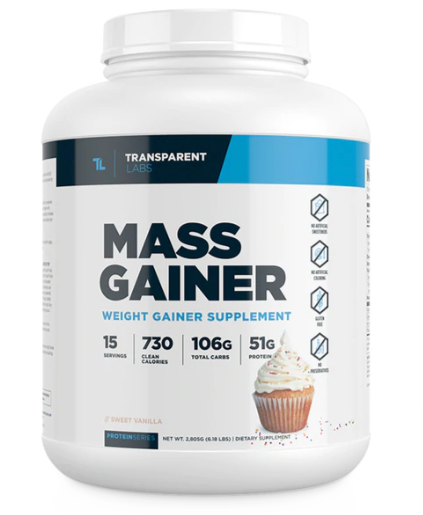
Calories per serving: 760
Carbs: 109g
Fat: 12g
Protein: 53g
Protein source: Grass-Fed Whey Protein
Flavors: Sweet Vanilla, Chocolate Glazed Donut
Largest tub size: 6.18 lbs (2.8 kg)
Servings per container: 15
Cost per serving: $4.67
Transparent Labs Overview
Transparent Lab’s Mass Gainer is our top pick for a few reasons. First, the supplement is sweetened with stevia and monk fruit, so you don’t have the fake sugars that many mass gainers and protein powders contain. The carbohydrate sources are oats, sweet potatoes, and organic tapioca, which are also more natural.
Additionally, there are no artificial preservatives or coloring, and it’s gluten-free and non-GMO, making it a healthier option for your bulk.
The company itself is also reputable. Transparent Labs is a well-known brand for health supplements and bases its products on science, hard evidence, and unbiased studies.
Their independent advisory board includes personal trainers, clinical physiologists, medical doctors, and registered dieticians, so you know you’re getting a product with experts behind it.Add in their 60-day money-back guarantee, and you can see why this is Fitness Mentors’ top choice!
I have high trust in Transparent Labs to produce quality products, and have used them for years for various supplements. If you are a PT recommending a mass gainer to a client, this is a good one to start with. While they are on the pricier side, you get confidence in the quality in return.
Overall Best Protein Powder For Weight Gain Over 1,000 Calories Per Serving
Optimum Nutrition Serious Mass
PRICE
★★★★★ Rated 5 out of 5
QUALITY
★★★★★ Rated 5 out of 5
FLAVORS
★★★★★ Rated 5 out of 5
OVERALL
★★★★★ Rated 4.5 out of 5
Pros
- High calorie formula
- Great taste profile
- Highly competitive pricing
Cons
- Complaints about lumping are frequent
- High sugar content at 29g a serving
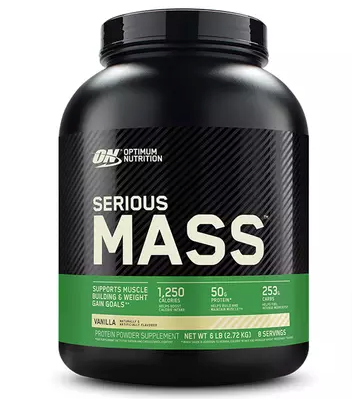
Calories per serving: 1,250
Carbs: ~254g
Fat: ~4g
Protein: 50g
Protein source: Whey, Calcium Caseinate & Egg Whites
Flavors: Chocolate, Chocolate Peanut Butter, Strawberry, Vanilla
Largest tub size: 12 lbs (5.44kg)
Servings per container: 16
Cost per serving: $4.75
Optimum Nutrition overview
Optimum Nutrition is a brand built on using the highest quality raw ingredients in a state-of-the-art approach. Each product is tested and retested to ensure you know what’s going into your body.
The company’s Serious Mass product is our top choice overall for over 1,000 calories per serving protein powder because of the quality of what’s in it, including the addition of 25 vitamins and essential minerals.
The powder is also great mixed with other foods and liquids to add more flavor and calories, like fruits, milk, and nut butters – giving you endless options for a great meal
Optimum Nutrition has been another trusted source of supplements for myself and clients for many years. Their Serious Mass gainer is a great choice if you’re looking to maximize calories in a post workout shake, or simply trying to bump your calories overall. I’ve used Serious Mass with good success over the years, and as long as you’re training hard and recovering well, it can be a great addition to a bulk.
Best Affordable Protein Powder For Weight Gain Under 1,000 Calories Per Serving
CytoSport Muscle Milk Gainer
PRICE
★★★★★ Rated 5 out of 5
QUALITY
★★★★★ Rated 4.5 out of 5
FLAVORS
★★★★★ Rated 3.5 out of 5
OVERALL
★★★★★ Rated 4 out of 5
Pros
- Best budget mass gainer
- Lactose free
Cons
- Complaints about flavors are common
- Low protein compared to other brands
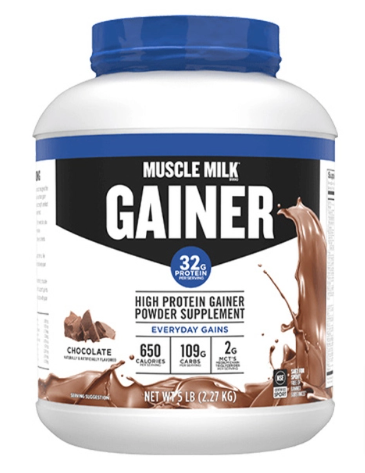
Calories per serving: 650
Carbs: 109g
Fat: 9g
Protein: 32g
Protein source: Milk protein isolate, caseins, whey protein
Flavors: Cookies & Creme, Vanilla Creme, Chocolate
Largest tub size: 5 lb (2.27 kg)
Servings per container: 14
Cost per serving: $2.78
CytoSport overview
Despite proteins derived from dairy, this gainer is actually lactose-free and includes 20 vitamins and minerals, including calcium and electrolytes.
Muscle Milk Gainer contains a special Protein System that combines proteins from multiple sources to deliver them to your body over an extended period. These include faster-acting whey proteins and slower acting casein proteins to provide longer term gaining potential.
If you’re not looking to break the bank, this is a great choice for your gaining goals.
The MuscleMilk gainer is usually my top choice for affordable mass gainers, and almost always my recommendation for anybody looking for a lactose-free alternative. I’ve always enjoyed their flavors and this mass gainer has great mixability. I’ve recommended it many times over!
Best Affordable Protein Powder For Weight Gain Over 1,000 Calories Per Serving
Dymatize Super Mass Gainer
PRICE
★★★★★ Rated 5 out of 5
QUALITY
★★★★★ Rated 4 out of 5
FLAVORS
★★★★★ Rated 3.5 out of 5
OVERALL
★★★★★ Rated 4 out of 5
Pros
- Great budget calorie powder
- Makes you full quickly
Cons
- Common complaints about sludge-like thickness
- Taste is often a customer complaint
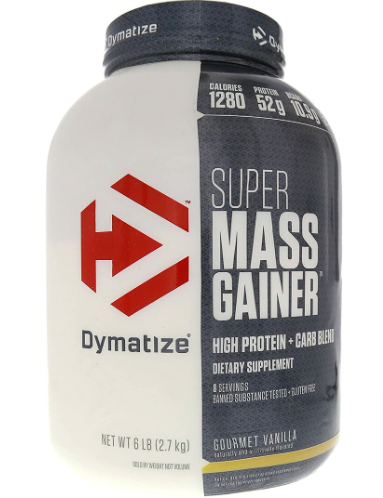
Calories per serving: 1280
Carbs: 252g
Fat: 4.5g
Protein: 50g
Protein source: Whey, casein, egg
Flavors: Rich Chocolate, Gourmet Vanilla, Cookies & Cream
Largest tub size: 6 lbs (2.7kg)
Servings per container: 16
Cost per serving: $2.68
Dymatize overview
Dymatize focuses on a special high-quality blend of complex carbohydrates to help build mass and keep your energy up.
Each serving also includes 17g of BCAAs (Branched-Chain Amino Acids) as well as 7.7g of L-Leucine, an amino acid that helps activate protein synthesis in your muscles.
The flavors are delicious (our favorite is the Rich Chocolate), and the product mixes very well with both milk and water. In fact, mixing it with 32 ounces of whole milk will increase your calorie count to 1900 per serving if you are in need of a bit extra.
So if you’re looking for some hefty calories and carbs, but want the lower cost, Dymatize Super Mass Gainer is a great choice.
Dymatize is my no-brainer for a cost effective high-calorie mass gainer. It’s my recommendation for bulking on a budget. Dymatize is dedicated to being evidence-based, and I trust the brand. I’ve only tried the chocolate and cookies and cream, and they were fantastic!
Best Vegan Protein Powder For Weight Gain
Vegan Naked Mass
PRICE
★★★★★ Rated 4 out of 5
QUALITY
★★★★★ Rated 5 out of 5
FLAVORS
★★★★★ Rated 3.5 out of 5
OVERALL
★★★★★ Rated 4 out of 5
Pros
- Free of many allergens like dairy and gluten
- GMO free
Cons
- High sugar content
- Vegan option makes it pricey
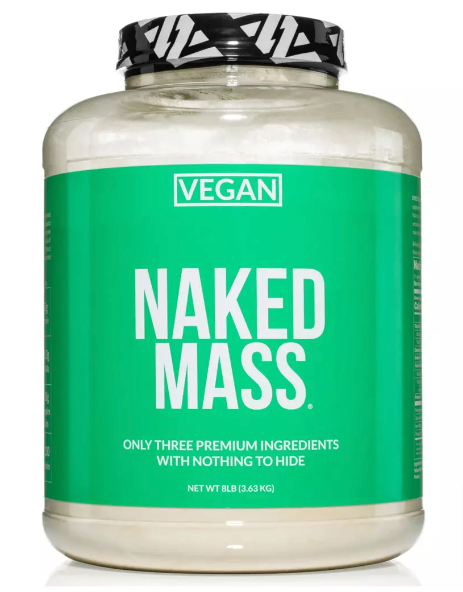
Calories per serving: 1,230
Carbs: 248g
Fat: 4g
Protein: 50g
Protein source: Pea protein and brown rice protein
Flavors: Chocolate and Vanilla
Largest tub size: 8 lb (3.63 kg)
Servings per container: 11
Cost per serving: $5.91
Vegan Naked Mass overview
Naked Nutrition’s Vegan Naked Mass combines pea protein and brown rice protein to give you a completely plant-based blend for your bulking goals.
We like this product because in addition to being vegan, it’s also free of artificial ingredients. You can count the ingredients on one hand, and they’re all recognizable – while still including all 9 essential amino acids.
In addition, if you’re environmentally conscientious, the farming practices used to create the product are sustainable, which sets it apart from other vegan protein powders.
For vegan clients or friends, Naked Mass is almost always my first recommendation. I trust the brand, and they use quality sources of protein. It’s a bit more expensive, but many vegan products are! I wish they had more flavors, but both chocolate and vanilla are tasty.
Best Protein Powder For Weight Gain With Lower Carbs
Optimum Nutrition Pro Gainer
PRICE
★★★★★ Rated 4 out of 5
QUALITY
★★★★★ Rated 5 out of 5
FLAVORS
★★★★★ Rated 3.5 out of 5
OVERALL
★★★★★ Rated 4 out of 5
Pros
- Free of many allergens like dairy and gluten
- GMO free
Cons
- High sugar content
- Vegan option makes it pricey
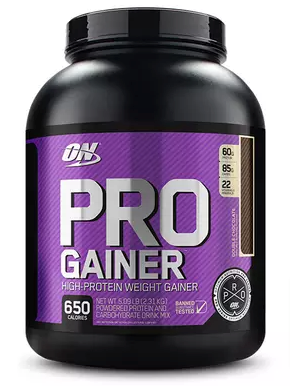
Calories per serving: 650
Carbs: 85g
Fat: 9g
Protein: 60g
Protein source: Whey and casein
Flavors: Double Chocolate and Vanilla Custard
Largest tub size: 10 lb
Servings per container: 28
Cost per serving: $3.68
Optimum Nutrition Pro Gainer
Most gainer powders have triple-digit carb content, so if you’re looking to bulk up with a lower ratio, this may be the option for you.
With a 65:85 protein to carb ratio and low added sugars, these shakes are a great supplement to a balanced diet. They even include a lot of extra vitamins and minerals to make the calories count!
Best Protein Powder For Weight Gain With Creatine
MuscleMeds Carnivor Mass Beef Protein
PRICE
★★★★★ Rated 4.5 out of 5
QUALITY
★★★★★ Rated 5 out of 5
FLAVORS
★★★★★ Rated 3.5 out of 5
OVERALL
★★★★★ Rated 4 out of 5
Pros
- Free of many allergens like dairy and gluten
- GMO free
Cons
- High sugar content
- Vegan option makes it pricey
Calories per serving: 720
Carbs: 125g
Fat: 2.5g
Protein: 50g
Protein source: Beef protein isolate
Flavors: Chocolate Peanut Butter, Chocolate Fudge, Vanilla Caramel and Strawberry
Largest tub size: 6 lbs (2.72 kg)
Servings per container: 14
Cost per serving: $3.62
Carnivor Mass overview
Most gainer powders have triple-digit carb content, so if you’re looking to bulk up with a lower ratio, this may be the option for you.
With a 65:85 protein to carb ratio and low added sugars, these shakes are a great supplement to a balanced diet. They even include a lot of extra vitamins and minerals to make the calories count!
Creatine is a substance that’s found naturally in the body, and it’s also available in supplement form. It’s often used by athletes and bodybuilders to improve performance and increase muscle mass.
Creatine works by supplying energy to the muscles, which can help improve strength and power. It may also help reduce fatigue during exercise.
MuscleMeds Carnivor Mass Beef Protein is loaded up with creatine as well as blocked-chain amino acids your muscles need. With four flavors to choose from, it’s a great choice if you’re looking for a weight gain protein powder with creatine.
However, it’s important to note that not everyone responds to creatine supplements in the same way. Some people may see no benefit from taking it, while others may experience side effects.
Carnivor Mass is often my first recommendation when friends or clients are seeking a low or no sugar option. It also has a ton of protein per serving, making a good choice for high protein bulks. I’ve noticed the flavors can have meat-like aftertaste at times, but Muscle Meds does a good job making it taste good. I also found it kept me full for quite a while.
Mass Gainer Alternatives
The below mass gainers are also worth mentioning but didn’t quite make our top picks for some of the more popular classifications around price, calories, creatine, or vegan options. This doesn’t mean they are not great options, as they all come from reputable sources and we still highly recommend them.
Best Protein Powder For Weight Gain For Competitive Sports
Optimum Nutrition Gold Standard Gainer
Calories per serving: 750-770
Carbs: 109-116g
Fat: 9-10g
Protein: 55g
Protein source: Whey and isolates
Flavors: Colossal Chocolate, Vanilla Ice Cream
Largest tub size: 10.29 lb (4.67 kg)
Servings per container: 23
Cost per serving: $3.91
When it comes to competitive sports, it’s especially important to know what’s going into your body.
Gold Standard Gainer is banned substance tested, so you can be assured it’s acceptable to take if you’re involved in competition.
This powder contains complete dairy proteins from mainly isolates and oat, pea and potato carbohydrates. Included fats come from flax, chia & MCTs for added benefits.
If you need a protein powder for weight gain that gives you a good source of carbs and proteins, but is tested to ensure you can use it in competitive sports, this is a great pick.
Top-Rated Protein Powder For Weight Gain By Customers
Calories per serving: 2050
Carbs: 440g
Fat: 6g
Protein: 60g
Protein source: Whey
Flavors: Delicious Strawberry, Triple Chocolate Brownie, Vanilla Milkshake
Largest tub size: 22 lbs (9.98 kg)
Servings per container: 20
Cost per serving: $4.80
With thousands of verified 5-star ratings across multiple sites, MuscleTech Mass-Tech Extreme 2000 packs a ton of nutrients into a serving.
Not only is it high in calories, carbs and protein, it also includes 10g of creatine and 20 vitamins and minerals, making it an ideal macronutrient profile for bulking up.
Some of the reviews boast “The most complete weight gainer on the market, very good flavor. Muscletech is one of my favorite brands” as well as “Mixes great, easy to digest, no grit, and great flavor”.
So if you’re looking for a weight gaining protein powder that has the backing of tons of people, this one might be the choice for you.
Protein Powder For Weight Gain With The Most Flavor Options
ALLMAX Nutrition QuickMass
Calories per serving: 1,010
Carbs: 170g
Fat: 8g
Protein: 64g
Protein source: Whey and isolates
Flavors: Vanilla, Chocolate, Strawberry Banana, Cookies & Cream and Chocolate Peanut Butter
Largest tub size: 6 lbs (2.72kg)
Servings per container: 10
Cost per serving: $5.99
has a great variety of flavor
Shakes can get boring after a while, especially with the size of them when you’re intending to bulk up.
ALLMAX Nutrition QuickMass has a great variety of flavor options you can mix and match and boasts a popular 3-to-1 carb to protein ratio.
In addition, this supplement includes NP5, a revolutionary patent-pending calorie activation technology.
What Do Protein Powders for Weight Gain / Mass Gainers Do?
Mass and weight gainers are sports nutrition products that are designed to help athletes and bodybuilders bulk up and gain weight. They usually come in powder form, and can be mixed with water or milk to create a shake.
Protein powders for weight gain typically contain high levels of protein, carbs and calories, making them ideal for those who struggle to consume enough calories and nutrients through their diet alone.
While these powders can be beneficial for those trying to bulk up, it’s important to choose one that contains quality ingredients and is appropriate for your individual goals. Not all protein powders are created equal, and some may even do more harm than good.
How To Choose A Good Protein Powder For Weight Gain For Your Needs
Here’s a look at some things to consider when selecting a protein powder for weight gain.
- Protein content: Look for a protein powder or mass gainer that contains at least 30 grams of protein per serving as well as a high concentration of branched chain amino acids. Protein is essential for muscle growth and development, so you’ll want to make sure you’re getting enough.
- Carbohydrate content: Protein powders for weight gain typically contain high levels of carbs, which can help replenish glycogen stores and promote muscle growth. However, if you’re trying to gain minimal fat while gaining muscle, or are watching your carb intake, you may want to choose one with lower carb levels.
- Calorie content: Most protein powders for weight gain are high in calories, which is necessary for those trying to bulk up.
- Ingredients: Take a look at the ingredient list to see what’s actually in the product. Avoid products that contain fillers, artificial flavors or sweeteners, and other unnecessary ingredients.
- Third-Party Testing: Many products do third-party testing, so you know you’re getting what you’re supposed to. Some of the more well-known organizations that do this testing include NSF International, Eurofins Scientific and USP.
- Cost: Protein powders for weight gain can be expensive, so it’s important to find one that fits into your budget. There are a variety of quality products on the market, so you should be able to find one that’s affordable.
Frequently Asked Questions
There is no one-size-fits-all answer to this question, and truth to be told there often isn’t a universal “best time” to drink your gainers. What’s most important is that you’re getting adequate calories, protein and nutrients in general. However, general advice often recommends drinking mass gainer early in the morning and immediately after workouts.
There is no definitive answer to this question, as mass gainers can have different effects on body weight and muscle growth. Some mass gainer supplements may help to increase muscle mass, while others may cause weight gain. The best way to find which mass gainer supplement is best for you is to speak with a nutritionist or doctor who can help you create a personalized nutrition plan.
Nutritionists and weight-loss experts generally agree that mass gainer supplements can be useful for people who are trying to gain weight or muscle mass. However, there is no definitive answer as to whether mass gainer supplements should be taken every day. Some people may find that taking mass gainer supplements regularly helps them gain weight more quickly, while others may not see any significant benefits. The best way to determine whether taking mass gainer supplements daily is best for you depends on your individual goals, schedule, and workout routine.
To gain weight, you must consume more calories than you burn. Mass gainers help you do this by simply adding calories to your diet, and they’re often the easiest way to do so, but they certainly aren’t the only option.
Final Words
While these are our top picks, it’s always best to consult a doctor or nutritionist before taking any supplements, as they may recommend alternatives.
Whether your fitness goal is to add muscle with minimal fat or to bulk up all around, there are a lot of choices out there and we hope this guide helps you compare the multitude of products!
Read more: Survey Results: The Best In Fitness & Personal Training for 2026
BS Kinesiology, NASM-CPT, CES, PES FNS, MMAS, WLS, FM-CPT, ACE-CPT, Master Personal Trainer
Eddie Lester is the founder and CEO of Fitness Mentors. With more that 17 years experience in the health, fitness and athletics field, he has helped tens of thousands of personal trainers transform their careers and reach their business goals. With a background in Kinesiology and Exercise Physiology Eddie has assisted in research that is spearheading the exercise science field.
His in-depth knowledge of the Health, Wellness and Fitness industry has earned him a place as a regular contributor on high profile sites such as the Personal Trainer Development Center, (Dan to list top sites) online where he writes about nutrition and personal training.
His contributions to help personal trainers include a weekly blog, podcast, youtube channel and multiple books including: Business and Sales: the Guide to Success as a Personal Trainer.
Eddie’s Philosophy often times includes focusing on the bigger picture in which daily positive contributions lead to a major impact on himself, his family, his community and the world.
Eddie is commonly found at the beaches of Southern California with his wife Courtney and five kids.