Thinking about becoming a certified virtual nutrition coach in this time of high demand? Here is a guide on how to get started and be successful.
Continue reading
Online Coaching Certification Course
Online Trainer Templates
Facebook Marketing Course
Free Resources
Courses
25% off ALL CEUs with code “Fitness 25”!
Personal Trainer Certification Guides
Personal Trainer Tools and Essentials
Personal Trainer Business Resources
Personal Trainer Career Resources
Nutrition Certification Guides
Featured Resources

Thinking about becoming a certified virtual nutrition coach in this time of high demand? Here is a guide on how to get started and be successful.
Continue readingBecoming a personal trainer starts with deciding which accredited certification to obtain. Here, you will learn the differences between ISSA and NASM.
Continue readingAfter COVID-19 hit in early 2020 the demand for online personal training software soared to new heights. Online training was a sector of the fitness industry that was already growing, but worldwide “stay at home” and “social distancing” orders made online training a necessity for both consumers and trainers virtually overnight – and the trend stuck around.
Online training is and will be the future of personal training, but it comes with different sets of tools and business structures. This is why online personal training software is so important; it helps personal trainers bridge the gap of fitness and technology, and in a much more streamlined and trackable way.
However, online personal training software is not a one-size-fits-all addition to one’s toolbelt. There are many features and benefits of different types of online personal training software, and the purpose of this research guide is to help trainers navigate the best online personal training software for them.
Below we take a deep dive on the most popular features of online training software for trainers as well as look at popular PT software side-by-side. These best online personal training softwares are:
Software | Ease of Use (5 being best) | Approximate Monthly Cost |
|---|---|---|
Trainerize | 3.5 | Free for one user, up to $36 for 15 users
|
Mind Body | 4 | $129 – $599 |
TrueCoach | 4.5 | $19 – $99 |
Virtuagym | 3.5 | Starting at $29 |
PT Minder | 4.5 | $36 – $123 |
Vagaro | 4.5 | Free for one user, up to $60 |
Before we get into the details, let me tell you a little about me.
Why Should You Trust Me?
At Fitness Mentors, we forecasted a demand for this fitness trend long before this happened as today’s technology allows trainers to scale their businesses online and frees them from the constraints of the man-hours needed to make money on in-person training.
As a personal trainer, I have spent years working in the fitness industry and honing my expertise in helping individuals achieve their fitness goals. Through my experience, I have become well-versed in the various tools and resources available to aid in the process, including online personal training software.
To rank the best online personal training software, I draw on my knowledge of the industry and the needs of my clients. I consider factors such as the software’s user interface, the range of features offered, the quality of customer support, and the overall effectiveness in helping clients achieve their fitness goals.
Additionally, as a personal trainer, I have had the opportunity to work with a variety of online personal training software platforms – including providing consulting services on the buildout of software – and have gained insight into the strengths and weaknesses of each. This allows me to provide informed and objective evaluations of different software options.
Overall, my experience and expertise as a personal trainer qualify me to rank the best online personal training software and to make recommendations to clients seeking to enhance their fitness journey through technology.
Trainerize is rated 3.5 out of 5 for ease of use.
OVERVIEW
Trainerize is a top-rated personal trainer software that is leveraged by personal trainers, health clubs, and other fitness professionals. Trainers can create custom programs for each client, track results, and communicate through the platform. It also has customizable workout plans and built-in templates. It can be accessed on web browsers, or Apple and Android apps.
PRICE
Trainers can save 10% on yearly billing
Pros
Cons
Client Tracking: In addition to body stats, uploadable progress photos, and target monitoring, Trainerize also allows for client nutrition tracking via connection with the MyFitnessPal app.
Client Management: The software has in-app video calls, messaging, and push notifications. For leads, clients can be added from the phone, computer, tablet or via email.
Client Scheduling: Scheduling can be automated through the app.
Payment Processing: Trainers can use the in-app Trainerize Pay option or use a third-party payment solution such as PayPal, Stripe, or Shopify.
Workout Templates: Trainerize has over 20 pre-built workouts that can be imported for client use.
Workout Builder: Trainers can upload their workouts or YouTube videos or upload videos in-app.
Live, Virtual, & On-Demand Training: Trainerize only offers on-demand training videos via uploaded videos.
Mindbody is rated 4 out of 5 stars for ease of use.
OVERVIEW
PRICE
Pros
Cons
Client Tracking: Fitness progress is monitored by FitMetrix, Mindbody’s tool to review things like heart rate, calorie burn, and equipment reservations.
Client Management: Client management features include individual client profiles, email tracking and renewals, and a client-facing portal.
Client Scheduling: Brandable booking and scheduling features make for an intuitive calendar.
Payment Processing: Clients can pay online through the app or memberships can be set up for automatic payments.
Workout Templates: No pre-existing workout templates available.
Workout Builder: No pre-existing workout building programs appear to be available.
Live, Virtual, & On-Demand Training: Integrated within the software is the ability to live stream workouts or provide pre-recorded, on-demand videos.
TrueCoach is rated 4.5 out of 5 stars for ease of use.
OVERVIEW
PRICE
Pros
Cons
Client Tracking: Trainers and their clients have access to progress tracking that give metrics over time and more granular views for trainers on items such as goals, access to equipment, nutrition info, and more.
Client Management: TrueCoach has a full suite of client management tools including personalized workout plans, in-app communication, and progress trackers.
Client Scheduling: Trainers can schedule within the software.
Payment Processing: Payments can be processed inside the app. This is built on Stripe.
Workout Templates: TrueCoach currently has over 1,200 videos in their library.
Workout Builder: Trainers can use the workout builder to design and deliver custom workouts.
Live, Virtual, & On-Demand Training: TrueCoach only offers on-demand training videos via uploaded videos.
Virtuagym is rated 3.5 out of 5 stars for ease of use.
OVERVIEW
PRICE
*Pricing not available on Virtuagym website.
Pros
Cons
Client Tracking: Client progress tracking is available and can include exercises, food plans and progress metrics.
Client Management: Client management features include client sign-ins, invoicing, and a branded fitness app.
Client Scheduling: Clients can book automatically through the app.
Payment Processing: Automatic invoicing or one-off invoicing is available along with integrations with all major payment providers.
Workout Templates: Virtuagym contains over 4,500 3D exercises, boasting the biggest exercise database of any software.
Workout Builder: Trainers can create digital plans from the 3D exercises and duplicate templates.
Live, Virtual, & On-Demand Training: Virtuagym only appears to offer on-demand training via the 3D training builders.
Starts at $29/month*
Prices listed are non-promotional, full-price, non-member prices.
*Pricing not available on Virtuagym website.
PTminder is rated 4.5 out of 5 stars for ease of use.
OVERVIEW
PRICE
Save 10% with annual billing.
Pros
Cons
Client Tracking: Client progress tracking is available via the app.
Client Management: Client bookings, progress, and payments can be managed inside the app.
Client Scheduling: Clients can book and pay for their training from their smartphones.
Payment Processing: Manage payments through the app with reputable third-party integrations.
Workout Templates: PTminder has a built-in workout library that can be customized for clients.
Workout Builder: Custom workouts can be built and assigned to clients; however, it is unclear if trainers can upload their own workouts to the platform.
Live, Virtual, & On-Demand Training: PTminder appears to offer on-demand training via their templates, but does not appear to offer live or virtual training despite labeling themselves as a virtual training software.
Starts at $29/month*
Prices listed are non-promotional, full-price, non-member prices.
*Pricing not available on Virtuagym website.
Vagaro is rated 4.5 out of 5 stars for ease of use.
OVERVIEW
PRICE
Save 10% with annual billing.
Pros
Cons
Client Tracking: Trainers can track clients’ workouts, meal plans, birthdays and more.
Client Management: Trainers have access to a dashboard to generate custom reports, view client retention, review client preferences, generate custom forms, and create memberships.
Client Scheduling: Clients are able to schedule their training sessions via the app, on Facebook, Yelp, or Facebook.
Payment Processing: Payments can be processed from the Vagaro app as well as with hardware such as cash drawers, credit card readers and more.
Workout Templates: Vagaro does not appear to have a workout library.
Workout Builder: Vagaro does not appear to have workout builder functionality.
Live, Virtual, & On-Demand Training: Trainers can use Vagaro for virtual classes and live stream with notification reminders on email, text, and via push notification.
1st Trainer Free
Prices listed are non-promotional, full-price, non-member prices.
In their most basic form, online personal trainer software exists to help personal trainers manage and connect with their clients. But online personal training software is so much more than that. Check out some of these popular features that are becoming in more demand and consider each one as it relates to your business.
Client Tracker: Tracking results is a great way for trainers to get feedback to share with their clients. Many softwares also allow clients to access the same fitness tracking data so they can, for example, see how often they’ve worked out, how many calories they’ve burned, or what their next fitness milestones are.
Client Management: A basic feature consistent with most online personal training software is client management. Client management features serve to decrease your administrative workload and automate processes such as memberships, attendance, lead tracking, clients-specific fitness package delivery, and session sign-ups. This also allows trainers and their clients to communicate via online mediums such as in-app, via text, email, or the phone.
Client Scheduling: Often a subset of client management, client scheduling features allow trainers and clients to collaborate via an online calendar. This can be used for one-on-one sessions or group fitness classes where students can simply sign up online and trainers can view their upcoming calendars with little to no interaction with students beforehand.
Payment Processing:
If creating and displaying your personal training options on your software for the public to access is one feature, allowing them to purchase them online is another. Many trainers want online training software that allows them to integrate third-party payment applications such as PayPal, Zelle, Venmo, Square, or Stripe.
Workout Templates: For trainers who want more turn-key features, pre-existing workout templates are a real favorite of the more modern online training softwares. With these workout templates, trainers can, for example, send 10 videos of leg workouts that exist within the software already. Trainers don’t have to spend time or resources creating videos or specific workouts, they can simply plug-in the templates that exist within their software.
Workout Builder:
In the Fitness Mentors Certified Online Personal Trainer course, there are six ways online personal trainers can monetize their business:
which type of online training business you run is important as this will greatly dictate the features you need to run your business most effectively. For example, if you are only selling non-personalized PDF fitness programs then you won’t need a software that offers live video streaming functionality.
On the contrary, if you want to conduct live fitness classes virtually, you’ll want to make sure your software has all the bells and whistles you need to make this a success.
Bonus tip for online personal training software: In-person, online or hybrid business models are still very popular. If you are mixing in-person training with your online training, try to find a software that helps manage both types of clients.
As you have learned above, each personal training software offers something slightly different. Upon analyzing these overviews, you should have a better idea of what may or may not work for you. This is not an exhaustive list of features, so you should try to determine which features you absolutely need and then remove available software options from your list to narrow things down.
Once you have narrowed your options down it is important to try and determine which PT software is right for you. You can consider the features and integrations, input from other trainers in your network, the needs of your clients, the brand power behind the software, pricing, and a whole slew of other factors.
There really is no best personal training software; the best personal training software is the one that best fits your needs and budget. The decision is a rather big commitment as you’ll likely end up placing all of your clients and employees on one piece of software and dedicate a lot of time to setting it all up.
I encourage you to take you time with this decision, try a few demos, and find some third-party review sites. With the right software you’ll be saving a lot of time, creating an invaluable experience for your clients, and helping build your company. Choose wisely and let me know if you have any questions or have any experience with any of the software companies mentioned in the comments.
Personal training software is a type of technology that helps personal trainers and their clients manage and track fitness programs online. It can include features such as workout plans, progress tracking, and communication tools.
Personal training software can offer many benefits for both personal trainers and their clients. These include improved communication, better organization of workout plans and progress tracking, increased motivation, and easier scheduling of sessions.
The cost of personal training software can vary depending on the specific features and level of support offered. Some software may be free, while others can cost several hundred dollars per month.
Most personal training software is designed to be user-friendly and easy to navigate. However, the level of ease may vary depending on the specific software and individual user experience.
Yes, personal training software can be used for online coaching, allowing personal trainers to work with clients remotely. Many software options offer video conferencing and messaging features to facilitate communication and support.
Many personal training software options offer customization options to fit the unique needs of personal trainers and their clients. This can include personalized workout plans, tracking metrics, and communication preferences.
Personal training software typically includes privacy and security measures such as password protection, data encryption, and secure communication channels to protect sensitive client information.

Group fitness has exploded in popularity, and for good reason – it’s energizing, social, and incredibly motivating. There’s something powerful about sweating it out alongside others who share your drive and determination. As a group fitness instructor, you’re not just leading a workout – you’re inspiring transformation, building confidence, and creating a community that thrives on movement.
But before you can take the stage (or studio floor) and lead with confidence, you need the right foundation. Earning a recognized group fitness certification ensures you’re equipped with the science, techniques, and safety knowledge to design fun, effective, and inclusive workouts for people of all fitness levels. It’s more than a credential – it’s your passport to a rewarding career that blends passion with purpose.
In this guide, we’ll break down the top group fitness certifications in the industry, comparing what makes each one unique and how they align with your goals. Whether you’re a fitness enthusiast looking to turn your passion into a career or a seasoned trainer ready to expand your expertise, this post will help you choose the certification that fits your vision and lifestyle.
Get ready to discover how the right certification can open doors, boost your credibility, and help you empower others – one class at a time.

We will look closer at pricing, expected study time, CEU requirements and the primary focus of education.
Here’s a quick glimpse:
| Certification | Pricing | Expected Study Time | CEU Requirements | Primary Focus of Education |
|---|---|---|---|---|
|
$285-$465 |
Self-paced, exam within 6 months |
20 hours every 2 years |
Comprehensive fitness education with an emphasis on exercise science and practical application. |
|
|
$299-$858 |
180 days, but many students take 6-8 weeks |
15 hours every 2 years |
Blending exercise science with choreography and music to deliver dynamic group fitness classes. |
|
|
$640 |
Self-paced |
20 hours every 2 years |
Holistic approach covering exercise science, program design, coaching techniques, and business skills. |
|
|
$399 |
Self-paced |
Is a CEU in itself |
Scientifically-based training methods with a focus on corrective exercise, functional movement, and injury prevention. |
As a certified personal trainer with years of hands-on experience, I’ve made it my mission to stay ahead of the curve – constantly exploring the newest trends, research, and innovations in group fitness. My passion for health and movement goes far beyond the gym; it’s a lifelong commitment to helping others discover their strength and potential.
Over the years, I’ve earned multiple certifications and immersed myself in a variety of group fitness formats – from high-intensity interval training to mind-body disciplines. Working closely with top instructors has given me valuable insights into what truly sets the best certifications apart.
Through this guide, I want to share that knowledge with you. My goal is to help you navigate the world of group fitness certifications with confidence, offering advice grounded in real-world experience, professional integrity, and a genuine desire to see you succeed in your fitness career.
Bonus Tip:
> Certified personal trainers are able to instruct group fitness classes but group fitness trainers are generally ineligible to train one-on-one in most corporate settings.
Here are the factors we looked at to determine the best group fitness certification course:
Primary Focus of Education:
considers the educational foundation of the course and what students can expect to learn.
The ACE Group Fitness certification is a comprehensive program that equips individuals with the knowledge and skills to lead safe and effective group exercise classes, focusing on proper form, exercise selection, and class management.
PRICE
$285-$465
Expected Study Time
3-6 months
CEU Requirement
20 hours every 2 years
Primary Focus oOf Education
Comprehensive fitness education with an emphasis on exercise science and practical application.
Pros
Cons
Writers Note
I strongly believe that the ACE Group Fitness Instructor certification is an excellent choice for fitness professionals seeking to expand their expertise in group exercise instruction. The ACE certification carries significant recognition and respect within the industry, opening doors to numerous employment opportunities and enhancing credibility with potential clients. The program’s comprehensive curriculum covers essential aspects such as anatomy, physiology, program design, and class management, equipping instructors with the knowledge and skills needed to deliver safe and effective workouts.
With an emphasis on safety and proper form, ACE ensures that instructors prioritize the well-being of participants, reducing the risk of injuries. Additionally, ACE offers a range of continuing education opportunities to keep instructors up to date with the latest trends and research, allowing for continuous growth and professional development. Overall, the ACE Group Fitness Instructor certification stands as a solid investment in one’s career, providing a strong foundation and the tools necessary for success in the dynamic and rewarding field of group exercise instruction.
PRICE
Expected Study Time
CEU Requirement
Primary Focus oOf Education
Pros
Cons
Writers Note
I wholeheartedly recommend the AFAA Group Fitness Instructor certification as an excellent choice for fitness professionals looking to excel in group exercise instruction. With its established reputation in the industry, the AFAA certification carries significant weight and recognition, making it a valuable credential for employment opportunities and client trust. The comprehensive curriculum of the program covers essential topics such as exercise science, anatomy, teaching methodologies, and program design, providing instructors with a well-rounded knowledge base.
One standout aspect of the AFAA certification is its practical focus, emphasizing hands-on application and effective teaching techniques, enabling instructors to deliver engaging and impactful group fitness classes.
Additionally, AFAA offers continuing education options, allowing instructors to expand their skill set and stay up to date with industry advancements. While there may be some limitations in terms of specialization options or specific formats, the AFAA Group Fitness Instructor certification serves as a solid foundation for any fitness professional seeking to thrive in the dynamic world of group exercise instruction.
The ISSA Group Fitness certification is a comprehensive program that provides individuals with the knowledge and skills to lead effective group exercise classes, focusing on exercise science, program design, and teaching methodologies, while also offering flexible study options and ongoing support for aspiring instructors.
PRICE
$640
Expected Study Time
CEU Requirement
Primary Focus oOf Education
Pros
Cons
Writers Note
I confidently recommend the ISSA Group Fitness Instructor certification as an excellent choice for fitness professionals seeking to become skilled and knowledgeable in leading group exercise classes.
One of the standout advantages of the ISSA certification is its flexible study options, allowing individuals to learn at their own pace through online coursework. The comprehensive curriculum covers all the essential aspects of group fitness instruction, from exercise science and program design to teaching methodologies and practical application.
ISSA also provides ongoing support to students, ensuring they have access to valuable resources, forums, and a dedicated student success team. While ISSA may be less recognized compared to some other certifications, its focus on delivering a well-rounded education and the flexibility it offers make it a solid foundation for aspiring group fitness instructors.
PRICE
Expected Study Time
CEU Requirement
Primary Focus oOf Education
Pros
Cons
Writers Note
The NASM Group Fitness Instructor certification as an excellent choice for fitness professionals seeking to excel in the realm of group exercise instruction. The NASM certification provides a strong foundation in exercise programming, equipping instructors with the knowledge and skills to design safe and effective workouts for various group fitness formats.
What sets NASM apart is its evidence-based approach, ensuring that instructors stay up to date with the latest research-backed information and strategies. Additionally, NASM places a significant emphasis on coaching techniques and effective communication skills, enabling instructors to motivate and engage participants during group fitness classes.
With its recognition and credibility in the fitness industry, the NASM certification opens doors to numerous job opportunities and enhances one’s professional standing.
There are many factors that can influence how much you can make as a group fitness instructor. Brand new, entry-level instructors with just a handful of classes should not expect to make as much as seasoned instructors who are teaching classes of 10+ students, two or more times per day.
However, the limits to your salary as a group fitness instructor may be entirely up to you as the online group training world allows you to monetize your business while you sleep. If you create courses on-demand, you can potentially have an unlimited amount of students compared to the instructor that is subject to how many hours there are in a day.
Accreditation for group fitness certifications is an important factor because it speaks to the professionalism and quality of a course. Accreditation is performed by reputable third-party organizations that review courses to ensure the safety and wellbeing of the public.
Group fitness certifications that wish to become accredited must submit their courses and final exams to third-party credentialing companies for review along with a hefty credentialing fee. These are the baseline in which certifications meet fitness standards and promote competency for entry-level employment.
ACE, AFAA, and ISSA all have NCCA-accreditation while NASM’s course does not. However, NASM, perhaps the biggest name in personal training certifications, offers their course as a continuing education specialization and assumes aspiring group fitness instructors to be existing certified personal trainers. Remember, certified personal trainers can already train group fitness classes with their existing cert so this specialization makes sense for their brand.
NCCA Accredited Group Fitness Certifications:
No one can tell you what the best group fitness certification is. At the end of the day, the choice is subjective and depends on how you weigh the above factors. For example, if learning about 12 group fitness exercise training format sounds awesome to you, then ISSA may be an ideal choice. On the other hand, you may find that the price point of ACE and the curriculum better resonates with your wallet.
Another very important factor not mentioned above is the career path you are choosing. If you know that there is a specific gym you want to work with, you’d want to check with them to see which group fitness certifications they require for employees.
The point is you need to be honest with yourself and look at all the variables for choosing a course and weigh them to determine the best option for you.
And if you’re searching for the best group fitness certification free, Fitness Mentor offers the best for you.
I hope that this post has helped you make the decision to choose the best group fitness certification that much easier. If you have any questions, or would like to see anything else added to this list, please leave a comment below.
Before sitting for a group fitness instructor exam, you’ll likely need to meet the following:
From there, you’ll need to choose a certification body, schedule your exam and begin studying, pass your exam, then get a job as a group fitness trainer. Learn more about
Most group fitness certifications can be obtained in about 6 months.
There are a lot of group fitness jobs available to you when you have a certification including the instruction of: yoga, pilates, cycling, Zumba, barre, HIIT, and virtual training.
ACE currently offers the cheapest group fitness certification at $224. However, this is subject to change and looks to be a promotion off their regular $449 package.
There may be some free group fitness certifications out there but they are unlikely to be reputable or help you get a job.
An online personal training certification can be one of the most important pieces of education you’ll receive in your online business. With a structured course like the Online Trainer Academy or the Fitness Mentors Certified Online Personal Trainer you’ll have a good idea of how to monetize this hot trend in fitness and make money while you sleep.
In terms of what you’ll learn and what you’ll take away from each program, there are some major differences. Each program has its own strengths, so before you choose one it pays to understand which might be the best for you.



The Online Trainer Academy (OTA) was the first of its kind and has built its reputation on the back of the Personal Trainer Development Center (thePTDC) website and its founder, Jonathan Goodman, a leading voice in the personal training industry for helping trainers succeed. The course includes video lecture presentations as well as textbook reading. The contents of the course are well-regarded for mindset management and overcoming mental roadblocks.
The Fitness Mentors Certified Online Personal Trainer (FM COPT) course is a 100% online, cutting edge course built by leading fitness education site Fitness Mentors. The head instructor, Eddie Lester, created the site based on years of experience as a trainer and college instructor teaching certifications. The course is centered around helping trainers determine the best type of business model to utilize, provides real mentorship from actual online trainers, a Facebook support group, and promises to teach the true application of online training concepts.
Online Trainer Academy has one package with two payment options: pay in full at $1,999 or use their 6-month payment plan for $366 a month (or $2,196).
Fitness Mentors COPT course offers two pricing tiers of $699 and $1,299, both considerably less expensive than the OTA. The $699 package, Online Trainer Pro, also offers a payment plan of $266 a month for 3 months (or $798). This package includes the final exam, a digital textbook, lecture video presentations, audio book lectures, actionable assignments, bonus learning videos, business templates, templates from other successful online trainers, and an online support group.
The more intensive of the packages, Online Trainer Elite with Live Online 6 Week Course, offers everything in the Online Trainer Pro package with live online classes. It also includes a 6-week live online business course, and lifetime online trainer career mentorship.
Comparing the OTA and the FM COPT on price
For the price conscious trainer, the FM Online Trainer Pro comes in at full $1,300 cheaper than the OTA product and provides a certification that is recognized by the National Board of Fitness Examiners. This makes the OTA course almost three times more expensive.
The core of the OTA course is based on video presentations and accompanying textbook reading. In all, there are about 14 hours of content where students will watch a video lecture and engage in some chapter reading. One-on-one feedback is available to fitness business mentors via online chats.
The OTA course is comprised of five modules:
OTA also has some additional coursework on Facebook/Instagram, and website success.
The FM COPT course is 100% online, includes over 60 hours of content including video lectures, slide presentations, actionable assignments, and chapter reading. The coursework was created by PhDs, college professors, and active online personal trainers. The active phone number is also a selling point for students who want to be able to ask questions to a live person on the fly.

The FM COPT is made up of five major learning sections:
Comparing the OTA and the FM COPT on education
There are some overlapping principles contained in both programs as to be expected. Both aim to prepare you for online training and how to setup your business for maximum efficiency and marketing. The learning materials of the OTA are about 14 hours, where the learning materials of the FM-COPT are around 60 hours. The FM-COPT also has a great deal more logical course progression given that it is created by former college professors, PhD’s, and those intertwined with professional course development. Further, the active phone number for the FM-COPT(424-675-0476) and online Facebook group makes it easy for students to engage with teachers and their peers.
Both courses also provide turn-key assets that allow the trainer to quickly on-board clients. FM COPT has 12 premade online training programs, 12 premade nutrition programs, and whitelabeled templates so you can easily add your branding and info to every program. The OTA has these types of assets as well, but they are mostly based in Google Docs (Google Survey’s, Google Sheets, etc).
The OTA website says that the course can be finished in 8-12 weeks with 3-5 hours of study time each week. There are no completion deadlines and lifetime access is provided. In short, the program is self-paced.
The FM-COPT can be completed in one month if 2-3 hours of aggressive studying are done each day. This approach is not for everyone, but is an option for those trainers who want to learn business skills quickly. A 1-2 month completion is recommended by Fitness Mentors as they say it is more compact in nature and provides the best opportunity for optimal comprehension.
Comparing the OTA and the FM COPT on course duration
Both courses can be completed quickly, however, Fitness Mentors has a study timeline that allows completion in one month. It is likely that both courses should be completed within 8 weeks for optimal comprehension.
The OTA course is made up of five modules before getting to the final exam. Each module has 7-10 chapters, and they are followed by four bonus mini courses. The final is 60 questions, with a passing score of 75% or higher required to graduate. Any retakes after the first test are $50 per test.
The FM COPT is built more along the lines of what you’d expect from a well-designed college course, with step-by-step curriculum, and a career application as the primary focus. This leads up to an exam with 50 multiple choice questions. A score of 70% or better is required to receive the certification, and two exam attempts are provided. Failure to pass the exam on the first two attempts will result in a retest fee of $50.
Comparing the OTA and the FM COPT on exam
The biggest takeaway with the exams is that the FM COPT places more emphasis on a National Board of Fitness Examiners recognition, and an exam to reinforce the true takeaway of the concepts. Both are around the same number of questions, although the COPT allows two chances before a retake fee and the OTA only one.
The OTA has been around for a bit longer than the FM COPT and has a great deal of reviews with lots of high praise. Trainers that like mindset management and mental toughness types of learning will enjoy the OTA course. Further, the OTA provides a good number of premade templates, questionnaires, and resources to help trainers get started engaging with clients right away.
Trainers who transition from in-person training full or part-time love the Fitness Mentors COPT. It is the only program that teaches trainers about all six of the possible models of online training and provides education in a college-like, yet user-friendly, setting that allows trainers to build an online business, scale it, and market it.
Comparing the OTA and the FM COPT on what trainers think
Trainers are trustworthy of products that come out of thePTDC/Jonathon Goodman camp because they know their/his materials to be well-respected in the industry. However, trainers who opt for the cheaper, new kid on the block FM COPT are pleasantly surprised on how the former college instructors have a knack for making students truly comprehend what they’re taught.
Online Trainer Academy
Common reviews from around the web mention some similar strengths and weaknesses of the OTA course. There are also a lot of affiliate relationships with the OTA course meaning many online reviewers are getting paid should their review lead you to a sale of the OTA product. These reviews are obviously going to be a bit more biased and in favor of all things OTA.
The strengths of the program, as exemplified in this review, are the multiple learning formats — digital portal, physical textbooks, and video — that the OTA provides. This student in particular mentions he got a textbook sent to him in Thailand for no extra charge.
Another reviewer said the course paid for itself within three months of graduating. They also said the OTA course makes no illusions that online training is not easy, which they appreciated. On the negative side, this reviewer said the fact that the course has no deadlines may make it difficult for some people to complete it, something that other reviewers mentioned as well.
Other negatives on the OTA from reviewers cite that there is not enough guidance on the information provided. On the plus side, there is a lot of good info, however, some graduates felt that it was hard to know what to do without guidance on all that information.
Fitness Mentors Certified Online Personal Trainer
Reviewers of the FM COPT praise it for providing real person mentorship and support groups to talk application over with Fitness Mentors’ employees or a peer group. Reviewers also liked the various different digital learning formats Fitness Mentors provides such as the — digital textbook, videos, audio books, business templates, and support groups.
The FM COPT has also received acclaim for providing actionable advice on how to transition clients over to a hybrid model of in-person and online before going all-in with online training. Further, the structuring of the course contents to identify step-by-step how to create an online business that is based on your interests in fitness and wellness was also praised.
The shortcomings of the FM COPT are brand awareness of the certification. Trainers thought that clients would not place much merit in it. Another negative of the FM COPT mentioned by one reviewer was the lack of a physical textbook.
Comparing the OTA and the FM COPT on adoption and reviews
Overall, there are no glaring negative reviews with either course. Students of either course may be surprised how in-depth the curriculum is and how much there is to learn about online training. For many students, having access to support groups or mentors was highly valued and where the OTA fell short. For the FM COPT, its freshness to the market may turn some trainers off who are more familiar with thePTDC brand.
For new trainers: It’s a draw, as the OTA is great at motivation and the FM COPT understands the psychology of teaching better than most fitness bodies.
For seasoned trainers: FM COPT, as the program has a focus on transitioning existing trainers to savvy online trainers.
For those with an existing web presence: FM COPT, as the program goes more in-depth with the various types of online businesses, or combinations of them, you can start. It also has brandable templates you can leverage immediately to sell and provide instantly to clients. These templates include complete fitness programs for all goals which allows you to focus on client care and acquisition as opposed to programming.

How to Become a Personal Trainer in 5 Simple Steps

Personal Trainer Salary
Top 5 Exercise Science Careers


We designed this quiz to help you choose the perfect certification based on your learning style and goals.
Watch Our Video: Best Online Personal Trainer Certification
There has never been a better time to invest in a certification as an online personal trainer.
Not only is the industry as a whole earmarked for expansion — the BLS forecasts a 13% growth rate through 2028 — but the success of brands like Peloton, Mirror, and other online fitness options showcase America’s desire for convenient and at-home training.
Couple this with the closure and uncertain future of many gyms due to coronavirus and you have a cocktail of opportunity for those trainers who are able to adapt to the times.
That said, it may seem like a no-brainer to get an Online Personal Trainer Certification but therein lies the question: what is the best online personal trainer certification and which is right for me?
Luckily for you, Fitness Mentors has done the heavy lifting for you and compiled this list of the best personal training certifications based on the following objective criteria:
Today we’ll be looking at these popular online personal trainer certification options:
But before we begin, let’s distinguish some very important characteristics of online personal training certifications and personal trainer certifications you can get online.
Online Personal Trainer Certification VS Personal Trainer Certification Online
Our focus today is on online personal trainer certifications, or certifications that help you learn how to train clients online. Personal trainer certifications online refer to the standard in-person personal training certifications with online study options. An example of the latter would be the Fitness Mentors Certified Personal Trainer course, a class dedicated to certify trainers with the needed credential to train in-person clients.
Now that we are all clear on the differences between the two, let’s learn more about the best online personal training certifications.
Accreditation is one of the most important aspects for personal trainer certifications as it sets the stage for trust and authority. Without an accreditation, trainers (and clients) won’t really know if any professional organization has reviewed the certification curriculum to determine its efficacy.
For consumers, this also ensures their online trainer has gone through the required education to ensure their success and safety. There are certain limitations that exist with an online training environment and a certification helps trainers safely deal with those challenges through additional perspective and understanding of variables — such as form, injury prevention, and communication — that don’t exist as clearly via online mediums.
As it stands today, Fitness Mentors is the only company nationally recognized by the National Board of Fitness Examiners (NBFE), or any other esteemed certification body, to offer an online personal training certification.
Unfortunately, all other online training programs are not third-party reviewed or certified. This is partly due to the fact that online personal training is so new and likely due to the fact that a third-party accreditation is not free for a certification body. Thirdly, most online personal trainer courses are not steeped in science backed information but rather marketability, which makes them unlikely candidates for a third-party accreditation.
Personal Trainer Takeaway: A online personal trainer certification is not a requirement to coach online, however, it does showcase the quality and credibility of a certification as it relates to the trainers and the emphasis on science, business/marketing skills and a college-level curriculum. If this is important to you, the Fitness Mentors Certified Online Personal Trainer is an ideal choice.
The Price includes the cheapest study option and final exam, where relevant. Keep in mind, however, that each of these products is not a formal certification, some are geared to be marketing tools above all else. They are noted accordingly.
Fitness Mentors: $699. Option to add a weekly mentorship program for $199/month.
TribeFit: $3,500 (3 month coaching program). Not a certification.
Online Trainer Academy: $799 for shortened course and $1,999 for complete course. Also offer level 2 Mentorship for a Monthly fee (Estimated at $400-$1000 per month)
Online Trainers Federation: Their bare bones intro course (not a certification), OC 101, is $199. It only runs twice per year, with the goal to upgrade you to the Elite which is estimated to run $300 – $600 per month.
PT Distinction University: Various courses with a la carte pricing. $1,100 for complete course package. Not a Certification.
Personal Trainer Takeaway: There are a lot of options for courses and the depth of the educational options are reflected in the costs. If you are just looking for one-off courses on very specific knowledge, the PT Distinction University has the lowest barrier to entry in terms of cost. You’ll sacrifice depth of knowledge here, however. If you are looking for in-depth knowledge from the ground up on how to become an online trainer, create a business, and market it, the most comprehensive courses are the Fitness Mentors COPT and Online Trainer Academy.
We designed this quiz to help you choose the perfect certification based on your learning style and goals.
Today’s trainers may feel a bit overwhelmed when trying to take in all the components of online training. In addition to knowledge in program design, physiology, injury prevention, and client achievement, certain aspects of online training can be particularly challenging.
For example, learning how to set up your business for online training, taking your business online if you have existing in-person clients, learning how to generate online leads, and caring for clients via online mediums can be a struggle for many trainers unaccustomed to these challenges.
Each program may have different approaches in terms of access to mentors versus having students solely rely on the digital assets they are provided.
The Fitness Mentors Certified Online Personal Trainer has roots in college-level curriculum creation and has established real trainers as mentors into its program. In addition to access to instructors via phone or email, students can also leverage Facebook support groups to ask questions and help them gain real-world understanding of course contents.
TribeFit is thought to provide email access to a competitor. It was difficult to find any info on the site.
The Online Trainer Academy also provides direct access to fitness business mentors via online chat and phone, as well as engagement with Facebook. Their Level 2 appears to have a weekly mentorship call, but exact information is not posted on their site.
Online Trainers Federation: Students have access to a Facebook group with non-paying students and paid students as well as the option for a weekly call that is only included in the Elite Program. Difficult to find any info on the site.
PT Distinction University has little to no mentor interaction as it seems the entire suite of coursework is built into their bundles or modules.
Personal Trainer Takeaway: The concept of online personal training can be daunting for some and access to real mentors invaluable in determining success. For trainers who are interested in a legit point of contact that is dedicated to your understanding of important concepts, opt for a certification with access to mentorship.
As you can imagine, there is a lot of overlap in terms of some of the education you’ll take away from each course. Rather than focusing on the similarities, below is an overview of what makes each program unique:
Fitness Mentors Certified Online Personal Trainer: Fitness Mentors’ COPT goes in-depth on business structure and learning how to build and sell an online business based on one of the six business models online trainers use (or the combination of the six). Additionally, they provide info and all templates on nutrition programs, online assessments, structuring memberships, affiliate programs, and other monetization models. Also included are brandable program design templates so you can start training immediately online.
TribeFit: TribeFit’s focus is on marketing your business and building out your online training sales funnel. Difficult to find any further info on the site.
Online Trainer Academy: OTA provides access to a physical textbook (digital as well) that some students really like. Their course also includes sales scripts, social media scripts and other documents that you can use to operate your business.
Online Trainers Federation: OTF is geared towards health and fitness professionals that have experience with in-person clients but want to help scale their business to service online clients. They admittedly mention that if you are not a coach already, the program probably is not for you.
PT Distinction University: PTDU provides students access to modules they can leverage as they see fit. A particularly unique option is the course with access to previously recorded webinars from fitness gurus.
Personal Trainer Takeaway: Each trainer is unique in their approach and goal with online personal training. Those that want a ground-up baseline for building and scaling their business should go for one of the programs that focus on all aspects of online training such as FM COPT or the OTA. If you are a trainer that is more concerned with marketing an existing online business then TribeFit, OTF, or PTDU may be a better fit.
Program duration refers to how much time it takes to complete the course or the investment of learning you can expect from each course.
Personal Trainer Takeaway: Consider the length of the course into your final decision as it relates to how quickly you may be able to monetize online training. However, consider that the more knowledge-rich courses will obviously demand a greater time investment for good reason.
The Location of Certification refers to the country where the certifying company is located.
Fitness Mentors: USA
TribeFit: AUS
Online Trainer Academy: Canada
Online Trainers Federation: Canada
PT Distinction University: UK
We found that many courses have a considerable amount of salemenship involved in the sign-up process. Some students interviewed did not like that they were pressured to purchase a course via a sales call and preferred the straightforward approach of an easy checkout process. In the Online Training Education industry sales calls are used for very high ticket products to try and build the most value.
Personal Trainer Takeaway: When it comes to the online world, many of us like it because it is convenient. Numerous students we spoke to strongly disliked having any sort of sales calls involved to get started with a course and preferred options where they could checkout online and interact with mentors on an as-needed basis.
How do I become an online personal trainer?
To become an online personal trainer it is advisable to first have a certification in personal training. Then, it is up to you to choose the type of online training you want to offer clients and how to market your services.
How much should I charge for online personal training?
The amount you charge for online personal training greatly depends on the service you offer, your experience as a trainer, competitor rates, the economy, the target population of your services, and your cost to train a client.
How big is the online personal training and coaching space?
There are 330,000 personal training jobs forecast in the US by 2026. The exact number practicing online training is unknown.
What is the most effective approach to starting an online personal training business?
The best approach to starting an online personal training business is to transition your existing in-person clients over to online clients. This allows you to get better at online training and expand your existing services to further monetize existing clients rather than starting from scratch.
Is online training as good as in-person training?
Online training has many advantages over in-person training including: time-savings, flexibility, recording options, cheaper training sessions for clients, sharing of digital assets (meal plans, DIY workout programs, etc). They are different but can be equally effective in terms of client results.
The best online personal trainer certification is the one that is best for you. Each course has its own unique product position as well as educational focus. Some focus on the full stack of knowledge you’d want to know about understanding the industry, focusing on a niche, and building a business from scratch. Others assume you already have training experience and are just adding another element to your offerings in the digital space. Other certs focus extensively on marketing and bypass business development fundamentals altogether.
At the end of the day the choice is a subjective one. You have to ask yourself what you want to get out of an online personal training certification and then find the course that works best for your specific goals.
If you have any questions about any of the courses we covered or want to provide some suggestions based on your experiences with the course, please leave them in the comments below.
BS Kinesiology, NASM-CPT, CES, PES FNS, MMAS, WLS, FM-CPT, ACE-CPT, Master Personal Trainer
Eddie Lester is the founder and CEO of Fitness Mentors. With more that 17 years experience in the health, fitness and athletics field, he has helped tens of thousands of personal trainers transform their careers and reach their business goals. With a background in Kinesiology and Exercise Physiology Eddie has assisted in research that is spearheading the exercise science field.
His in-depth knowledge of the Health, Wellness and Fitness industry has earned him a place as a regular contributor on high profile sites such as the Personal Trainer Development Center, (Dan to list top sites) online where he writes about nutrition and personal training.
His contributions to help personal trainers include a weekly blog, podcast, youtube channel and multiple books including: Business and Sales: the Guide to Success as a Personal Trainer.
Eddie’s Philosophy often times includes focusing on the bigger picture in which daily positive contributions lead to a major impact on himself, his family, his community and the world.
Eddie is commonly found at the beaches of Southern California with his wife Courtney and five kids.
Chances are, if you are considering this niche you are attracted to it because there is no income ceiling. Online personal training works while you sleep, doesn’t care how many hours there are in a day, and doesn’t put you in a box that forces you to focus on time as an income limiting factor.
Simply put, online personal training as a business model is scalable.
Creating online training service offerings that help people achieve their fitness and health goals, but do not require a ton of time, allow you to gain back that ever so important personal and financial freedom.
Watch Our Video: How to Become an Online Personal Trainer
So, this sounds fantastic doesn’t it? Of course it does, but that doesn’t mean it’s easy.
Today we will learn how to become an online personal trainer, the six different types of online personal training business models, touch on some online personal training revenue streams that you may want to consider, and learn a little about online personal trainer software.
But first, let’s define exactly what an online personal trainer is.
We designed this quiz to help you choose the perfect certification based on your learning style and goals.

An Online Personal Trainer is someone who enhances the health and fitness of others through internet-based technological mediums.
The definition of an online trainer is very broad, and to be frank, it is supposed to be. Online personal trainers can do the things that are normally associated with personal trainers — improve fitness levels, body image, health, and performance — all online.
With today’s technology, personal trainers can connect with clients from anywhere, at any time, making it easier than ever to build an online personal training business. By leveraging tools like an Online Booking Plugin for Personal Trainers, trainers can streamline scheduling, manage appointments, and focus on delivering top-notch training sessions.
Before you begin training clients online, it’s essential to set up your business for success. Start by establishing yourself as a professional online personal trainer, equipped with the right systems to enhance both client convenience and your own financial freedom. With today’s technology, it’s easier than ever to connect with clients worldwide, making it possible to build a career as a remote personal trainer with flexible hours and limitless potential.
There is a logical path that exists for you to become an online personal trainer. In fact, we’ve created an entire course around it. Let’s discuss how to become an online personal trainer while also assuming you are already a personal trainer.
Before you go head first into online training, my recommendation is to transition one of your in-person clients over to what is called the “hybrid personal training model.” The hybrid model is a blend of traditional personal training (in-person) along with online personal training (more on the online personal training business models below).
This gives you some experience working with clients online and allows you to begin to develop additional revenue-generating programs in the process. For example, you can take an in-person client and create a PDF workout plan for them to follow and interact with them via online mediums. In between in-person workouts you allow your client to follow your guide and regularly check-in with them via email, text message, phone, or some other method that allows for tracking and accountability.
If you like the freedoms this hybrid method of training affords you, you will likely want to learn how to scale it.
We designed this quiz to help you choose the perfect certification based on your learning style and goals.
While it’s possible to start without a credential, earning an Online Fitness Coach certification significantly boosts your credibility.
Let’s get something out of the way as it concerns becoming an online personal trainer. You don’t actually NEED any special certification to sell or provide personal training services online.
But, and this is a strong but, would you trust a doctor that didn’t have a proper educational background? Would you let a dentist with no dental education work on your pearly whites?
A professional with credentials is important to the consumer, as it builds credibility and trust, and therefore it should be important to you as well. Earning an online personal trainer certification provides you insight into assisting your clients online, understanding business and program creation, scaling your business, and provides you with credentials that were created to enhance the lives of your clients while protecting their safety. In short, in helps to maintain the integrity of the personal training industry as a whole with a set of principles, guidelines, and recommendations that help both you and your clients succeed using this great medium.
So, while you can skip getting an online personal training certification, I highly recommend you start here before establishing yourself as an online personal trainer.
This portion of your education will also help to transition you into a larger role as an online personal trainer while also allowing you more personal and financial freedom, the hallmarks of the online personal training industry.
If step one taught you how to gain experience using online training and the hybrid model, step three will be the part where you really scale your online business. In the Fitness Mentors Certified Online Personal Trainer certification (FM-COPT), you’ll learn the various assets you can build to help you sell personal training online.
Online personal training really weighs heavily on business structure, and understanding how to structure your business from start to finish is very helpful for new online trainers. For example, learning how to leverage online PDFs, video libraries, client management platforms, and integrate them into your website are all educational paths you can learn the hard way or the easy way. The FM-COPT will show you how to start building these assets as well as your new online business model based on the six kinds of online business models I’ll explain more below.
After you begin to build out these additional revenue streams, it’s all about getting more clients online.
At this final stage of becoming an online personal trainer you’ve now learned some of the ins and outs of online training with your experience with a hybrid model, you’ve gotten a certification that helps set some structure and shows you how to build assets out to sell more services, and now all you need to do to be more successful is to get more clients online.
Notice I did not specifically mention marketing here as that is not the only way to get online personal training clients. There is an opportunity for you to bring your existing in-person clients over to your online suite of services and that is probably an easier transition than marketing itself. While marketing will eventually become an important part of scaling your business, I recommend using existing relationships to truly kickstart some of your online training while you laser focus your online business.
But as you move into the online world, it’s important to show off your qualifications, certificates, and training philosophy in a way that is both professional and interesting. How well you explain your expertise and unique value offer to potential clients is the first step in building your internet profile. Many fitness professionals use Resume Writing Lab online and hire resume writers to create professional LinkedIn profiles, CVs, cover letters and other materials that effectively highlight their certifications and client success stories for online audiences. These resume and career coaching services know how to show off your fitness qualifications and experience in ways that work best for websites, social media, and client-facing materials that generate trust and authority in the digital fitness industry.
If you want some insight into marketing your business, check out our blog on personal trainer marketing and specifically some of the ideas that relate to websites or online services.
Read on to learn about the types of online personal training services can you offer.
Coaching and training clients online can happen in countless unique ways but the starting point always remains the same: your goal is the focus on improving the health of your clients.
The way you set yourself up as an online personal trainer will dictate the ways you can make money online. It also will determine the amount of clients you can have.
These methods include:
Let’s take a closer look at each variation to see how they create an online personal trainer business. As you read through these think about how they fit into your style of training and your personal interests for business development.
The personalized element of personal training is retained in this type of online training, but the difference is this method is that the trainer does not work with the client in-person. Using various communication methods — phone, email, text, and especially software — the trainer provides their clients the tools and program needed to achieve a specific fitness goal. Using some of these same technological resources, the trainer is able to track client progress and ensure client success and retention.
Non-personalized PDF fitness programs are created by trainers for general or specific population types. These premade programs usually live on a website and are made available for download. This type of online training requires zero client interaction, but strong online marketing to help drive attention to the program and convince clients to make purchases.
Like the above PDF programs, these video programs also do not involve direct client interaction. Instead, trainers provide clients access to a video or a series of videos in which they can follow on their own.
The hybrid model is a mix of in-person personal training combined with online resources that allows trainers to provide hands-on services and reinforce them with online tools. These programs usually are more cost-effective for clients as they usually only see a trainer in-person a handful of times each month, and then are free to use the online resources to maintain their workouts on their own. This approach is a good starting point for trainers who are looking to transition clients from 100% in-person to a combination of in-person and online.
Live video chat or in-person online streaming is a form of training that allows a trainer and a client to see and interact with each other from their computers or mobile devices. A trainer who uses this tool can provide immediate feedback to clients on form, demonstrate exercises, and answer questions in real time.
An extension of the above, innovative personal training software company WeStrive also allows trainers the option to do one-on-one live streaming sessions or train and interact with larger groups of clients, all online. For example, trainers can hold a yoga, pilates, or other group fitness class and have the option to live stream it, record themselves and make their workouts on-demand via memberships. This potentially opens up the door for much larger revenue opportunities for trainers and this online training opportunity has been proven by Peloton with much success.
If you are looking at the above and are wondering if you can combine them together, you absolutely can. Just like in traditional in-person personal training there is nothing stopping you from adding additional services to your offerings. You just have to learn how to find the appropriate channels in which to deliver your services, market your business, and leverage software to your advantage.
In case you want some other ideas for how to monetize your online personal training business, consider some of the following to set yourself apart from other personal training businesses:
If you are considering expanding your personal training business online one of the investments you’ll want to make will surely be software. Software will help manage your clients, help to deliver programs or services, automate specific tasks, house your documents or videos, and can even help with billing and payments.
Before you decide on a software you should first determine what features you need to run and operate your business. If there is one mistake I see too many trainers make it’s purchasing a software solely based on brands that they’ve heard of rather than features that they need.
Fitness Mentors’ view on online personal training software is that you should focus on finding something that saves you time. Having time allows you to scale your business and potentially make money while you sleep.
Another aspect of online personal training software to consider is how it will play into the evolution of personal training. For example, a recent article in the Wall Street Journal highlighted the trend in fitness for online training and on-demand and virtual, live streaming classes.
Membership software is one solid option to consider. It simplifies content delivery, and unifies client management, billing, scheduling and live sessions, creating more opportunities for passive income. Establishing a membership website and app helps trainers automate key tasks, and save time, enabling them to focus on business growth and client relationships. One such platform is Uscreen which offers the Fitness Power Plan, providing excellent value with features like a Netflix-style catalog, unlimited bandwidth, live streaming, mobile apps, community management tools, and VIP support. It can be tailored to different fitness professionals; yoga, pilates, fitness, health and wellness coaches.
The point is, consider the services that you want to deliver, the demands from clients, the state of the personal training industry as a whole, and how software can help integrate all these aspects to help you scale your business.
Check Out, Personal Trainer Job Outlook 2026: What To Expect In the Coming Years
Any willing person can call themselves an online personal trainer, but just because they call themselves one doesn’t mean they are qualified. A true certified online personal trainer will understand health and safety protocols, program design, and more.
There are six primary ways in which online personal trainers can make money:
While there is no magic recipe for a profitable online personal training business, yes, online personal training can be very profitable. High profits for online personal trainers are particularly associated with those who can build a successful online presence, sell products or services through automated processes, and develop a scalable business model that is not contingent on the amount of hours in a day typically reserved for in-person training.
The most logical way to start an online personal training business is to transition existing in-person clients over to online clients. Creating online workout programs and giving in-person clients access is one of many examples that can be used to start an online personal training business.
Online personal trainers should charge according to their experience, the target population they are working with, and how much value they are bringing to their clients.
Yes, it’s possible, but certification builds trust and demonstrates professionalism. Clients are far more likely to choose a trainer with proven knowledge and credentials.
Starting an online personal trainer business has its challenges. Deciding where to put your efforts for the best chance of success and developing strategies can be a bit overwhelming.
This is why the Fitness Mentors Certified Online Personal Training certification was created. This program, which is also offered as a 6 Week Mentorship, will provide you the insight into creating the business that works best for you while revealing the best strategies for transitioning to a full or part time online personal trainer.
We encourage this through 5 Major learning sections:
Choosing to take this path toward creating the career that you envision is an envious task. Your passion for success will shine through as you learn every step toward becoming a successful online personal trainer.
This passion will allow you to establish yourself as a leader in this new and fast-evolving industry.
You will be backed by and supported by the quality education provided in this certification course, with the credential to assist thousands of people in improving their health, performance and overall happiness.
Give yourself credit for taking this step and mentally prepare yourself for the commitment of completing this course and creating the life you want.
Learn more about the Fitness Mentors COPT today.
BS Kinesiology, NASM-CPT, CES, PES FNS, MMAS, WLS, FM-CPT, ACE-CPT, Master Personal Trainer
Eddie Lester is the founder and CEO of Fitness Mentors. With more that 17 years experience in the health, fitness and athletics field, he has helped tens of thousands of personal trainers transform their careers and reach their business goals. With a background in Kinesiology and Exercise Physiology Eddie has assisted in research that is spearheading the exercise science field.
His in-depth knowledge of the Health, Wellness and Fitness industry has earned him a place as a regular contributor on high profile sites such as the Personal Trainer Development Center, (Dan to list top sites) online where he writes about nutrition and personal training.
His contributions to help personal trainers include a weekly blog, podcast, youtube channel and multiple books including: Business and Sales: the Guide to Success as a Personal Trainer.
Eddie’s Philosophy often times includes focusing on the bigger picture in which daily positive contributions lead to a major impact on himself, his family, his community and the world.
Eddie is commonly found at the beaches of Southern California with his wife Courtney and five kids.
Imagine waking up every day doing what you love on your own terms, with your own clients, building a business that’s entirely yours.
The opportunity is real: over 330,000 personal training jobs are projected in the US by 2026, and demand for health and wellness is only accelerating. There has never been a better time to turn your passion for fitness into a thriving career.
But here’s what no one tells you…
Passion alone won’t pay the bills.
Without a clear plan, smart pricing, and the right business foundation, even the most dedicated trainers find themselves stuck chasing clients, earning inconsistently, and never quite breaking through.
The good news? You don’t need a business degree or years of experience. You just need the right roadmap.
In this complete guide, you’ll discover:
Ready to go even deeper? The Business and Sales: The Guide to Success as a Personal Trainer masterclass walks you through how to structure your business, fill your schedule, and sell your services with confidence.
Let’s build a fitness business that actually works.
Today’s personal trainers come from a mixed bag of backgrounds. Some work at gyms, others with colleges or sports teams, many work at community centers, and some create their own personal training businesses.
The businesses that personal trainers can start usually fall into the below categories:
In a recent post on personal trainer salaries, we discussed a payment structure where the trainer could bring in their own clients to gyms that they had relationships with. In these relationships, the personal trainer and their clients are independent from the gym’s payroll or clientbase, respectively.
The gym allows trainers and their clients to utilize their facilities and the trainer is able to charge whatever they can negotiate with their clients. The catch is that the trainer will pay the gym a fee each time the facilities are used.
An increasingly popular personal training business is taking your in-person personal training services to the homes or facilities of your clients. Starting a personal training business from home allows you to create a dedicated training space such as a garage gym. If you are interested in this route, there are a few things that you’ll have to keep in mind as you start an in-home personal trainer business.
The main question and concern you’ll have as an in-home personal trainer is the type of equipment the client has or that you need to bring. If a client lives within a gated community, condo, or other association with a community gym, then you may have access to some decent machines and/or equipment.
If the training setting is, for example, your client’s living room, you’ll have to get more creative. This may limit the exercises you are able to perform and may impact the results without proper planning.
Regardless, a good trainer can adjust to the equipment on hand and will figure out a way to make the training as effective as possible.
In-home personal training in your own homes is similar to training at your clients’ homes with the exception that the training is performed at your home and your clients come to you.
Most trainers I know who train at their own homes have fairly elaborate garages that are built out to accomodate a number of different machines and equipment. This too is a popular form of personal training and can be an ideal business model for trainers who have the space within their homes or who don’t mind clients coming to their personal residences.
How to start a personal training business online? Online personal training is by far the most exciting new personal training business model out there. Compared to the other personal training business models, this model varies in that the personal trainer does not have to meet in-person with a client to create a massive impact on their health. In fact, because of new technology, a trainer can work online from anywhere in the world and change the lives of tens, hundreds, thousands and even millions of people.
So, what is an online personal trainer?
An Online Personal Trainer is someone who enhances the health of others through internet-based technological mediums.
The variety of online personal trainer businesses is broad, but here is a overview of they types of online personal training businesses you can start:
The private personal online model is most like traditional in-person training. The trainer performs all the tasks of a normal personal trainer but does not work with the client in-person. Through specific software, phone, email and text messaging, this trainer provides all the tools and programming needed to achieve a fitness goal, and the client follows along without the trainer being present.

Premade, downloadable programs are made by the trainer and published online. These non-personalized models involve zero client interaction and are generally pushed over to the client through automated software.
Video fitness programs have been around for a long time. However, the advantages for today’s trainers are the ability to store their premade workout programs online and provide immediate access to a workout video library. Like the PDF programs, there is no client interaction.
The hybrid model utilizes the internet to deliver programs to local clients, but also involves in-person training 1-4 times per month. Using a “hybrid” model allows the client to
receive the hands-on training of a personal trainer at a lower cost, since most of
the program is performed on their own. This is a great starting point for trainers
looking to take their business online.
Video chats or calls allow the trainer to see, hear, and interact with a client live, but not actually in-person. This allows the trainer, and client, to benefit from immediate feedback on form, exercise demonstrations, and cueing.
The online group personal trainer performs live group fitness classes, records them, and delivers them to as many people as possible. Think of on-demand workout classes Online Boot Camp, Yoga, Pilates, Etc.- that require membership to access the content. Companies like Peloton have cornered this niche exceptionally well and proven people will subscribe to workout in the comfort of their homes
Now that you have gone through the foundational steps of getting certified, specializing, launching a brand, and choosing the type of personal training business you want to start, now you’ll need to move on to business development.
We do a deep dive on the below in our Business and Sales course, but here are some talking points you’ll want to include in your personal trainer business plan.
Legal Formation
Forming a personal training business typically begins with selecting a suitable business structure, such as a sole proprietorship or a corporation. One popular choice for personal trainers is forming a Limited Liability Company (LLC), which provides personal liability protection and offers tax advantages. Hiring a reputable registered agent can help you with the process of registering the business name with the state, filing the necessary articles of organization, and obtaining any required permits or licenses. When forming an LLC, it is important to consider the costs associated with filing and ongoing compliance, the need for a clear operating agreement to outline management and operational procedures, and the potential requirements for additional state-specific filings or fees. As administrative responsibilities increase, many service-based businesses explore outsourced administrative services to help manage billing, documentation, and operational processes more efficiently.
Setting Prices
Every successful personal trainer has to figure out how to price their services for maximum profit and value to the client. As your own boss, you are able to charge whatever you like. Here are some things you should consider:
Read more: How to Set a Pricing Structure for Your Personal Training Business

Addressing Buyer Hesitation
If every trainer pitched a potential client and got “Yes, I’m in” as an answer we’d all be rich. Thing is, people are not always convinced of your value and have what we call buyer hesitation.
Here are some areas that are common for buyer hesitation and how you can address them.
Read More:
Marketing
Personal training marketing… There can be entire books written on the topic and while related to starting a personal training business, it goes so far beyond those beginning stages.
One of our most popular articles is all about personal trainer marketing and has 19 personal training ideas catered at getting you more clients. Some of these ideas include:
If you are planning on getting some help with your marketing and hiring a firm or doing some advertising, note that the Money Task Force recommends spending 12 to 20 percent of your gross revenue for marketing if you are a new company, and 6-12 percent if you are an established company.
This ultimate guide has nearly everything you need to begin the process of starting your very own personal training business. If you need extra guidance, or like the idea of a reputable personal training certification, check out the Fitness Mentors CPT. If you already are a trainer but want to further specialize and hone your knowledge, check out our CEU courses and blog. If you want a full course on the above with more details and step-by-step instruction, check out our Business and Sales course.
If you have any comments or questions, please post them below.

Are you considering an Exercise Science degree or asking yourself “what can you do with an exercise science degree?” to help plan for your future?
Whatever your stage in life — consideration, current Exercise Science student, recent grad, or what can you do with a health and exercise science degree?– this post is for you.
As a previous Exercise Science graduate, I can give you a little taste of the college route (as well as other education paths) and provide insight into the options for Exercise Science careers.
But first, let’s define what Exercise Science is.
Exercise Science describes the study of the body under the stress of exercise including acute and chronic adaptations like the effects on overall health parameters, pathologies, and its potential to reduce, or reverse, disease progression.
Some other areas of study within Exercise Science vertical that you might see at various educational institutes are:
This foundation prepares students for applied exercise science jobs that integrate science with practical fitness and health applications.
You can also expect a strong educational emphasis in the areas of anatomy, physiology, chemistry, biology, and oftentimes, physics.
If there is one thing I want to emphasize about studying Exercise Science is that the majority of careers in the field require additional graduate school coursework. Yes, that is worth repeating.
Exercise Science is a common prerequisite for graduate level programs in careers such as:
The important takeaway here is that for most, the bachelor’s degree in and of itself does not get them to the career that they want. Additionally, and as I will get into more below, the career you want might not require a four year college degree in Exercise Science.
However, if you are interested in some of the above careers that require education beyond a B.S. degree, by all means continue on the path that makes the most sense for you.
I emphasize this point because I have met many people who studied Exercise Science in college only to find that they either did not realize they needed additional education to get the career they wanted, or realized there were quicker, more affordable ways to get into the career they wanted.
That said, listed below are some careers that you can get without additional education after your Bachelor’s in Exercise Science degree, including:
Provided below are the most popular career paths in Exercise Science, which may or may not include a college education, are below.
By far, the most common career path chosen by people looking to have an Exercise Science career, as well as who are currently studying Exercise Science, is personal training.
The benefits of a career in personal training are numerous and can even be aligned with that of any of the other careers on this list.
For starters, you don’t need to get a bachelor’s degree to become a personal trainer. In fact, there are five separate ways you can become a personal trainer, ranging from certification from accredited companies, to vocational college, to university programs, to online options, and internal gym programs.
If your heart is set on becoming a personal trainer it certainly would be helpful for you to understand your options for certification beforehand.
Now, I am certainly not knocking university or college-based personal training certification options I got my B.S. at a university and was a college instructor afterward but I do understand that it may not be an option for everyone.
But what if you want a career that requires a college degree? Would it still be beneficial to consider a personal training certification?
Let’s say you choose any of the aforementioned education routes for your career in Exercise Science: college degree or not.
Either way, you can benefit from a personal training certification no matter what route you take. If you are wanting to have a career as a personal trainer, you can get certified in as little as two to five months and start making money right away.
If you are in college and are studying Exercise Science, it is still a good idea to get a personal training certification because you can begin gaining experience within your career immediately and can even pay for your education, through your personal training income.
For example, while I was in college I used my personal training certification to my advantage. I was able to train clients around my school schedule given the flexibility of the career. This provided me industry experience, but also allowed me to pay my way through college.
I also became certified as an Online Personal Trainer and trained clients through the internet, which gave me even more freedom to complete my studies and enjoy the college experience.
So, no matter what your long-term goals are, getting a personal training certification can help in the following ways:
Below are the best certification options to choose from:
It is a well known fact that private personal trainers have the potential to make far more than gym trainers.
Why? Because private personal trainers can set their own rates.
There is a catch for private personal trainers, however, and that is that they have to drum up enough business to write their own paycheck. But before we get into a sample private personal trainer salary let’s define exactly what a private personal trainer is.
A private personal trainer is a trainer that is self-employed, creates their own work schedule, and is free to choose the clients that they work with. For many personal trainers, this is the end goal of their personal training careers and is what sees some trainers working with celebrities and making big bucks.
Unlike gym trainers, private personal trainers don’t get help from the gym or get funneled clients from fitness organizations. They utilize their own networking, sales, and marketing skill sets to drive leads and ultimately generate new clients.
For that reason, many private personal trainers struggle to make a decent income. You can’t simply get a personal trainer certification and expect leads to come your way. (Check out this course to learn how to build your business and get clients). This is also why so many trainers start out in the gym, get experience, make relationships, begin taking on private clients on the side, and eventually leave the corporate gym environment behind.
A respectable private personal trainer can make upwards of $70,000 per year.
Compare this to the full time salary of a respectable personal trainer at 24-Hour Fitness which would likely fall in the low $40,000 range. And by respectable I mean one with a couple thousand hours of sessions under their belt and training 20-30 sessions per week. This low $40,000 range is also commensurate with what NASM says their average trainer makes.
For example, a 24-Hour Fitness trainer in their middle tier (PT3) makes $13 an hour when training. If you compare a potential salary of an entry-level trainer at 24-Hour Fitness, $22,440/year, to that of a Master Trainer at 24-Hour Fitness, $58,464, and split it down the middle (which is more or less where a PT3 would be), you’d get $40,452.
Now, let’s compare the above salary of a gym trainer to that of a private personal trainer.
The average private personal trainer in the U.S. charges around $50 session. Let’s say this trainer works a total of 30 hours per week and making $1,500 in that time. Multiple this time the weeks in a year, 52, and you have a respectable private trainer who is making $78,000 a year.
Potential Salary of Private Personal Trainer
That same trainer can charge $100 a session, work 15 hours a week, and make the same salary.
Gym trainers typically have to work a lot more hours than private personal trainers for a fraction of the salary which is why private training is often the more desirable route. But as we’ll learn, private personal training is not the only way to make money as a trainer outside the gym.
Interested in getting a CPT with an emphasis on entrepreneurship and business development? Check out the FM-CPT for more info.
We designed this test to help you choose the perfect certification based on your learning style and goals.

According to the Bureau of Labor Statistics (BLS), a career in Physical Therapy has some very promising advantages.
Among the highest paying jobs with an exercise science degree, physical therapists earn a handsome amount annually. For starters, the median pay approaches $90,000 per year, is expected to grow 28% by 2016 (which is much faster than average), and consistently ranks as one of the best jobs in healthcare for work-life balance.
Physical therapy jobs tend to require a DPT degree, although some may accept a master’s degree. CostHelper.com says that doctoral physical therapy degrees can cost $35,000 (such as the doctorate in physical therapy at the University of Illinois at Chicago), or much more for out-of-state students, such as The University of Delaware’s doctoral program which costs over $75,000. That is on top of the money you spend for your bachelors degree.
Athletic trainers also rank high on this list as the profession is similar in scope to that of personal trainers, yet requires a formal bachelor’s degree in a specialized program and the passing of a state licensure exam. Athletic trainers have a median income of $46,630 per year according to the BLS, and have a rapid rate of employment at 23% when looking out to 2016. This career highlights the connection between exercise science careers and salaries, showing how education directly impacts earning potential.
One of the coolest things I find about athletic trainer careers is that they often work alongside athletes within educational settings such as colleges of universities.This often means these professionals are the ones who work hand-in-hand with some of the best up-and-coming athletic talent in the country.
They can also work with younger students, within hospitals, or even for professional sports teams.
With a median pay of just under $50,000 per year, and a faster than average job outlook, a career in exercise physiology is a popular choice for many looking to put their Exercise Science degree to work. Many roles require advanced education, making it one of the most promising masters in exercise science jobs.
This type of career typically requires a Masters in Exercise Physiology, which on average takes 6 years of total college time as well as requires board certification through the American Society of Exercise Physiologists.
Another interesting aspect of this career is that about half of all exercise physiologists are self-employed. So if you have an entrepreneurial spirit and enjoy the freedom of owning your own business, you may be able to do well in this career.
According to ZipRecruiter, PE teachers make about $42,500 per year. While this is the lowest salary on this list, you have to remember that these teachers tend to have summers off and benefit from all school holidays as well as teacher pensions.
Typical education requirements for this career include a bachelor’s degree in exercise science as well as a teaching credential or a masters in education. Often times a personal training certification will enhance the likelihood of employment as well.
We also can’t forget that PE teachers get to hang out in gym clothes all day, coach fun sports like kickball and dodgeball, and even be physical fitness role models for many of their students.
Granted there is some give and take for each of the professions on this list in terms of knocking off all the boxes of the most ideal career, but the daily life of the PE coach can be very rewarding.
Boot camp instructors are personal trainers who lead group fitness classes that are usually based on military-style training methods. However, in some cases, instructors may unintentionally display behaviors related to relational aggression, such as belittling or excluding participants to create a sense of competition or control. These actions can negatively impact group dynamics and participants’ overall fitness experience.
As we have learned above, not all careers within Exercise Science require a full-fledged bachelor’s degree. Similarly, we’ve learned that many sought after degrees within Exercise Science require advanced degrees such as master’s or doctoral degrees.
With that in mind below is a comprehensive list of the many careers and their educational obligations. Note that some of these careers may overlap in multiple categories.
Exercise Science Careers that don’t require Degrees
Exercise Science Careers that require Bachelor’s Degrees
Exercise Science Careers that require Master’s or Doctoral Degrees
The most common way to make money with an Exercise Science career path is personal training. While personal training doesn’t require a degree, those who get certified are able to put money into their pockets quickly and build a strong foundation for further career advancement.
Exercise Science generally offers courses in Anatomy, Physiology, Kinesiology, and Nutrition. Jobs can range from personal trainers and strength and conditioning coaches to physical therapists and physician assistants – so Exercise Science can be lucrative.
Not quite. Kinesiology is a more broad study that focuses on human movement and its effects on an individual’s health. Exercise Science is a sub-field more fine-tuned into learning and influencing human responses to exercise.
Bachelor’s degrees will open you up to mid-level jobs in the fitness industry. Examples of these degrees include Bachelor’s in Sports Management, Health Sciences, Nutrition Science, or Health and Wellness. Graduate degrees, like master’s and doctorate, qualify for higher-level positions. These programs might include a master’s in Exercise Science and Wellness or Human Performance, an MBA in Health Care Management, a Ph.D. in Education for Sports Management, or a medical degree in Sports & Athletic Management. While personal training only requires a certification, you can also get an associate’s degree in Exercise Science, giving you a solid foundation to start personal training.
You should now have a better idea of what you can do in the exciting field that is Exercise Science. For many, a bachelor’s degree at a college or university is the path that they will take to become educated in the many areas of movement and exercise. For others, the bachelor’s is just a stepping stone for a more advanced degree as in the case of physical therapy, physician’s assistant, or doctoral paths. Others may be surprised to learn there are many rewarding careers in Exercise Science that do not require a college degree, and the most popular career in this field, a certified personal trainer, demonstrates that.
When considering your education and career path, keep in mind the following:
With these considerations in mind, you should be able to paint a great picture of where you want your career to take you.
What is your experience with jobs and education in the Exercise Science niche? Is there any tip you wish you knew before you started your studies or career? Let us know in the comments.
If you are considering getting your group fitness certification here are a few statistics that backup your decision:
Although you probably don’t need any more convincing about getting a group fitness certification that will allow you to find gainful employment in an exciting industry, you probably are looking for some information on how to get your group fitness certification.
Below, we have provided info on the exact steps as well as some information on the top group fitness certifications out there. There’s even a little bonus about section group fitness certifications versus personal trainer certifications that I think you’ll find quite interesting (hint: you can become a certified personal trainer and train in a group setting (but not vice versa)).
Instructor in 5 Steps
Here are the steps to become a group fitness instructor. There may be some variation on these steps depending on the certification body you go with, but for the most part, these steps are fairly standard no matter which group fitness certification body you go with.
Before you can sit for a group fitness instructor exam, most certification bodies require the following:
By far, the most popular place to get a CPR/AED certification is through the American Red Cross. It is not the only option, but tends to be the most convenient. You can find a Red Cross CPR/AED class near you on their website.
Worth noting, is that you need not have all of the above prerequisites in place when you begin your group fitness studies, only when you sit for the exam. For example, you can start studying and obtain a CPR/AED certification along the way.
This brings us to our next step, finding a group fitness certification program that is right for you.
One of the most important steps in becoming a group fitness instructor is choosing the best certification for you. Now, there really is no such thing as the “best group fitness certification,” as this is a highly subjective decision.
There are a number of factors that may make a group fitness certification more appealing to you such as cost, length of program, CEU requirements, prestige of brand, job requirements, and convenience.
One area of group fitness certifications that is not subjective is the accreditation body. The gold standard in a group fitness certification is a program accredited by the National Commission for Certifying Agencies (NCCA). The Distance Education Accrediting Commission (DEAC) accreditation is also gaining some clout, and is held by ISSA.
ACE
ACE offers NCCA accredited group fitness courses ranging from $299 to $599 (at the time of this writing). The final exam takes place at an administered location and the coursework can consist of videos, podcasts and webinars, depending on the program you register for. ACE is one of the largest name’s in fitness and boasts that their trainers benefit from agreements they have made with popular gyms such as 24 Hour Fitness, Anytime Fitness, Orange Theory, Crunch Fitness, and others.
ACSM
The ACSM Certified Group Exercise Instructor (ACSM-GEI) course is prided on its educational approach to intentional planning around science-based group sessions as well as motivational and leadership techniques that make training fun and effective. While ACSM claims it is the “gold standard” in group fitness certification, it is not currently an accredited certification option.
AFAA has perhaps the most outstanding reputation in the group fitness certification arena. Not only is the cert NCCA certified and been in existence for nearly four decades, but is also a partner of NASM (NASM acquired AFAA in late 2017 which is why you won’t see a standalone NASM group fitness course).
AFAA courses range from $299 for self-study, to $399 for premium self-study, to $499 for an all-inclusive package with a job guarantee. On the NASM website, however, the certification is mentioned as an add-on continuing education course and has a reduced price of $224, $299, and $374 for the options mentioned above, respectively (at the time of this writing).
ISSA
The ISSA Specialist in Group Fitness certification is an online course that offers a self-paced study regime. As mentioned before, this is the only certification body that is accredited by the DEAC, which is a less prestigious name in the accreditation space, but nonetheless a national accreditation. At $799, it is by far the most expensive group fitness certification on this list.
The NCCPT Group Exercise Instructor (CGxI) credential is a self-proclaimed “entry level specialization certification” that is likely intended to be an add-on CEU for existing certified personal trainers rather than a standalone certification like many others on this list. It is also amongst the cheapest at $199 for the exam-only package, but ranges up to $299 for additional study and preparation materials.
NESTA’s Group Exercise Instructor Course is 100% online and is one of the most affordable options for group fitness certification at $275. While highly convenient and amongst the least expensive group fitness certifications, The NESTA GEI is unaccredited, so many gyms may be a bit more discerning while hiring for this certification.
NETA’s Group Fitness certification is amongst the three in the country that have earned NCCA accreditation. While the program doesn’t benefit from the brand power of ACE and AFAA (the other two accredited options), it does have a strong curriculum and multiple study options ranging from $239 to $299. The live workshop study option is popular as it allows students to attend a workshop with an experienced NETA educator.
Once you familiarize yourself with these brands and choose one that works for you, you can move on to the next step.
With most group fitness certifications you can purchase your study materials (and begin studying) before you schedule the exam. Many programs, however, require that you register for the exam within a specific time period after the purchase of the study materials.
ACE, for example, requires you to register for your exam within six months of the materials purchase date. With AFAA, you have 180 days from your enrollment date to take the certification exam.
These certification bodies require these timelines for a variety of reasons. First, they want to set that psychological goal in your head to start and finish the program in its entirety. Secondly, they make money on the study materials and the exam, so it makes sense that if you were to buy study materials, you would take the exam.
While the exams of each certification body vary in difficulty and materials covered, there are some standard study tips that can help you get through all the studying in time for the final certification exam.
As a former college professor, I recommend the following approach to studying for the group fitness exam:
And here’s a study fast track system that works really well for those who like to knock things out fast:
Once you are prepared for the exam, it is time to knock it out!
The most obvious step in getting your group fitness certification is passing your exam.
But this necessary step only happens if you put in the time to learn the materials, understand the concepts behind them, and get the certification in your hand.
After you do this, you’ll be ready to start a career as a group fitness trainer!
Do you already know where you want to work? Are you going to start your own fitness club or perhaps get a job as a contractor at several?
Related: Check out this post on personal trainer salaries to see which gyms pay the most.
Once you have your certification in hand, you can begin to peruse the web for group fitness trainer openings, check in at your local gym, or visit the websites of gyms to see if they post active positions.
Gyms aren’t the only places that hire group fitness instructors though, so don’t limit your job search to these locations. Spin, yoga, and pilates studios are some of the other well-known locations to get a group fitness job. The rare country club gig or super rare cruise line job may also open up from time-to-time.
In many cases you may have to get an additional certification (ex. Spin instructor) or go through an internal training program at your place of employment.
There are also specialist programs that you may be interested in to truly hone your craft. For example, AFAA has an indoor cycling speciality course, and ACE has a Functional Aging Group Exercise specialty course. The specialization you choose largely has to do with the demographic you enjoy working with.
In an effort to help trainers maintain their education and the health and safety of their clients, continuing education units (CEUs) are required by every reputable certification body. The amount you need depends on the certification body, but these CEUs are not just a tool to help you maintain your certification, they are also opportunities to expand your knowledge of health and fitness.
A lot of aspiring group fitness trainers will also consider a personal trainer certification and weigh the options between each. There are some important considerations that aspiring trainers from each career option should take into account.
The first, and perhaps most important consideration, is that you are able to train group fitness classes with a personal trainer certification but are generally ineligible to train individuals at most corporate settings with a group fitness certification.
This may sway some trainers towards choosing the certified personal trainer route and considering a group fitness specialization or CEU as they can train groups and individuals.
The other important consideration for aspiring trainers is the potential income from each type of training — personal training or group training. This has a lot to do with your involvement as a trainer with your clientele.
If you are a group fitness instructor, you generally have to showcase the exercises as you teach (i.e. workout with your group), making man’s/woman’s physical limitations a factor in terms of financial gain from multiple group fitness sessions per day.
On the other hand, a personal trainer can provide guidance to multiple clients each day without having to physically exert themselves. For the entrepreneurial trainer, this may make the decision to get a CPT a more decisive one.
Granted, group trainers usually make more than personal trainers on a per session basis, but personal trainers can easily conduct five or more sessions per day whereas a group fitness trainer may be limited to two due to the physical demands of teaching.
Now you have a good idea of what the steps are to become a group fitness instructor, recognize some of the top certification bodies, and even know that you can become a certified personal trainer and train in a group setting (but not vice versa).
If you are ready to advance your group fitness career, start by knocking out your prerequisites. From there, find a group fitness certification that works for you, study hard, pass your exam, and find your dream job.
There are numerous ways to make money as a personal trainer, but unquestionably the most common way is to start working at a gym.
If you are looking to get certified as a personal trainer, check out our blog on the best personal training certification.
Watch Our Video: Personal Trainer Salary – Which Gyms Pay the Most? How Much do Private and Online Trainers Make?
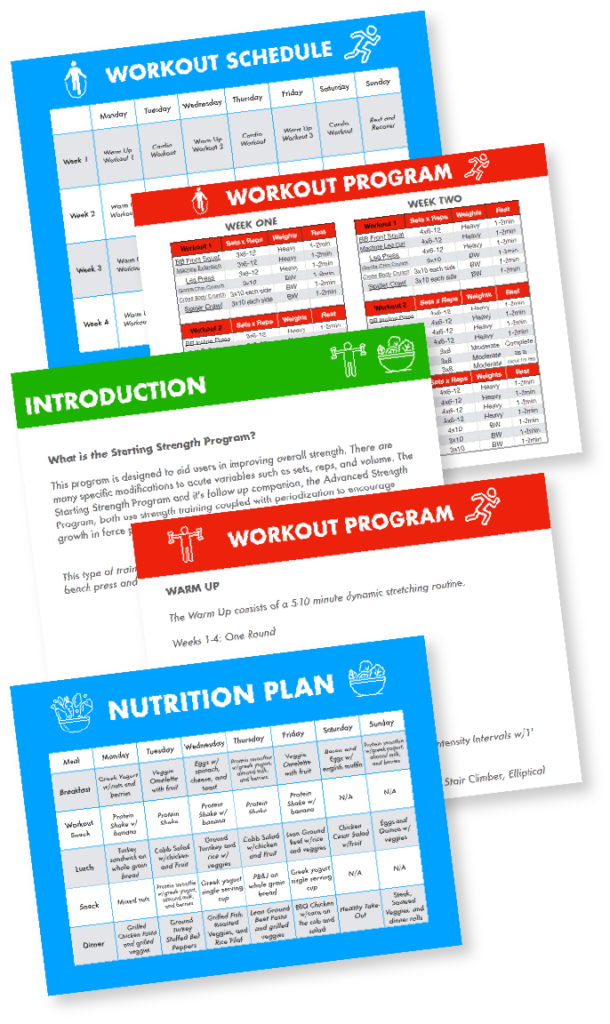
We designed this quiz to help you choose the perfect certification based on your learning style and goals.
If the most common question I get asked about personal training is what certification to get, the second most common question has to be “how much can I make as a personal trainer?”
There are numerous ways to make money as a personal trainer, but unquestionably the most common way is to start working at a gym. I started my career as a personal trainer by working at Equinox and 24-Hour Fitness.
Also be sure to join the conversation with hundreds of fitness pro’s, six-figure personal trainers, fitness mentors and coaches on our discord here:
When people first consider becoming a trainer they begin to think about the major gyms and how much they pay. And as much as certification bodies like NASM want to tell you that their average trainers make $42k a year, the reality of a personal trainer salary ultimately lies in what the gyms will pay as this is the most common career route.
However, the gym route is not the only one and many existing or aspiring trainers want to venture into the more entrepreneurial routes of private, or online personal training, as higher income levels are more easily achieved.
So, to help trainers understand what popular gyms pay their trainers and to showcase some insider knowledge on what private and online trainers can make, I’ve put together this post that outlines personal trainer salaries as well as what trainers at the most recognizable gym brands around the country get paid, and how they set up their payment structure. Overall this blog answers the question, “how much can I make as a personal trainer?”.
I’ll also discuss the three pay structures that are common to trainers and provide you with next steps from a seasoned personal trainer who has gone through the experience of getting a gym job first-hand as well as utilized the private and online routes.
First things first, if you want to work in personal training or at a big box gym like 24-Hour Fitness, Equinox, LA Fitness, or the like, you’ll need a personal training certification from a credentialed fitness organization.
Gyms want their trainers to get, or have, certifications, because they provide a baseline for credibility.
We have written a very comprehensive blog on the best personal trainer certifications where you can take a look at our side-by-side analysis of 10 different, popular personal training certification organizations. If you are unsure the exact steps to become a trainer and the prerequisites — education, age requirements, CPR/AED certifications.
Keep in mind that many gyms may hire you before you get a certification, and some will even have you go through their internal certification, so if you have a gym in mind for your place of employment it doesn’t hurt to ask what their requirements are first. Note that a true personal training certification will allow for a job at a much wider range of locations than just that one gym, something you’ll want to consider as your career evolves.
But before you enter the personal training employee marketplace, it pays to know some of the various pay structures that are common within the personal training industry so you know what to expect going in.
When you begin your search for gyms that will provide you gainful employment, you can expect the pay structures to fall into one of these three categories:
In the gym world, the gyms who make you get clients and don’t feed them to you will generally pay the most. The opposite is true too; the gyms that feed you clients will generally pay you the least.
Commercial gyms will typically pay you minimum wage to “work the floor” and try to drum up new clients. Once you are actually training clients, you’ll get a bit more per hour as you are increasing the gyms revenue by performing a training session. If you sell a large personal training package, commercial gyms will often give you a commission.
Independent pay structures, or those that pertain to the self-employed personal trainer, are much more favorable to the trainer, but the negative is that they are obviously not as exposed to as many potential clients as they would be on the floor of a major gym, and are only getting paid when they train.
When you are self-employed, or an independent personal trainer not on a gym’s payroll, you may be able to develop relationships with smaller, privately-owned gyms that will allow you to bring in your own clients.
The catch is that you have to pay the gym a fee when you use their gym to train your client. For example, I used to pay a privately-owned, non-chain gym $15 a session to bring my client in and train them.
I could ultimately charge my client whatever I wanted, and had no pressure from any boss to sell more training sessions as it was entirely up to me. I did have to do more for marketing and found these metal cards to be a professional way of displaying the quality of my business to new potential clients.
Keep in mind that with this independent structure, you are running your own business, which means you are responsible for additional tasks like accounting, taxes, marketing, advertising, sales and lead generation.
Related: How to Set a Pricing Structure for Your Personal Training Business I
The 1099 model is similar to the self-employed trainer model except the gym has a relationship with the clients. A 1099 is a tax form given to an independent contractor as opposed to a W2 which is given to employees.
In this pay structure, the gym does not actually employ you as a personal trainer, but they contract with you so that they can make money on personal training and alleviate themselves from the costs of having an employee.
The 1099 model is like when you hire a plumber to come fix your broken toilet; they are getting paid for their service but they are not your employee.
In the contractor payment style, the personal trainer and the gym typically get a split, like 50/50, on whatever the gym charges. So, if the gym charges $60 for an hour long session, they’d keep $30 and you’d get paid $30. The gym collects the money from the client and then will pay you, the trainer, for the session performed.
With this type of structure the personal trainer will be responsible for claiming taxes on the money they make, as the gym does not set aside any income since the trainer is not an employee.
Now, you may be asking yourself, “how do I know what kind of payment structure the gym I want to work at has?” Excellent question, let’s address that below.
While I could have left you hanging with the above information on the three various pay structures that are common for trainers who work at/with gyms, I wanted to do a deeper dive and get some answers from real trainers who work, or have worked, at some popular gym chains.
The Fitness Mentors team reached out to several gyms chains and their current employees, as well as conducted a survey with our current and previous students on Facebook, to get currently used payment structures and insight on how various gyms pay their trainers. We have provided that information below.
If you have any experience with these gyms or would like to comment on something different, please feel free to let us know in the comments so we can update this post.

Non-training payment:
Floor hours at minimum wage – typically 20 hours a week until your client base grows.
Payment structure:
Less than 42 sessions per pay period (2 week pay period):
More than 42 sessions per pay period (2 week pay period):
The average full-time trainer at Equinox performs 25-30 training sessions per week.
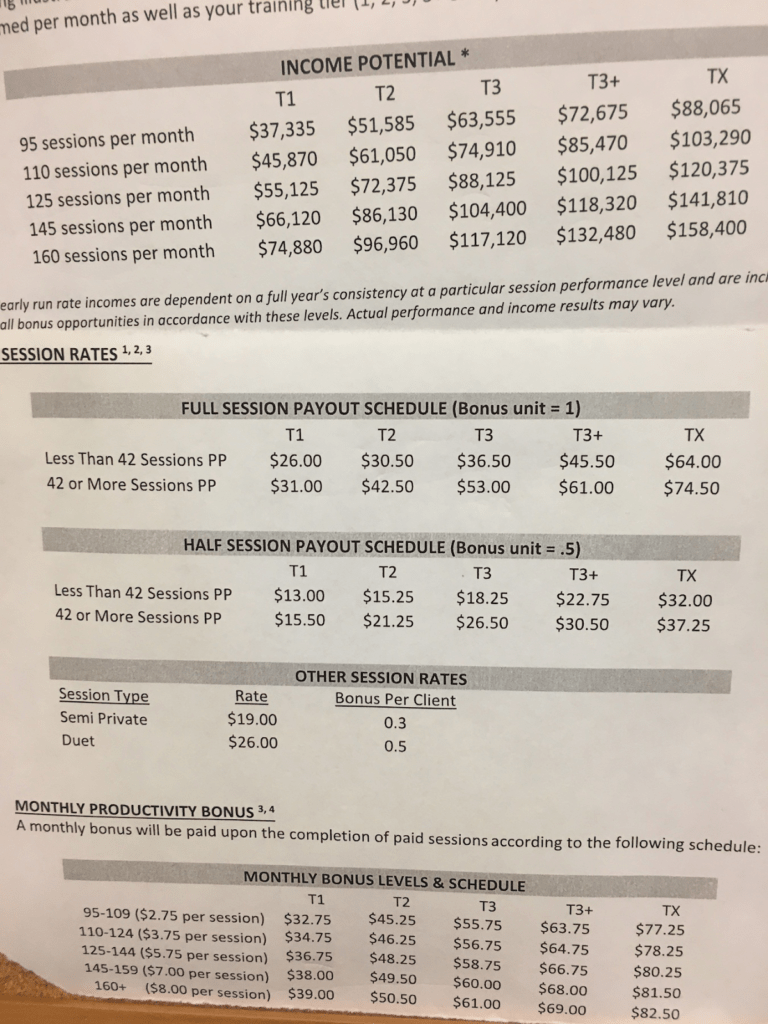

Non-training payment:
Minimum wage for non-training hours.
Payment structure:
Also, a 5% bonus commission is added to total salary when 60 training sessions or more are performed in one pay period.
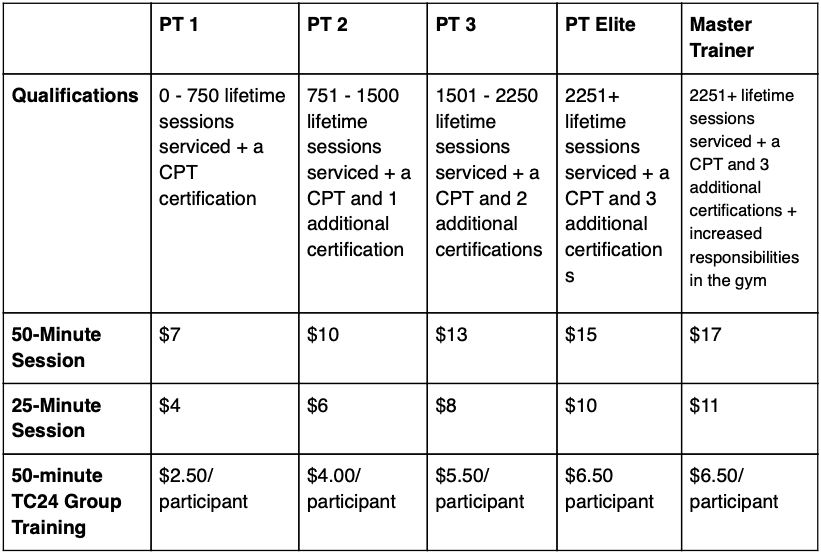
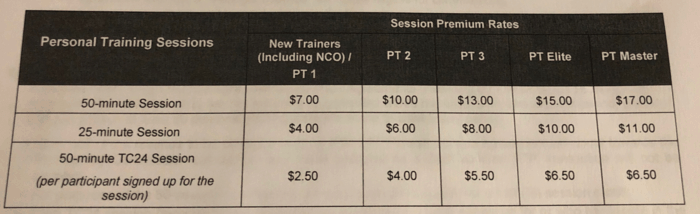
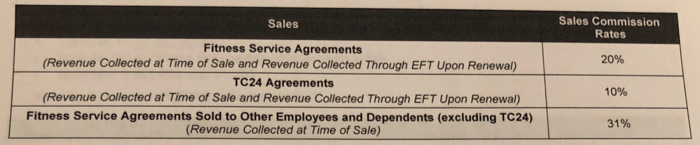
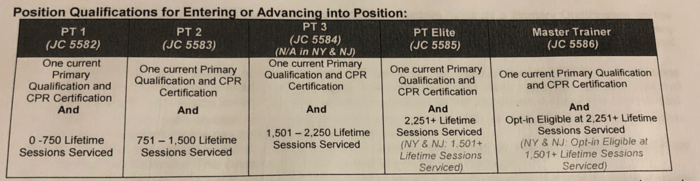

Non-training payment:
Minimum wage for non-training hours.
Payment structure:
$6 – $7.50 per 30 minute session
$12 – $15 per 1 hour session
$7.50 – $15 is for larger cities with higher cost of living like in Los Angeles.
$6 – $12 is for less populated, lower cost of living areas like Arizona.
Other findings:
No findable bonus structure. Trainer turnover is very high.
Every person in the Facebook group concurred that LA Fitness is a less than ideal place to work as a trainer, but a few people mentioned they pay their group exercise instructors significantly better.

Non-training payment:
Varies
Payment structure:
Varies, these are franchised gyms and each one has a different pay structure.
Answers varied on payment structure for the trainers we surveyed:
Other findings:
Collective agreement that Anytime Fitness is an enjoyable place to work. They are 3,000-5,000 sq ft gyms with only 5-10 trainers per location.

Non-training payment:
None
Payment structure:
These are franchised gyms and each location may have a different pay structure.
Here are some quotes from Crunch Fitness trainers concerning their salary. Answers varied on payment structure:
I’m only paid for hours trained and commission on sales. I’m not paid while trying to get clients.”
“I work at Crunch. Mine is a level 3 gym but because I just started I’m at level 2 for a few months. If I charge a la carte the client pays $80/hour or $50/30 minute session. Depending on my sales volume I can make between 40% and 65% of what I sell. I’m given “potential clients” but I have to sell them the personal training sessions. There’s not a sales force like at LA Fitness but the income potential is much better. I set my own hours and can work whenever I like. They encourage me to sell package deals which requires a 3 month commitment from the client. They are not allowed to cancel. Money is debited from their account either monthly or biweekly. They can also get a discount if they pay in full. For level 2, if you wanted to be trained 2x week, it would cost $504. For 3x week $697. Those are monthly rates for hour long sessions. Level 3, of course, is higher and most of the trainers at my gym are level 3. We have about 17 trainers. It’s a great place to work! Just takes time to build your clientele.”

Non-training payment:
Minimum wage is paid when not training.
Payment structure:
Basically, YMCA trainers make $15 – $28 per session/hour depending on their tier.
We were able to find some training salary data for YMCA but it is just for the Charlotte, NC area. I assume that cities with higher costs of living would be accounted for in pay (and vice versa for smaller cities), but we were unable to find any other data on that.
The information for YMCA trainers and their tiers can be found below, respectively:
Other benefits include:

Full-time minimum wage positions.
Payment structure:
Typically no higher pay for trainers, but it is an easy job that requires no sales and just training. Decent for beginners looking to gain training experience but not really career-worthy. No commissions. No bonuses.
It is a well known fact that private personal trainers have the potential to make far more than gym trainers.
Why? Because private personal trainers can set their own rates.
There is a catch for private personal trainers, however, and that is that they have to drum up enough business to write their own paycheck. But before we get into a sample private personal trainer salary let’s define exactly what a private personal trainer is.
A private personal trainer is a trainer that is self-employed, creates their own work schedule, and is free to choose the clients that they work with. For many personal trainers, this is the end goal of their personal training careers and is what sees some trainers working with celebrities and making big bucks.
Unlike gym trainers, private personal trainers don’t get help from the gym or get funneled clients from fitness organizations. They utilize their own networking, sales, and marketing skill sets to drive leads and ultimately generate new clients.
For that reason, many private personal trainers struggle to make a decent income. You can’t simply get a personal trainer certification and expect leads to come your way. (Check out this course to learn how to build your business and get clients). This is also why so many trainers start out in the gym, get experience, make relationships, begin taking on private clients on the side, and eventually leave the corporate gym environment behind.
A respectable private personal trainer can make upwards of $70,000 per year.
Compare this to the full time salary of a respectable personal trainer at 24-Hour Fitness which would likely fall in the low $40,000 range. And by respectable I mean one with a couple thousand hours of sessions under their belt and training 20-30 sessions per week. This low $40,000 range is also commensurate with what NASM says their average trainer makes.
For example, a 24-Hour Fitness trainer in their middle tier (PT3) makes $13 an hour when training. If you compare a potential salary of an entry-level trainer at 24-Hour Fitness, $22,440/year, to that of a Master Trainer at 24-Hour Fitness, $58,464, and split it down the middle (which is more or less where a PT3 would be), you’d get $40,452.
Now, let’s compare the above salary of a gym trainer to that of a private personal trainer.
The average private personal trainer in the U.S. charges around $50 session. Let’s say this trainer works a total of 30 hours per week and making $1,500 in that time. Multiple this time the weeks in a year, 52, and you have a respectable private trainer who is making $78,000 a year.
Potential Salary of Private Personal Trainer
That same trainer can charge $100 a session, work 15 hours a week, and make the same salary.
Gym trainers typically have to work a lot more hours than private personal trainers for a fraction of the salary which is why private training is often the more desirable route. But as we’ll learn, private personal training is not the only way to make money as a trainer outside the gym.
Interested in getting a CPT with an emphasis on entrepreneurship and business development? Check out the FM-CPT for more info.
Now you know what you can potentially make when you become a personal trainer at a gym. With this information, you may understand the gyms you want to work at and those you potentially want to stay away from.
One thing that should be clear with this information is that personal growth equates to more money as revealed by the tier systems many of these gyms have. The goal of continually developing yourself as a personal trainer is so you can build your book of business and generate a better income for yourself.
If you are interested in becoming an all-around better personal trainer and business-savvy individual, check out my book and online course I’ve made specifically for hungry self-starters looking to earn the income they deserve: Business and Sales: The Guide to Success as a Personal Trainer.
In addition to understanding which gym to kickstart your career, you’ll still want to have an understanding of which personal trainer certification is right for you. Amongst the three most popular certifications are Fitness Mentors, NASM and ACE, of which we cover side-by-side in this in-depth blog post.
If you liked this post or want us to try and find additional information, please let me know in the comments. If you have experience at other big brand gyms and want to share the salary information, please help us educate other personal trainers by sharing your thoughts below.
Check out our Top 5 Exercise Science Careers and The Best Education Paths
BS Kinesiology, NASM-CPT, CES, PES FNS, MMAS, WLS, FM-CPT, ACE-CPT, Master Personal Trainer
Eddie Lester is the founder and CEO of Fitness Mentors. With more that 17 years experience in the health, fitness and athletics field, he has helped tens of thousands of personal trainers transform their careers and reach their business goals. With a background in Kinesiology and Exercise Physiology Eddie has assisted in research that is spearheading the exercise science field.
His in-depth knowledge of the Health, Wellness and Fitness industry has earned him a place as a regular contributor on high profile sites such as the Personal Trainer Development Center, (Dan to list top sites) online where he writes about nutrition and personal training.
His contributions to help personal trainers include a weekly blog, podcast, youtube channel and multiple books including: Business and Sales: the Guide to Success as a Personal Trainer.
Eddie’s Philosophy often times includes focusing on the bigger picture in which daily positive contributions lead to a major impact on himself, his family, his community and the world.
Eddie is commonly found at the beaches of Southern California with his wife Courtney and five kids.
Learn how to create your first 5 pieces of online content to generate word of mouth, increase exposure, and get online clients with nothing more than your smartphone and expertise.
Every personal trainer looking to grow their business needs an online content strategy. Whether you’re a personal trainer looking for clients online, just starting out, or want to scale beyond local sessions, content creation is the most cost-effective way to build authority, increase visibility, and generate consistent income.
Creating content as a personal trainer gives you a competitive edge in a crowded fitness market. Here’s what a strong content strategy can do for your personal training business:
Here’s a proven, beginner-friendly system to produce maximum-impact content with minimum effort no camera crew, no studio, no ad budget required.
Content with the least amount of effort.
The easiest way to start creating content as a personal trainer is to solve one real problem for one real person.
Think about a specific struggle one of your current clients is facing right now. Ask yourself:
The truth is: the most relatable fitness content doesn’t come from brainstorming it comes from the real conversations already happening in your sessions.
When you speak directly to a common client pain point like losing weight after 40, building muscle as a beginner, or staying consistent with workouts your content instantly connects with the people most likely to become your next online clients.
One client’s problem = hundreds of potential clients searching for the same answer.
Once you’ve identified a pain point, write a short, focused blog article built around solving that exact problem. This is one of the highest-impact moves a personal trainer can make for long-term online visibility.
You don’t need to write a textbook. Aim for 700–1,500 words covering 3 clear sections:
Open by describing the client’s problem in vivid, relatable detail. Give enough background that readers think “that’s exactly me.” Use a made-up name if your client values their privacy the story just needs to feel real and human.
SEO tip: Open with language your ideal client actually searches phrases like “why can’t I lose weight no matter what I do” or “how to stay consistent at the gym” signal to Google exactly who your content is for.
Walk through how your client overcame the problem and how you guided them there. Write it in a way that makes the solution feel actionable and repeatable for anyone reading. This is where you naturally demonstrate your expertise as a personal trainer without hard-selling.
Wrap up with the 3 biggest takeaways and give readers one simple action they can take today. End by painting the resolution what life looks and feels like on the other side of that struggle. Make the reader feel the relief, the confidence, the result. Show them the grass really is greener.
Publish your article on your own website for maximum SEO benefit. If you don’t have one yet, WordPress is the go-to platform for personal trainers starting their online business affordable, professional, and built to grow with you.
No website = no digital real estate. Your blog is the home base that every other piece of content drives traffic back to.
Your blog article gives you the foundation now turn it into a video to multiply its reach and impact.
Here’s the reality: most people would rather watch than read. A short, enthusiastic video explaining how to solve a fitness problem will always out-reach a written article alone. And the people who already read and liked your article? They’re now primed to share your video putting your face, personality, and expertise in front of a brand new audience.
This is how personal trainers build what’s known as the KLT Triad:
Completing the KLT Triad is one of the fastest ways to grow an online personal training business and a simple talking-head video is one of the quickest ways to do it.
No studio. No expensive camera. Just:
Set up your shot: Turn your phone sideways (landscape mode) and frame from your chest to slightly above your head. This is called the “talking head” frame it’s personal, direct, and exactly what builds connection with online audiences.
Once recorded, less is more. Use jump cuts to trim out any rambling and keep only your strongest sentences. Jump cuts may feel abrupt when you first watch them back but for viewers, they actually make content easier and more engaging to watch.
Keep your video between 1–4 minutes. Attention spans are short, and anything that feels too long will get scrolled past before you even get to your point.
Your goal isn’t a perfect production it’s a clear, confident, concise video that gives your ideal client a reason to trust you.
Video editing software: I use iMovie just because it’s simple and I can usually edit 10 minutes of raw footage into a solid 3-4 minute video within about 30 minutes. You can also use FilmoraGo and Splice (both free and available on your smartphone).
You’ve written the article. You’ve recorded the video. Now squeeze every drop of value out of that content by repurposing it for social media without creating anything new from scratch.
This is how personal trainers with no marketing budget show up everywhere at once.
Copy and paste your 3 main points from your blog or video into your notes app, then edit them to flow naturally together. That’s your social post. Aim for 100–400 words punchy enough to stop the scroll, compelling enough to make readers want to click through for more.
Tailor the same content for each platform:
Instagram’s time restrictions don’t require you to reshoot anything. Simply:
One video. Multiple posts. Maximum reach.
Every post should include a clear, direct call-to-action that points readers to your full content:
Don’t assume people will search for your content. Tell them exactly where to find it
One run through this system is all it takes to understand the power of content repurposing. Do it twice and you’ll start seeing which format article, video, or social post resonates most with your audience. Do it consistently and you’ll have a self-sustaining content engine that grows your personal training business on autopilot.
Timing is everything. Instead of posting whenever, study the daily schedule of your target client and show up exactly when they’re most likely to engage.
Here’s a real example of a posting schedule built around a 9-to-5 audience:
| Content Type | Best Day | Best Time | Why It Works |
|---|---|---|---|
| 📝 Blog Article | Tue & Thu | 12:00 PM | Readable during lunch breaks or slow desk periods |
| 🎥 Video | Mon & Wed | 4:00 PM | Watchable after work when audio is no longer an issue |
The logic: A client sitting at their desk can quietly read an article — but can’t play a video out loud. Meet them where they are, when they’re available.
After a few weeks of consistent posting, pay close attention to your analytics:
Use that data to double down on what’s working and cut what isn’t. Over time, your content strategy sharpens itself.
So now you have your first blog for your website, a post for Facebook, Instagram, and twitter, and your first YouTube video! I’ve given you a strategy to squeeze the most amount of content for all of your content creation efforts to ensure that you stay motivated and encouraged while getting the results that you want. Hopefully this helps you get your first few online clients within the first month like it did for me!
Make sure you are up-to-date with the most relevant, timely information relating to you as a personal trainer!
How to Become a Personal Trainer in 5 Simple Steps
Personal Trainer Salary
Top 5 Exercise Science Careers
The Fitness Mentors Certified Online Personal Trainer (FM-COPT) is the only company nationally recognized by the NBFE (National Board of Fitness Examiners) to offer an Online Personal Training Certification.