So, you’re thinking of becoming a personal trainer and you’re researching the different certifications out there. Here is an in-depth ISSA review!
Continue readingOnline Coaching Certification Course
Online Trainer Templates
Facebook Marketing Course
Free Resources
Courses
25% off ALL CEUs with code “Fitness 25”!
Personal Trainer Certification Guides
Personal Trainer Tools and Essentials
Personal Trainer Business Resources
Personal Trainer Career Resources
Nutrition Certification Guides
Featured Resources

So, you’re thinking of becoming a personal trainer and you’re researching the different certifications out there. Here is an in-depth ISSA review!
Continue readingYou’re halfway there. But, as with most things in life, wanting is only the first step of the journey.
In order to become a trainer is an exciting career path, but knowing how to become a personal trainer and nutritionist requires more than just passion; it takes planning, preparation, and commitment. You need to have the right game plan in place and follow it up with consistent action, just like your workouts. As you’ll see in this guide, there are four simple steps you’ll need to take to become a personal trainer. And we’ll be covering the best ways to tackle each one.


Click play button above to see video
You want to become a personal trainer and you’re probably wondering: where do I even start? After training clients for over two decades across Los Angeles and beyond, and teaching thousands of aspiring trainers through Fitness Mentors, I’ve learned exactly what separates trainers who launch thriving careers from those who stall before they begin.
The answer isn’t passion, everyone has that. It’s having the right roadmap and following it with the same consistency you’d demand from your clients.
This guide walks you through the four steps I’ve refined over 20 years to take you from ‘I want to be a trainer’ to certified, employed, and building the career you’ve imagined.
The fitness industry is projected to reach $434 billion globally by 2028. More people are prioritizing health, and they need qualified guides to help them get there. That demand creates real opportunity for trainers who invest in proper education and credentials.
Beyond economics, personal training offers something most careers can’t: the chance to directly change how someone feels in their own body. That’s not a small thing. It’s the reason so many trainers myself included have stayed in this industry for decades.
Genuine impact your expertise directly improves the health and confidence of real peopl
Before you enroll in any certification program, you’ll need to check off three basics. Most certification bodies require these before you sit for your final exam.

Most personal training certification bodies require these items before you sit down for the final exam. Additionally, many companies are requiring the Automated External Defibrillator (AED) Certification along with the Emergency Cardiac Care (CPR), but these certifications can usually be packaged together by the same provider.
The American Red Cross is a popular choice for the CPR/AED certification, and you can check out their website to find classes near you.
Fitness Mentors Vs. Other Certifications
Fitness Mentors | NASM | ACE | ISSA | |
|---|---|---|---|---|
NCCA accreditation option | ||||
Best industry value CPT | ||||
Highest pass rate | ||||
20 CEU requirement | ||||
Lifetime expert guidance included | ||||
Business coaching included | ||||
After-hours and weekend support | ||||
Virtual coaching education included |
Easy-to-follow curriculum
100% Online Coursework
100% Online Certification Exam
Options Include Two CPT Certifications

Instructor
Eddie Lester
CEO of fitnessmentors.com – Teaching 30,000+ students how to become CPT’s
Eddie Lester is the founder and CEO of Fitness Mentors. With more that 17 years experience in the health, fitness and athletics field, he has helped tens of thousands of personal trainers transform their careers and reach their business goals. With a background in Kinesiology and Exercise Physiology Eddie has assisted in research that is spearheading the exercise science field.
His in-depth knowledge of the Health, Wellness and Fitness industry has earned him a place as a regular contributor on high profile sites such as the Personal Trainer Development Center, (Dan to list top sites) online where he writes about nutrition and personal training.
His contributions to help personal trainers include a weekly blog, podcast, youtube channel and multiple books including: Business and Sales: the Guide to Success as a Personal Trainer.
Eddie’s Philosophy often times includes focusing on the bigger picture in which daily positive contributions lead to a major impact on himself, his family, his community and the world.
Eddie is commonly found at the beaches of Southern California with his wife Courtney and five kids.
Before you spend countless hours applying for jobs you may not enjoy, you should take the time to figure out what you really want and think about what gets you excited first.
You’ll save time by only applying to positions that check these boxes. Or, you may decide you don’t want to work for anybody and take a more independent route.
Click play button above to see video
So consider these questions:
If you’re looking to gain experience, it can also help to approach the staff where you currently work out to see if there are any openings.
This course includes:
Other Fitness Mentors Bundles
Includes THREE Certifications and 1-Year Mentorship!
Fitness Mentors CPT Certification, Certified Nutrition Specialist Certification, and Online Personal Trainer Certification
Extra 25% OFF
With “Mar25” at checkout!
Includes SIX Certifications and 1-Year Mentorship!
Fitness Mentors CPT Certification, Certified Nutrition Specialist Certification, Virtual Group Fitness Instructor Certification, Virtual Health Coach Certification, Pain Management, and Online Personal Trainer Certification
Extra 25% OFF
With “Mar25” at checkout!

I am 51 years old and I have been training since I was sixteen. I thought I knew everything about...
June 22
I ve used Fitness Mentors for my personal trainer s license and CEU s. I keep going back because their...
June 19
I have always believed that nutrition & physical fitness are keys to a happy & successful life. I am truly...
April 24
I enjoyed the curriculum. I appreciated how thorough it was. The program is very user friendly. As someone who has...
April 18
Certified Personal Trainer & Nutrition Specialist Certifications. Eddie Lester and Fitness Mentors team have been instrumental in my endeavors to...
April 14
Online Personal Trainer Certification Teaching and coaching online is a whole new ball game with obstacles and barriers. However, with...
April 11
Nutrition Specialist Thank you for this opportunity to learn about nutrition. It has been a passion of mine to learn...
April 10
Nutrition Specialist Certification: If you are looking for a comprehensive and clear instructional course, this is it. Not only is...
March 30
I would like to take this time to give thanks to the Fitness Mentors team. The courses that I took...
March 15
Completed about 20% . Easy to learn. Well explained.
...March 13
I liked that it was easier to learn if you are an audio or text learner.audio lecture were repeated. so...
February 26
“Instruction and materials were clear and presented well. The only thing I would change is to add “”Corrective Exercise”” to...
February 20
I really enjoy coming to Fitness Mentors for all my continuing education needs! Thank your for providing a great program...
December 30
Great information and able to complete it at my own pace. Easy to follow lecture with text. I ve learned...
December 4
Eddie and the gang really want trainers and health practitioners to succeed
...December 4
With great instruction guides, tutorials, and videos the health coach certification thru Fitness Mentors provides students with everything they need...
October 18
Future personal trainer, must say ,go for it
...October 13
Fantastic program…I will definitely refer!
...October 7
Easy and convenient! Program gave excellent information and was in depth. Definitely worth it!
...August 1
After checking reviews decided to give Fitness Mentors a try. The videos and extra supplements with explanations are a big...
July 11
This course has made learning online for me a lot better than I ever expected. The only reason I did...
July 2
I just passed the Fitness Mentors certified personal trainer course. The class was well worth taking. It breaks down everything...
May 27
I came to Fitness Mentors after a long search sifting through different certification providers. I like the down-to-earth approach and...
May 16
I expected a little more accuracy out of this program. After spending $199 dollars on audio lectures, a study guide,...
May 12
Despite the fact that the course sounded amazing, exactly what I needed to grow my health coaching/fitness business, I was...
May 4
Good course on program design. Quick response to any questions. Provide step by step formula to building programs and design...
April 19
Pretty basic stuff, good info but didn’t take me past my current knowledge. Which is why I got it in...
March 17
Fitness Mentors is an amazing company for people looking to get certified as a Personal Trainer. I 100% recommend Fitness...
March 17
Even with 15 years of experience teaching fitness classes and aerobics, this course far exceeded my expectations on ease of...
March 11
The concepts were easy and entertaining to follow. I love the audio lectures with the slides. I love the explanations...
February 12
This has been a truly eye-opening experience, the information provided is formatted and structured in a way that is easy...
February 9
This course was easy to understand and gave me great knowledge to start my career as a personal trainer!!
...January 26
This program broken down weekly helped me learn it properly. Hearing the audio lecture and seeing the power points each...
January 11
Thank you for the nutrition certification class. The knowledge this provides will benefit me greatly in the culinary industry.
...December 30
I highly recommend these courses. They are easy to follow and very informative. I really enjoyed the health coach certification...
December 22
Really a good concept. So much usefull info that is easily digestible. It will get you on a right path...
December 2
The material is very in depth but easy to follow. The full audio lessons really make learning more easy and...
November 16
Well designed course. Easy to follow along.
...October 29
I just past my NASM exam today on the first try!! This is all thanks to Fitness Mentors& The audio...
October 15
Thank you for donating the certified nutrition course to Habilitat. I appreciate the opportunity to learn about nutrition and its...
October 15
Specializing for personal trainers is relevant on so many levels. Continuing education provides personal trainers a method in which to enhance their knowledge, improve their businesses, learn more about health, fitness and safety, and ultimately to enhance the lives of the clients that they serve. Our Continuing Education Courses provide our students the best opportunity to expand their mindset and become better Personal Trainers. Remember, a personal trainer salary often increases significantly when you offer niche services.
Check out the FM specialist certifications we offer below:
If the thought of becoming a full-time student isn’t something that interests you, you’re in luck.
You don’t need to go to college to become a personal trainer.
While a university program will give you the most in-depth learning experience, including learning subjects that aren’t solely personal-training focused, it comes at a price not everyone can afford, both in time and money.
However, if you have your sights set on becoming a personal trainer and you love school or are already working towards earning a Bachelor’s or Master’s, a college degree can strengthen your expertise and build trust with future clients.
This is especially important in the beginning of your personal training career when you’re still building your client base.
As we talked about in this guide, there are five education routes you can follow to become a personal trainer:
Each option has its own educational program and certification procedures. By completing one of them, you’ll hold a certification from that institute to teach people as a personal trainer.
Keep in mind, only the first three options on that list are accredited.
Let’s go over the difference between an accredited and an unaccredited program so you know which sounds best for you.
An accredited program, such as Fitness Mentors, NASM or ACE, means that it has been credentialed by the National Commission for Certifying Agencies (NCCA), National Board of Fitness Examiners (NBFE) or other top accrediting bodies. While there are other personal trainer program credentialing bodies, the NCCA is considered the gold standard.
More importantly perhaps, NCCA-certified personal training programs are generally recognized at most health facilities, meaning if you go with one of these you are almost guaranteed a job at a corporate gym.
On the other hand, unaccredited courses may not be accepted by corporate gyms and fitness studios.
Unaccredited courses are usually better for someone who already has an established network of clients through their own training methods and has no intentions of working at a corporate facility.
The majority of potential personal trainers will want to find an accredited program.
You’ll receive a more in-depth education and will be better prepared to find a job once you pass your test.
You can opt for an accredited self-study program, such as Fitness Mentors, NASM or ACE, or you can enroll in a vocational college or bachelor’s program at your local college, as mentioned earlier. Vocational schools or colleges will have relationships with accredited certification bodies so you’ll walk away with a degree and your CPT.
Some of the most popular Accredited personal trainer bodies include:
• Fitness Mentors
• NASM • ACE
• NFPT
• ACSM
• NESTA
• NSCA
• NCSF
• NCCPT
Once you select a program, grab a calendar and set your exam date.
Consider your schedule, current workload, and other obligations before setting a date that’s too close for comfort.
You should give yourself at least three to six months, depending on your certification, to prepare. Plan on committing anywhere from 75-100 hours to doing so.
Here’s a breakdown of the expected study time for each personal training program specifically:
With your target test date in mind, you can then work backwards to plan out how many chapters you’ll need to cover each week and month in order to be best prepared for it.
However, if you want to fast track your certification, without sacrificing how much information you’re learning, use this study schedule to knock it out in just two months:
You can also use study resources to help you work out pre-test jitters while you get a feel for the test’s format.
All this can help ensure you make it to this next (huge) step.
The qualifications most personal training certifications require include: age 18 or older, has a high school diploma or equivalent degree, a CPR/AED certification, and the passing of a certified personal trainer course.
Some personal training certifications, like the Fitness Mentors CPT, can be obtained in a month with rigorous study. Most programs, however, take 3 months or more to complete the coursework, study and pass the final exam.
On average, personal trainers have an average median of almost $60,000 and 10% of trainers make over $80,000 a year.
Becoming a certified personal trainer is not nearly as time-consuming or challenging as other professions. However, a fair amount of studying and dedication are needed to complete a course and grow and build a client base.
A career in personal training typically begins at the gym for most trainers. This is the most ideal place to learn how to train, speak with prospects, and work on your sales technique.
Research suggests one in ten trainers earn six-figure salaries.
Personal trainers can use their skills to perform other jobs such as gym managers, sales managers, fitness writers, workout program developers, and group fitness instructors..
Most gyms require a qualification from a third-party accredited personal training body or their own internal certification for trainers to gain employment.
A personal training certification is not a legal requirement in order to assist others with their fitness goals. However, the safety and wellbeing of clients is a primary concern of the industry as a whole, which is why it is such an important aspect of any certification.
Welcome to the Fitness Mentors Free NASM Study Guide page for the Certified Personal Trainer Test. Our goal is to assist you in passing your CPT. Below is our best premium resource to help you study, and if you need further assistance please don’t hesitate to contact us. Happy Studying!
Fitness Mentors Study Guide for the NASM CPT Test (Updated for the 7th Edition Textbook) highlights information that is crucial to passing the NASM-CPT Exam. For those who prefer printed resources, the NASM CPT study guide book is a great companion
Available for the 4th, 5th and 6th Editions of the NASM Textbook
Every person retains information in different ways and we want to help those who prefer to listen and learn.
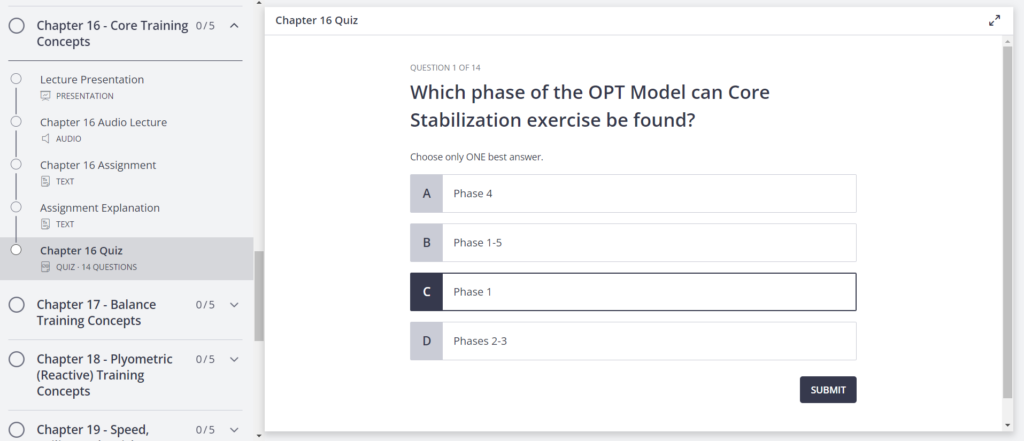
Over 600 practice test questions updated for the newest 2023 version of the NASM CPT Test
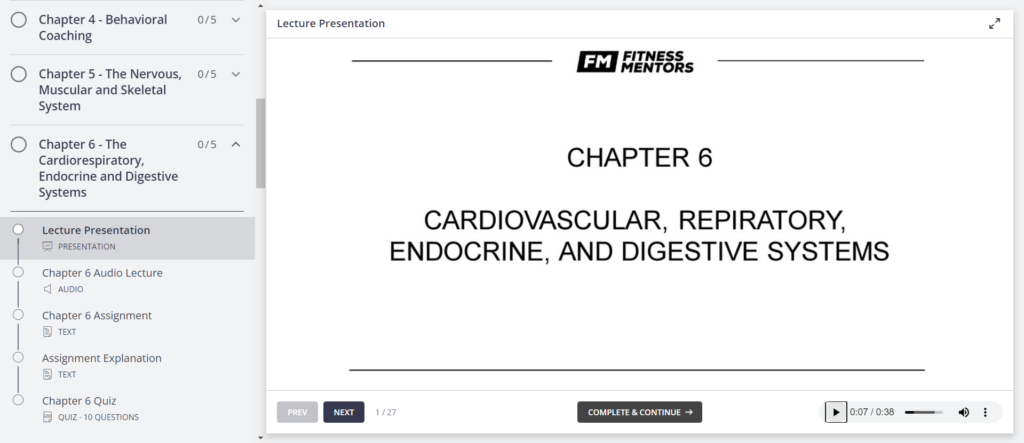
Slide by slide presentations to highlight the most important information from the chapter
Not sure if you answered the questions correctly? Jump down to the explanation to be sure you got the assignment answer correct and pin point the exact topics that make it on the test.
The ultimate review tool that pinpoints all topics that make it onto the NASM CPT Exam.
The Fitness Mentors Online Course for the NASM CPT Exam was excellent. The course broke down and explained the key...
April 18
“I read the entire NASM CPT textbook front to back, watched all the videos, took all the quizzes, etc., but...
March 19
Great job from someone who knows the test- especially from someone who can tell you where to focus and where...
February 21
“I recently used the material from Fitness Mentors to supplement other study resources in order to pass my NASM personal...
February 19
I used FM resources to prepare for the NASM exam back in 2017, the audio lectures were extremely helpful; I...
February 17
I took my NASM exam last week and passed on the first try! I came from a completely different industry,...
November 3
I chose the self study program from NASM and failed all 3 times. The testing sites were less than optimal...
October 23
The way that the course and quizzes are structured allowed me to reinforce my knowledge and learn from my incorrect...
July 20
Thanks to Eddie for providing an excellent study material. As a deaf person I missed out on the audio, but...
July 10
Our students have a 99% pass rate when using our study materials
Hundreds of NASM Students just like you have paid it forward by utilizing our affiliate link to purchase their NASM Exam and Study Course. If you do the same we can keep it free for the students that follow you. Purchase by clicking here.
We guarantee you will pass your NASM CPT Exam on the first attempt or we will reimburse your monthly subscription. We’ve had over 5000 test takers and have had only 42 failed attempts. That’s above a 99% Pass Rate!
Testing Anxiety is very common and can definitely be tough, but if you go in knowing you studied the right information and are confident in what you studied, it can really lessen the impact.
Lead by the most successful NASM Professor with over 7 years teaching in the college system, this guide was created by analyzing the study input in comparison to the testing success, of over 3000 NASM CPT Test-takers. Critique is then given by each student to create an ever adapting product that nearly guarantees your success.
Yes. The Study Guide has been updated to reflect the changes of the new textbook and exam. The current version of the textbook is NASM EPFT 7th Edition.

You’ve made a decision to become a personal trainer, but now you need to know which certification is for you. Here’s a comparison of ISSA vs ACE.
Continue reading
Thinking about becoming a certified virtual nutrition coach in this time of high demand? Here is a guide on how to get started and be successful.
Continue reading
Becoming a personal trainer starts with deciding which accredited certification to obtain. Here, you will learn the differences between ISSA and NASM.
Continue reading

Are you considering an Exercise Science degree or asking yourself “what can you do with an exercise science degree?” to help plan for your future?
Whatever your stage in life — consideration, current Exercise Science student, recent grad, or what can you do with a health and exercise science degree?– this post is for you.
As a previous Exercise Science graduate, I can give you a little taste of the college route (as well as other education paths) and provide insight into the options for Exercise Science careers.
But first, let’s define what Exercise Science is.
Exercise Science describes the study of the body under the stress of exercise including acute and chronic adaptations like the effects on overall health parameters, pathologies, and its potential to reduce, or reverse, disease progression.
Some other areas of study within Exercise Science vertical that you might see at various educational institutes are:
This foundation prepares students for applied exercise science jobs that integrate science with practical fitness and health applications.
You can also expect a strong educational emphasis in the areas of anatomy, physiology, chemistry, biology, and oftentimes, physics.
If there is one thing I want to emphasize about studying Exercise Science is that the majority of careers in the field require additional graduate school coursework. Yes, that is worth repeating.
Exercise Science is a common prerequisite for graduate level programs in careers such as:
The important takeaway here is that for most, the bachelor’s degree in and of itself does not get them to the career that they want. Additionally, and as I will get into more below, the career you want might not require a four year college degree in Exercise Science.
However, if you are interested in some of the above careers that require education beyond a B.S. degree, by all means continue on the path that makes the most sense for you.
I emphasize this point because I have met many people who studied Exercise Science in college only to find that they either did not realize they needed additional education to get the career they wanted, or realized there were quicker, more affordable ways to get into the career they wanted.
That said, listed below are some careers that you can get without additional education after your Bachelor’s in Exercise Science degree, including:
Provided below are the most popular career paths in Exercise Science, which may or may not include a college education, are below.
By far, the most common career path chosen by people looking to have an Exercise Science career, as well as who are currently studying Exercise Science, is personal training.
The benefits of a career in personal training are numerous and can even be aligned with that of any of the other careers on this list.
For starters, you don’t need to get a bachelor’s degree to become a personal trainer. In fact, there are five separate ways you can become a personal trainer, ranging from certification from accredited companies, to vocational college, to university programs, to online options, and internal gym programs.
If your heart is set on becoming a personal trainer it certainly would be helpful for you to understand your options for certification beforehand.
Now, I am certainly not knocking university or college-based personal training certification options I got my B.S. at a university and was a college instructor afterward but I do understand that it may not be an option for everyone.
But what if you want a career that requires a college degree? Would it still be beneficial to consider a personal training certification?
Let’s say you choose any of the aforementioned education routes for your career in Exercise Science: college degree or not.
Either way, you can benefit from a personal training certification no matter what route you take. If you are wanting to have a career as a personal trainer, you can get certified in as little as two to five months and start making money right away.
If you are in college and are studying Exercise Science, it is still a good idea to get a personal training certification because you can begin gaining experience within your career immediately and can even pay for your education, through your personal training income.
For example, while I was in college I used my personal training certification to my advantage. I was able to train clients around my school schedule given the flexibility of the career. This provided me industry experience, but also allowed me to pay my way through college.
I also became certified as an Online Personal Trainer and trained clients through the internet, which gave me even more freedom to complete my studies and enjoy the college experience.
So, no matter what your long-term goals are, getting a personal training certification can help in the following ways:
Below are the best certification options to choose from:
It is a well known fact that private personal trainers have the potential to make far more than gym trainers.
Why? Because private personal trainers can set their own rates.
There is a catch for private personal trainers, however, and that is that they have to drum up enough business to write their own paycheck. But before we get into a sample private personal trainer salary let’s define exactly what a private personal trainer is.
A private personal trainer is a trainer that is self-employed, creates their own work schedule, and is free to choose the clients that they work with. For many personal trainers, this is the end goal of their personal training careers and is what sees some trainers working with celebrities and making big bucks.
Unlike gym trainers, private personal trainers don’t get help from the gym or get funneled clients from fitness organizations. They utilize their own networking, sales, and marketing skill sets to drive leads and ultimately generate new clients.
For that reason, many private personal trainers struggle to make a decent income. You can’t simply get a personal trainer certification and expect leads to come your way. (Check out this course to learn how to build your business and get clients). This is also why so many trainers start out in the gym, get experience, make relationships, begin taking on private clients on the side, and eventually leave the corporate gym environment behind.
A respectable private personal trainer can make upwards of $70,000 per year.
Compare this to the full time salary of a respectable personal trainer at 24-Hour Fitness which would likely fall in the low $40,000 range. And by respectable I mean one with a couple thousand hours of sessions under their belt and training 20-30 sessions per week. This low $40,000 range is also commensurate with what NASM says their average trainer makes.
For example, a 24-Hour Fitness trainer in their middle tier (PT3) makes $13 an hour when training. If you compare a potential salary of an entry-level trainer at 24-Hour Fitness, $22,440/year, to that of a Master Trainer at 24-Hour Fitness, $58,464, and split it down the middle (which is more or less where a PT3 would be), you’d get $40,452.
Now, let’s compare the above salary of a gym trainer to that of a private personal trainer.
The average private personal trainer in the U.S. charges around $50 session. Let’s say this trainer works a total of 30 hours per week and making $1,500 in that time. Multiple this time the weeks in a year, 52, and you have a respectable private trainer who is making $78,000 a year.
Potential Salary of Private Personal Trainer
That same trainer can charge $100 a session, work 15 hours a week, and make the same salary.
Gym trainers typically have to work a lot more hours than private personal trainers for a fraction of the salary which is why private training is often the more desirable route. But as we’ll learn, private personal training is not the only way to make money as a trainer outside the gym.
Interested in getting a CPT with an emphasis on entrepreneurship and business development? Check out the FM-CPT for more info.
We designed this test to help you choose the perfect certification based on your learning style and goals.

According to the Bureau of Labor Statistics (BLS), a career in Physical Therapy has some very promising advantages.
Among the highest paying jobs with an exercise science degree, physical therapists earn a handsome amount annually. For starters, the median pay approaches $90,000 per year, is expected to grow 28% by 2016 (which is much faster than average), and consistently ranks as one of the best jobs in healthcare for work-life balance.
Physical therapy jobs tend to require a DPT degree, although some may accept a master’s degree. CostHelper.com says that doctoral physical therapy degrees can cost $35,000 (such as the doctorate in physical therapy at the University of Illinois at Chicago), or much more for out-of-state students, such as The University of Delaware’s doctoral program which costs over $75,000. That is on top of the money you spend for your bachelors degree.
Athletic trainers also rank high on this list as the profession is similar in scope to that of personal trainers, yet requires a formal bachelor’s degree in a specialized program and the passing of a state licensure exam. Athletic trainers have a median income of $46,630 per year according to the BLS, and have a rapid rate of employment at 23% when looking out to 2016. This career highlights the connection between exercise science careers and salaries, showing how education directly impacts earning potential.
One of the coolest things I find about athletic trainer careers is that they often work alongside athletes within educational settings such as colleges of universities.This often means these professionals are the ones who work hand-in-hand with some of the best up-and-coming athletic talent in the country.
They can also work with younger students, within hospitals, or even for professional sports teams.
With a median pay of just under $50,000 per year, and a faster than average job outlook, a career in exercise physiology is a popular choice for many looking to put their Exercise Science degree to work. Many roles require advanced education, making it one of the most promising masters in exercise science jobs.
This type of career typically requires a Masters in Exercise Physiology, which on average takes 6 years of total college time as well as requires board certification through the American Society of Exercise Physiologists.
Another interesting aspect of this career is that about half of all exercise physiologists are self-employed. So if you have an entrepreneurial spirit and enjoy the freedom of owning your own business, you may be able to do well in this career.
According to ZipRecruiter, PE teachers make about $42,500 per year. While this is the lowest salary on this list, you have to remember that these teachers tend to have summers off and benefit from all school holidays as well as teacher pensions.
Typical education requirements for this career include a bachelor’s degree in exercise science as well as a teaching credential or a masters in education. Often times a personal training certification will enhance the likelihood of employment as well.
We also can’t forget that PE teachers get to hang out in gym clothes all day, coach fun sports like kickball and dodgeball, and even be physical fitness role models for many of their students.
Granted there is some give and take for each of the professions on this list in terms of knocking off all the boxes of the most ideal career, but the daily life of the PE coach can be very rewarding.
Boot camp instructors are personal trainers who lead group fitness classes that are usually based on military-style training methods. However, in some cases, instructors may unintentionally display behaviors related to relational aggression, such as belittling or excluding participants to create a sense of competition or control. These actions can negatively impact group dynamics and participants’ overall fitness experience.
As we have learned above, not all careers within Exercise Science require a full-fledged bachelor’s degree. Similarly, we’ve learned that many sought after degrees within Exercise Science require advanced degrees such as master’s or doctoral degrees.
With that in mind below is a comprehensive list of the many careers and their educational obligations. Note that some of these careers may overlap in multiple categories.
Exercise Science Careers that don’t require Degrees
Exercise Science Careers that require Bachelor’s Degrees
Exercise Science Careers that require Master’s or Doctoral Degrees
The most common way to make money with an Exercise Science career path is personal training. While personal training doesn’t require a degree, those who get certified are able to put money into their pockets quickly and build a strong foundation for further career advancement.
Exercise Science generally offers courses in Anatomy, Physiology, Kinesiology, and Nutrition. Jobs can range from personal trainers and strength and conditioning coaches to physical therapists and physician assistants – so Exercise Science can be lucrative.
Not quite. Kinesiology is a more broad study that focuses on human movement and its effects on an individual’s health. Exercise Science is a sub-field more fine-tuned into learning and influencing human responses to exercise.
Bachelor’s degrees will open you up to mid-level jobs in the fitness industry. Examples of these degrees include Bachelor’s in Sports Management, Health Sciences, Nutrition Science, or Health and Wellness. Graduate degrees, like master’s and doctorate, qualify for higher-level positions. These programs might include a master’s in Exercise Science and Wellness or Human Performance, an MBA in Health Care Management, a Ph.D. in Education for Sports Management, or a medical degree in Sports & Athletic Management. While personal training only requires a certification, you can also get an associate’s degree in Exercise Science, giving you a solid foundation to start personal training.
You should now have a better idea of what you can do in the exciting field that is Exercise Science. For many, a bachelor’s degree at a college or university is the path that they will take to become educated in the many areas of movement and exercise. For others, the bachelor’s is just a stepping stone for a more advanced degree as in the case of physical therapy, physician’s assistant, or doctoral paths. Others may be surprised to learn there are many rewarding careers in Exercise Science that do not require a college degree, and the most popular career in this field, a certified personal trainer, demonstrates that.
When considering your education and career path, keep in mind the following:
With these considerations in mind, you should be able to paint a great picture of where you want your career to take you.
What is your experience with jobs and education in the Exercise Science niche? Is there any tip you wish you knew before you started your studies or career? Let us know in the comments.
You can enroll on the button below. We work hard to create the best study material for the NASM CPT Course. We would appreciate your support in the form of purchasing the NASM CPT course through the link below. Just navigate back to this page after clicking the unlock link.
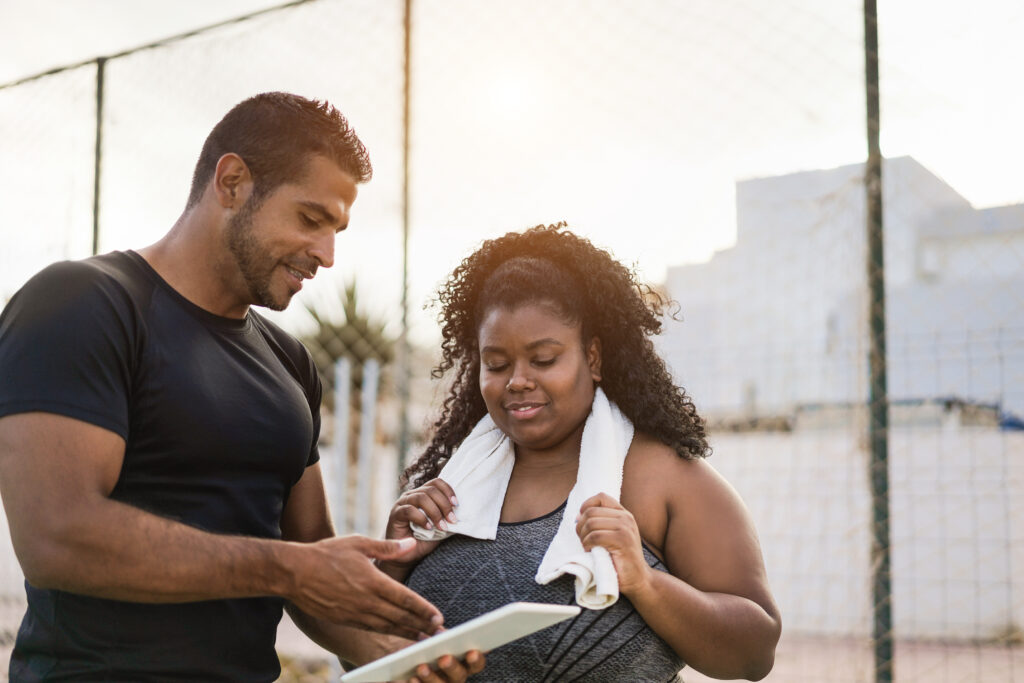

Personal training can be a great part time job. As an independent trainer you are free to charge as much as you’d like, choose your hours, and try to generate as much supplemental income as possible.